
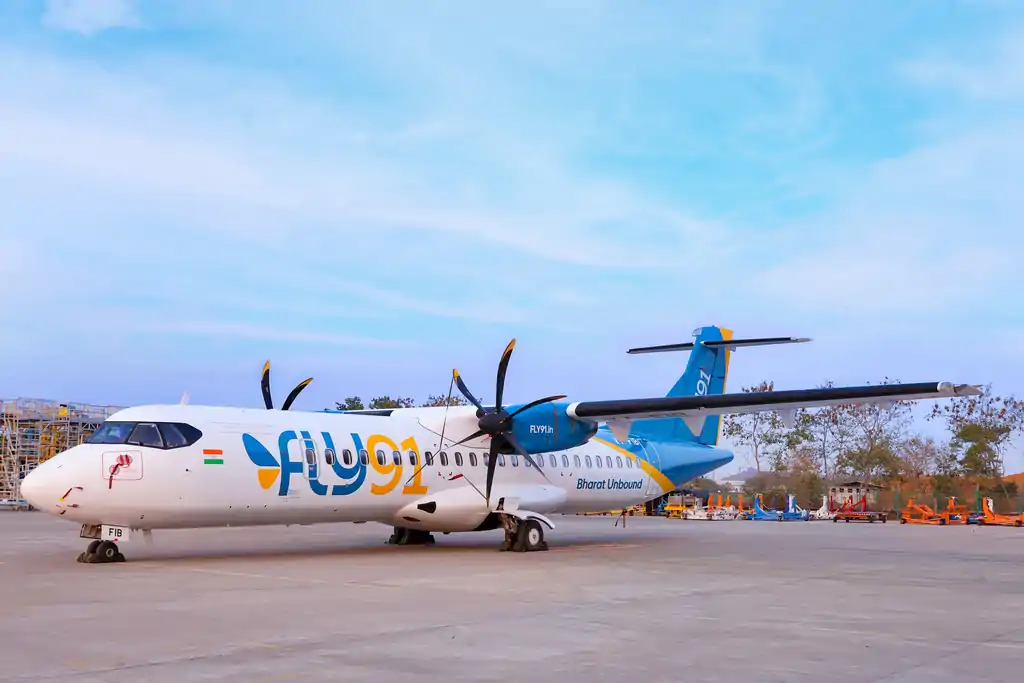
Regional carrier Fly91 has placed an order for 40 ATR-72 turboprop aircraft — one of the largest orders for the type in recent times — as the airline looks to dramatically expand connectivity to smaller towns and cities across India that have long been bypassed by larger commercial jets, according to people aware of the development.
At list price, the deal is valued at more than $1 billion, though airlines typically secure substantial discounts on orders of this scale. Spokespeople for both Fly91 and aircraft manufacturer ATR did not respond to queries seeking official confirmation.
Doubling the Fleet, Expanding the Map
The order represents a significant inflection point for the young carrier. Fly91 currently operates a small fleet of ATR-72 aircraft, connecting airports under the Indian government's UDAN regional connectivity scheme — including destinations such as Sindhudurg and Jalgaon. The 40 new aircraft will more than double the airline's fleet and substantially expand its footprint across tier-2 and tier-3 cities that remain chronically underserved by aviation infrastructure.
Deliveries are slated to begin towards the end of 2027 and are expected to be completed over a period of five years.
Fueling the Expansion
Alongside the aircraft order, Fly91 is in the process of raising approximately Rs. 250 crore from a combination of existing and new investors to support its broader expansion plans, the people said.
The Case for Turboprops in India
Manoj Chacko, Founder and CEO of Fly91, made the airline's strategic rationale clear. "We are heavily bullish on the India story and want to build a reliable transportation company out of India," he said. "There are 100 such airports in India where a big aircraft like Airbus A320 and Boeing 737 can't go. The ATR-72 aircraft perfectly suits those routes and for our cost model."
The ATR-72, a twin-engine turboprop built for short-haul and thin routes, is widely regarded as the aircraft of choice for regional connectivity in markets where infrastructure constraints rule out larger narrowbody jets.
A Market the Big Players Left Behind
India's aviation story has, for years, been dominated by carriers chasing the high-density metro corridors. Fly91's order signals a deliberate counter-bet — that the country's next wave of air travel growth lies not in the skies above Mumbai or Delhi, but across hundreds of smaller cities and towns that have rarely, if ever, seen scheduled airline service.
If the strategy holds, the carrier could emerge as a defining force in India's regional aviation landscape — one turboprop route at a time.
With Inputs from Economic Times

Read next
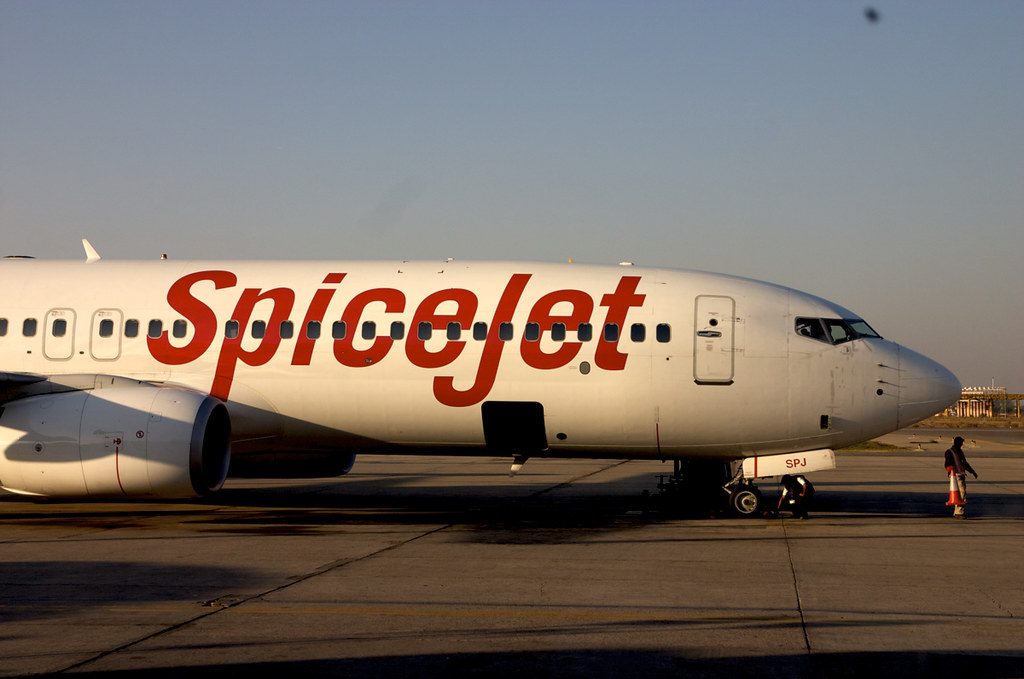
SpiceJet has finalised lease agreements to induct 20 aircraft into its operational fleet, comprising 15 Boeing jets and five Airbus planes. The entire lot is scheduled to join the airline between mid-October and mid-November 2026, timed precisely to coincide with the winter schedule and the year-end holiday travel rush.
The aircraft will operate under damp and wet lease arrangements. Under a damp lease, the aircraft owner supplies the plane along with flight crew and maintenance support, while SpiceJet provides its own cabin crew. A wet lease goes a step further — the lessor takes over operations entirely, supplying a complete crew, insurance, and maintenance cover.
The Airbus Wildcard: Higher Seats, Bigger Impact
Among the five incoming Airbus aircraft, the induction will include the A321 variant — a wider, higher-capacity narrow-body that exceeds the seating available on SpiceJet's current narrow-body fleet. The airline intends to deploy these jets on high-demand routes during the peak holiday window, squeezing more passengers onto the busiest sectors.
With the 20 aircraft joining its fleet, SpiceJet is targeting 200 daily flights for the holiday season and winter schedule. The expanded capacity is expected to strengthen operations across both the airline's domestic and international networks.
Airfare Relief on the Way?
SpiceJet believes the additional capacity will bring greater stability to the market. The airline stated that the expanded fleet is expected to ease pressure on airfares during periods of peak demand — a welcome development for travellers who have contended with elevated ticket prices in recent years. Beyond the winter, SpiceJet added that the fleet will continue to support operations through the following peak summer travel season.
Echoes of Last Year's Expansion
The current induction closely mirrors a similarly sized expansion SpiceJet carried out a year prior. For the winter of 2025–26, the airline had added 20 aircraft between October and November 2025 — a mix of damp-leased Boeing 737s, an Airbus A340 wide-body, and reactivated grounded jets. That round of additions helped SpiceJet more than double its operational fleet and triple its available seat kilometres (ASKM), driving daily flights to a peak of 250, up from just 125 during the preceding summer schedule.
Engine Overhauls Keeping Pace
Running parallel to the fleet induction, SpiceJet has been overhauling engines from its grounded aircraft. The airline has dispatched close to 19 engines to maintenance, repair, and overhaul (MRO) facilities worldwide — including CFM LEAP-1B engines powering its Boeing 737 MAX fleet and turboprop engines from its Q400 fleet. The move signals a broader effort to restore more of its existing fleet to service alongside the newly leased arrivals.
Read next
SpiceJet Walks a Financial Tightrope — Rs. 50 Crore Missed, Court Watching
Abhishek Nayar
01 Sep 2026
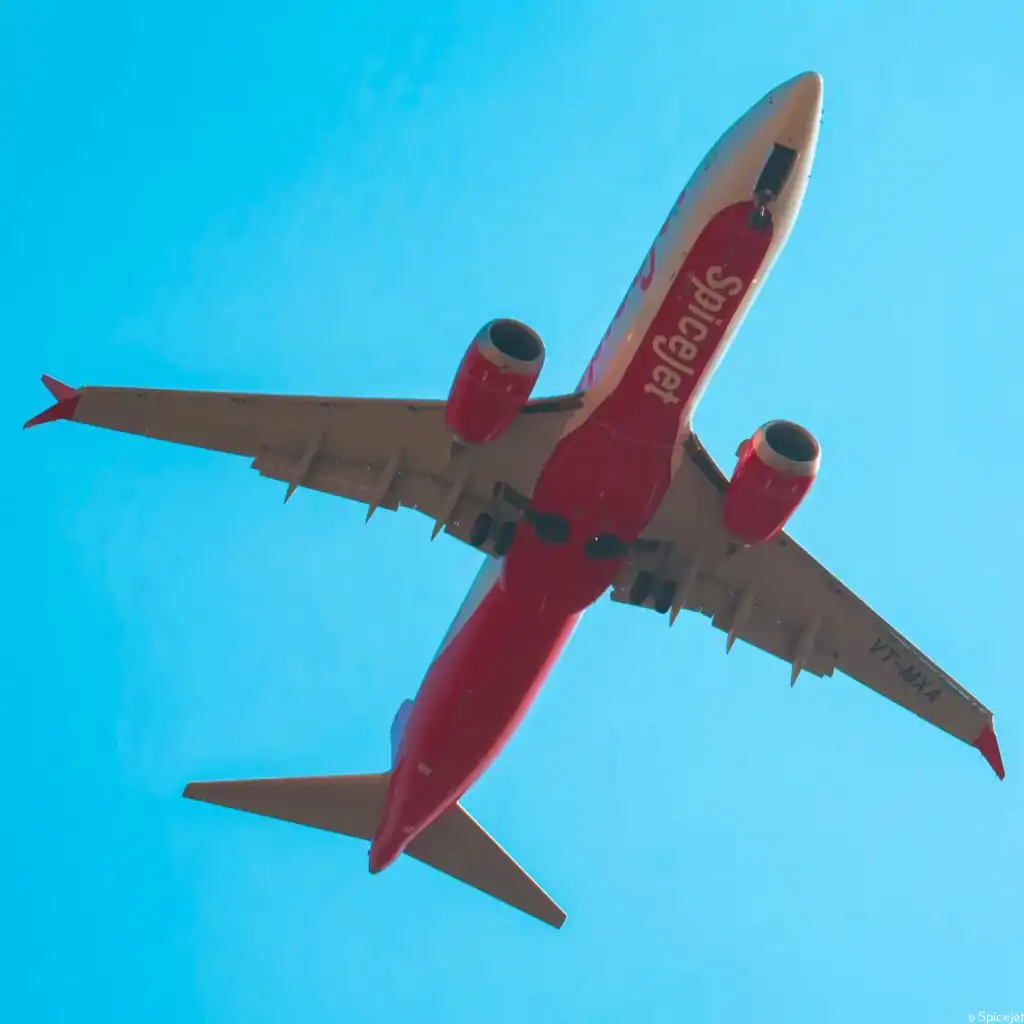
SpiceJet has failed to deposit the first instalment of Rs. 50 crore as mandated by the Delhi High Court, reigniting concerns about the airline's financial health and its ability to honour legal commitments in the long-running dispute with KAL Airways Pvt. Ltd. and former Sun TV chairman Kalanithi Maran.
The missed deadline of August 27 has pushed the matter back into the spotlight, with the court now awaiting September 21 to examine SpiceJet's bona fides.
How It Came to This
The payment obligation stems from the Delhi High Court's July 13 order, under which SpiceJet and its promoter Ajay Singh had undertaken to deposit Rs. 50 crore within 45 days, followed by the remaining Rs. 94.51 crore within 90 days — totalling Rs. 144.51 crore. The court had framed this as a test of the airline's sincerity.
Before that, the Supreme Court on May 19 had declined to interfere with the High Court's earlier judgment but allowed SpiceJet to approach the High Court given a new ECLGS policy window.
SpiceJet's Defence: Waiting on a Second Tranche
In court on Monday, senior advocate Mukul Rohatgi argued that SpiceJet had applied for Rs. 1,000 crore under the Emergency Credit Line Guarantee Scheme (ECLGS) 5.0 and received Rs. 151 crore as the first tranche in June. He stated that those funds were entirely consumed by operational necessities — Aviation Turbine Fuel, airport charges, engine lease payments and employee salaries.
Rohatgi submitted that SpiceJet had applied for the second tranche with its lender on June 26 and expected it around September 15, subject to the bank's approvals. He claimed the Rs. 50 crore deposit would have been made had those funds arrived.
A Court Unmoved — For Now
Justice Subramonium Prasad declined to pass any interim order against SpiceJet or Ajay Singh, observing that Rohatgi's request appeared to be in the nature of anticipatory relief. The court left it open to KAL Airways and Maran to take appropriate legal steps and directed that any such application be listed on September 21.
SpiceJet has formally sought a four-week extension on both instalments.
The Bigger Picture: Fewer Flights, More Stakes
SpiceJet has cited the West Asia crisis as a significant operational blow, stating its daily flights dropped from approximately 160 on February 28, 2026, to just 73. The airline warned that forcing the Rs. 50 crore payment without the second ECLGS tranche could jeopardise operations and affect roughly 5,169 employees and 5,500 vendors.
The airline has also argued that if its Section 34 challenge to the underlying arbitral award succeeds fully, it stands to recover approximately Rs. 449.86 crore from Maran and KAL Airways. Even a partial win on the interest component alone would entitle it to a refund of around Rs. 179 crore. Those proceedings are now listed for November 3, 2026.
September 21 is the next critical date — and likely the most consequential one SpiceJet has faced yet.
With Inputs from ANI
Read next

Boeing and its largest white-collar union, the Society of Professional Engineering Employees Association (SPEEA), are set to return to the bargaining table on Monday, resuming contract discussions after a dramatic breakdown last week. A SPEEA spokesman confirmed the renewed talks, signaling that both sides remain willing to negotiate — at least for now.
The urgency is real. The current contract expires on October 6, and with a strike threat looming, every day without a deal counts.
Union Members Make Their Demands Clear
SPEEA's roughly 17,000 members — engineers and technical workers who form the backbone of Boeing's design and certification operations — overwhelmingly rejected the company's latest contract offer last week. The rejection was not close.
In response, SPEEA conducted a membership survey, drawing responses from nearly 13,000 union members. The results painted a clear picture of what workers want. Topping the list was a demand for larger and immediate guaranteed wage increases — workers want more money, and they want it now, not tied to performance timelines. Coming in second was a push for higher annual performance-based raises, while better cost-of-living adjustments ranked third among priorities.
The message from the workforce was unambiguous: the current offer simply does not go far enough.
Boeing Speaks — Then Goes Quiet
Boeing issued a measured statement in response to the ongoing standoff. "We want to reach an agreement before the current contract expires and look forward to finding a solution with SPEEA at the bargaining table," a Boeing spokesman told.
Beyond that, the company declined to comment further — a notably cautious posture as the deadline approaches.
Boeing Makes a Contingency Move
Even as negotiations were announced, Boeing moved quietly to prepare for the possibility of a work stoppage. On Tuesday, the planemaker posted contractor job listings, a move widely interpreted as contingency planning ahead of a potential strike. The posting suggested Boeing is not taking any chances — and is hedging its bets even while publicly expressing optimism about reaching a deal.
The Stakes: Two Aircraft, Years Behind Schedule
What makes this labor dispute particularly significant is the work SPEEA members perform. Engineers and technical workers under the union are directly involved in Boeing's effort to certify two of its most critical aircraft — the 737 MAX 10 and the 777-9. Both programmes are already several years behind their original schedules, and airlines waiting for deliveries have grown increasingly restless.
Any work stoppage would deal a fresh blow to both programmes, further delaying their entry into service and compounding an already difficult period for the American aviation giant.
What Comes Next
With Monday's talks now confirmed, all eyes will be on whether Boeing and SPEEA can bridge the gap before October 6. A strike would be costly — for the company, for the union, and for the airlines still waiting on delayed aircraft. The next few weeks will determine whether cooler heads prevail at the bargaining table.
With Inputs from Boeing
Read next
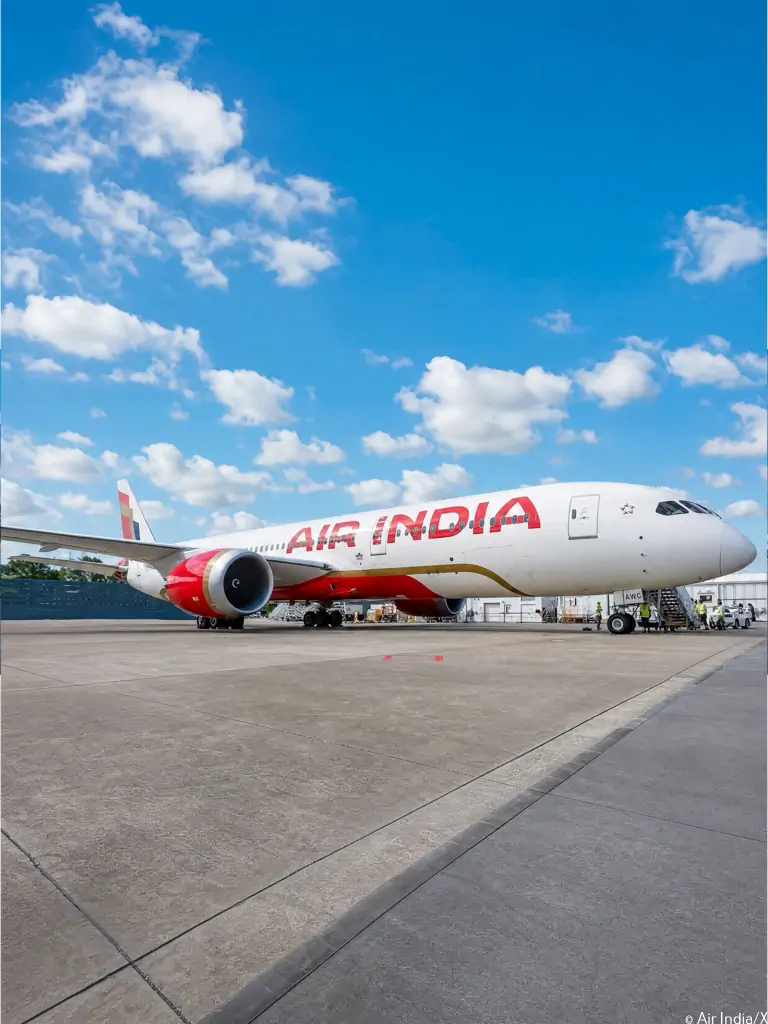
What began as a high-stakes bet on India's aviation resurgence is rapidly becoming a source of political discomfort in Singapore. Air India, the Tata-owned carrier that Singapore Airlines (SIA) has backed since November 2024, is now reportedly seeking $1.5 billion in fresh equity from its stakeholders — and the fallout is echoing in Singapore's parliament.
The $1.5 Billion Question
Air India has formally approached both Tata Sons and Singapore Airlines for a fresh capital infusion, expected to be disbursed in tranches. SIA, holding a 25% stake in the Indian carrier, would be required to contribute its proportionate share for any funding round to proceed. Discussions remain ongoing and no final decision has been reached. The request is among the largest publicly reported shareholder funding appeals in Indian aviation history.
The urgency stems from Air India and its budget arm, Air India Express, posting combined losses of $2.33 billion in the fiscal year ended March 2026 — more than double the losses recorded the prior year.
A Singaporean Politician Draws the Line
The capital call triggered an immediate political reaction in Singapore. Workers' Party MP Kenneth Tiong Boon Kiat wrote to Transport Minister Jeffrey Siow, questioning the commercial logic of SIA's continued exposure to Air India. He sought an oral answer in the September 8 parliamentary session.
Tiong's concern centred on Temasek Holdings — Singapore's government-owned investment firm and SIA's largest shareholder — potentially absorbing Air India's losses through SIA.
"No one, least of all Singaporeans, owes Air India a living," he wrote, stating he would not support any future use of Temasek funds to prop up the Indian carrier via SIA.
How SIA Got Here
SIA's Air India chapter opened in November 2024, when it folded its longstanding Vistara joint venture — a 2013 investment — into Air India, simultaneously committing S$822 million ($642 million) in fresh capital. Just five months after the deal was signed, SIA was called upon to inject a further S$167 million, bringing total capital invested to S$989 million ($772 million).
In its most recent quarter, SIA reported its first net loss since 2022, dragged down by Air India's underperformance and elevated jet fuel costs linked to the US-Iran conflict — despite posting record revenue at the group level. Cumulatively, the Air India investment has resulted in operating losses of approximately S$1.3 billion, an improvement from S$2.02 billion a year earlier.
Leadership Chaos at the Top
Air India's financial woes are compounded by leadership instability. CEO Campbell Wilson departed earlier in 2026, prompting Tata Sons chairman N. Chandrasekaran to take a more direct operational role. Tewolde Gebremariam, former head of Ethiopian Airlines, was shortlisted as Wilson's successor in August — though he had most recently declined a similar role at Pakistan International Airlines. Days later, Chandrasekaran himself announced he would not seek a third term as chairman of Tata Sons' holding company.
With leadership in flux and losses mounting, the question in both Mumbai boardrooms and Singapore's parliament remains the same: how much longer can this turbulence be absorbed?
With Inputs from Economic Times, Business Standard
Read next
India's Airport War Heats Up: GMR Quietly Bets ?194 Billion on the World's Next Aviation Boom
Abhishek Nayar
25 Aug 2026

GMR Airports Ltd., India's largest airport operator by passenger footfall, has unveiled plans to pump as much as Rs.194 billion ($2 billion) into expanding its flagship facilities in New Delhi and Hyderabad — a direct response to what the company sees as an unprecedented surge in Indian air travel over the coming decade.
The investments, confirmed by Executive Director for Finance and Strategy Saurabh Chawla in a recent interview, will be deployed over the next five to seven years and funded through a mix of debt and equity at the individual airport-venture level, not at the GMR Airports holding company level.
Where the Money Goes
The lion's share — roughly Rs.138 billion — is earmarked for Rajiv Gandhi International Airport in Hyderabad, the southern industrial hub. The remaining Rs.56 billion will go toward the New Delhi airport. Once Hyderabad's expansion is complete, the airport will be capable of handling approximately 80 million passengers annually, more than double its current capacity of 34 million fliers.
Why Now? India's Passenger Numbers Tell the Story
The timing is no coincidence. India is already the world's third-largest domestic aviation market, behind only the United States and China. Government projections paint an even more dramatic picture ahead: passenger traffic is expected to grow six-fold to roughly 1.1 billion fliers over the next 14 years, while the country's commercial fleet is forecast to swell from 400 aircraft in 2014 to over 2,350 planes by 2040.
GMR vs. Adani: A Rivalry Taking Shape at 30,000 Feet
GMR's announcement arrives as its chief rival, Adani Airport Holdings Ltd., is already planning a $15 billion infrastructure push across its own network — the biggest by number of airports in India. The two conglomerates now find themselves locked in a race to capture India's aviation upswing, with GMR holding the edge in annual passenger volumes and Adani dominating sheer portfolio breadth.
Beyond Delhi and Hyderabad: A Bigger Expansion Blueprint
Chawla hinted that the current investment round may only be the opening chapter. GMR's portfolio already spans six Indian airports, one in the Philippines, and another under construction in Greece. The group took over the Nagpur airport in June 2026, and investment plans for that facility are currently under discussion.
On overseas airport redevelopment, however, Chawla was clear: no such discussions are on the table.
No Airline Ambitions, No Distractions
Despite India's government reportedly exploring a policy change that would allow airport operators to enter the airline business — a move aimed at breaking the near-duopoly of IndiGo and Air India, who together control close to 90% of the domestic market — GMR remains firmly uninterested.
"We're not interested," Chawla stated plainly, emphasizing that the group intends to stay focused on airports, aircraft maintenance, and real estate development around its aviation hubs.
For GMR, the runway ahead is long — and they are fully committed to building it.
With Inputs from Economic Times
Comment