
Shrink to Shine: Spirit Airlines’ Bold (and Slightly Brutal) Plan to Diet Its Way Back to Profit by 2027

Abhishek Nayar
16 Oct 2025
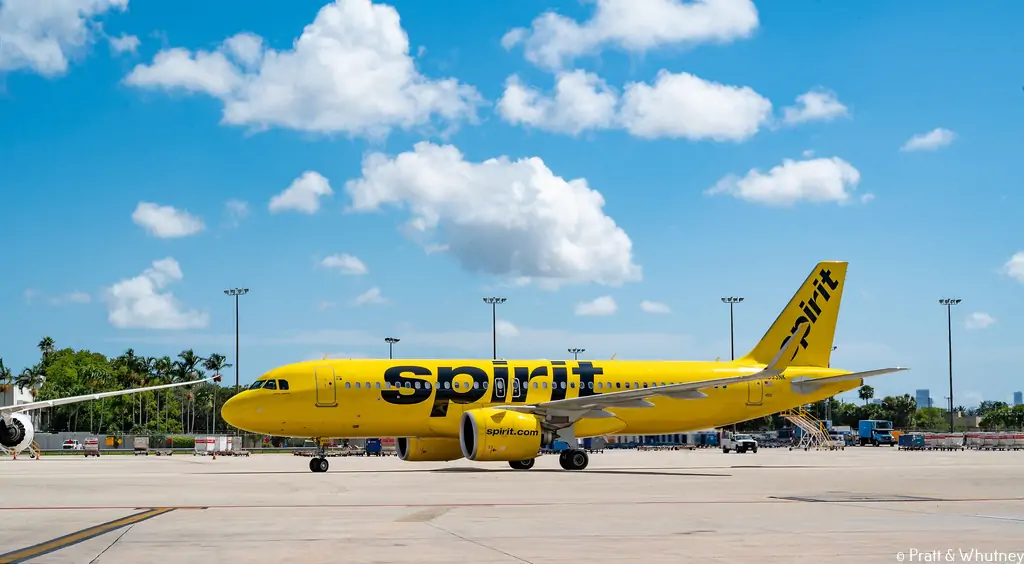
Spirit — the neon-yellow, ultra-low-cost U.S. carrier — has filed for Chapter 11 for the second time in a year and told regulators it expects to lose money in 2025 and 2026 before returning to a modest profit in 2027.
What Spirit just told regulators (the cold, hard numbers)
- 2025: An estimated loss of about $804 million.
- 2026: A smaller but still negative number, around $145 million.
- 2027: A projected $219 million net profit — the airline’s first full-year gain since 2019.
Spirit says its turnaround plan will be fully implemented by the end of 2027, at which point it expects to generate roughly $900 million in EBITDAR (earnings before interest, taxes, depreciation, amortization and rent).
The painful but “necessary” cuts (think of it as financial surgery)
To get those numbers, Spirit is taking drastic steps that will change the airline’s day-to-day and who’s in the jumpseat:
- Shrinking capacity: The carrier plans to cut capacity roughly 20–25% next year to focus on its strongest routes and markets. That means fewer flights for customers — and fewer paychecks for some employees.
- Fleet shrinkage & order cancellations: Spirit has reached settlement with lessor AerCap that cancels some Airbus orders and lets Spirit reject certain leases — part of a wider move to downsize its fleet and cash commitments. AerCap will still lease some aircraft back to Spirit and is putting cash on the table as part of the deal.
- Asset sales: The plan includes selling property and valuable rights — things like its Dania Beach headquarters and landing/takeoff slots at LaGuardia — to raise cash. Think of it as auctioning the houseplants to pay the electric bill.
Headcount heartbreak: who’s getting furloughed
Cost saves, unfortunately, come from people:
- Pilots: About 330 pilots have already been furloughed, with another ~270 reportedly to be furloughed soon.
- Flight attendants: Roughly 1,800 flight attendants — about one-third of Spirit’s cabin crew — are set to be furloughed effective December 1. The airline estimates those furloughs will save roughly $211 million.
(If you’re keeping score: that’s a lot of yellow jackets leaving the hangar.)

The financing lifeline (not exactly a fairy godmother)
Spirit also landed emergency debtor-in-possession (DIP) financing and a settlement with AerCap that provides cash and fewer planes in exchange for lease reworkings. That financing is meant to keep the lights on while the airline reorganizes — but it isn’t a long-term cure; it’s more like PRN medication until the new business model sticks.
Is this realistic? The short answer: “Maybe” (depends on a lot)
Pros in Spirit’s favor:
- Focusing capacity on profitable routes can quickly improve unit economics.
- Cutting leases and offloading unneeded aircraft reduces fixed costs fast.
Cons / unknowns:
- Consumer behavior and competition (legacy carriers improving fares and service) remain big headwinds.
- Selling assets like LaGuardia slots generates cash once, but it removes future revenue opportunities.
- Workforce morale and operational reliability can worsen with big furloughs and route churn — and that can further erode revenue.
The human angle (because spreadsheets are cold)
Behind the numbers are real crews, pilots and flight attendants who face uncertain holidays and paychecks. The workplace grief is real: fewer flights mean fewer hours and fewer chances for career progression. That matters not only for families, but for operational safety culture and customer service quality — things you can’t fully fix with a one-time asset sale or magic Excel formula.
A cheeky metaphor you didn’t ask for (but wanted)
Think of Spirit as a gym member who binged on cheap in-flight fees and growth, then realized the membership bill is due and the treadmill’s broken. So, they cancelled the fancy trainer, sold the weights, and are promising to run a smarter 5K in two years. Will they make it? Depends on willpower, market conditions, and whether the treadmill stays plugged in.

Why you should care
- If you fly Spirit, route choices and fares may change in the near term. Expect fewer flights on marginal routes.
- If you work in aviation, this is a signal: industry shakeouts continue, and low-cost models are being tested hard.
- If you follow corporate turnarounds, this is a classic restructuring test: belt-tightening + asset sales + strategic refocus. Some companies pull it off. Some don’t.
Final thought (short, human, honest)
Spirit’s plan is ruthless but straightforward: cut costs, sell non-core assets, and hope demand and unit economics improve enough to return to profit in 2027. That’s a long road with plenty of potholes — but if the numbers and the market cooperate, a smaller Spirit could still keep flying. If not… well, the airline industry has room for few second chances.
TL; DR
- Spirit filed for Chapter 11 for the second time in a year and outlined a restructuring plan.
- It projects $804M loss (2025), $145M loss (2026), and a $219M profit (2027).
- Plans to cut capacity ~20–25%, shrink fleet, and sell assets (HQ, LaGuardia slots, spare parts).
- 330 pilots already furloughed, 270 more expected; 1,800 flight attendants to be furloughed Dec 1 — saving an estimated $211M.
- Reached settlements/financing (AerCap deal, DIP financing) to provide emergency cash and ease lease burdens.
With Inputs from Reuters
Read next
Could Air India's Push for 300 Jets Reboot Its Global Ambitions — or Is It Too Much, Too Fast?
Abhishek Nayar
16 Oct 2025

Short answer: Maybe. Loud answer: absolutely dramatic, carefully strategic, and — depending on how the talks finish — a transformative bet on India becoming a true global aviation hub.
Tata-owned Air India is in fresh negotiations with Airbus and Boeing that could expand its fleet purchases to as many as 300 additional aircraft — with around 80–100 of those possibly being wide-body jets (in addition to earlier reported talks for about 200 narrow-body planes and 25–30 wide-bodies). The conversations are still fluid: some of these may be firm orders while others could be options.
What’s actually on the table?
- Narrow-body jets: Earlier reports in June detailed pushback discussions for roughly 200 single-aisle planes to beef up domestic and short-haul international capacity.
- Wide-body jets: The new wrinkle is the scale-up of wide-body interest — 80–100 aircraft — which would dramatically increase long-haul muscle for flights to the U.S., Europe, and other far-flung markets.
Think of narrow-bodies as the high-frequency espresso shots between cities; wide-bodies are the long, buttery croissants that take you across oceans.
Why now? (Spoiler: it’s both strategy and recovery)
- Network expansion & premium push: The Tata group has been rebranding and modernizing Air India to compete globally — more wide-bodies mean more nonstop long-haul routes and better international connectivity.
- Fleet renewal: Older aircraft need replacing — newer planes are more fuel-efficient, give better in-flight products, and lower operating costs. (Also: passengers like bathrooms that don’t rattle.)
- A cloud over the runway: The airline is trying to move forward after a high-profile and tragic June crash that killed 260 people — an event that also triggered regulatory inspections of certain 787 systems and intensified public scrutiny. Buying new planes is both a practical and symbolic step toward restoring confidence.
Airbus vs Boeing: the awkward dinner date
Large airline orders are often split between Airbus and Boeing — partly to diversify supply risk, partly for political and maintenance reasons, and partly because airlines like having leverage. Air India’s suppliers have historically included both; sources expect any large purchase to be shared, though the final split (and how many are firm vs. options) hasn’t been decided. Translation: lots of spreadsheets, many cups of coffee, and a few very polite negotiations.
How big is Air India today? (Quick reality check)

Post-merger and following years of fleet growth, Air India operates a large and growing fleet — the company has already taken on dozens of Airbus A350s, A320neos and other types as it modernizes. Adding hundreds more jets would be a continuation of a multi-year push to turn a once-beleaguered national carrier into a global network airline.
What would this mean for passengers, rivals, and the industry?
- Passengers: More nonstops, more premium seats (hello, lie-flat beds), and likely more frequent choices on major international routes.
- Rivals: Indian carriers such as IndiGo and Vistara (now merged into Air India through Tata Group moves) will face a beefed-up competitor on long-haul routes — expect aggressive schedule and capacity adjustments across the region.
- Manufacturers & suppliers: Airbus and Boeing are juggling production lines and delivery slots; a large new order would be welcome but logistically challenging given global supply chains and backlog constraints.
A moment for sober notes (and a little human wit)
Buying planes is not like ordering shoes online. Each wide-body takes months to years to deliver, needs training, spares, and a war chest for crew and route planning. If Air India places firm orders, the deliveries will reshape its route map — but won’t instantly make every connection faster, kinder, or more punctual. In the meantime, airline PR teams will be working hard to assure nervous flyers that the sky is still a very safe place to nap.

The negotiable bits (what’s still unknown)
- Firm order vs. options: We don’t yet know how many of the 300 are contractually committed versus optional top-ups.
- Exact manufacturer split: Airbus and Boeing both want the business; the final division will reflect price, delivery slots, and strategic choices.
- Delivery schedule & financing details: Large purchases require long lead times and complex financing; timelines will matter more than the headline number.
Airline shopping list (a playful forecast)
- 80–100 wide-bodies — for routes that let you watch three movies without feeling guilty.
- 200 narrow-bodies — for the domestic espresso shots and regional hops.
- A few thousand Excel cells — for the finance team. (Budget friendly?)
Final take
If these talks turn into true orders, Air India would be placing one of the most ambitious fleet expansion bets in recent aviation history. It’s a practical move to expand capacity and modernize — and a confident message from Tata that Air India aims to be taken seriously on the long-haul map. But the path from “in talks” to “jets in the sky” is long, full of paperwork, and occasionally punctuated by the kind of regulatory checks that follow any major incident — which makes this both a business strategy and a national story.
TL; DR
- Air India is in talks with Airbus and Boeing that could expand purchases to up to 300 aircraft, including about 80–100 wide-bodies.
- These talks add to earlier reported plans for roughly 200 narrow-body jets (June reports).
- The move aims to modernize the fleet, expand long-haul capacity, and replace aging planes.
- The negotiations come as Air India continues to manage fallout and regulatory scrutiny after a June crash that killed 260 people; India’s regulator has asked for additional inspections of 787 systems. (Safety remains the top priority.)
- Key unknowns: how many jets become firm orders vs. options, the final Airbus/Boeing split, and delivery schedules.
Read next

India’s aviation regulator, the DGCA, has imposed a total penalty of Rs.40 lakh on IndiGo after finding that pilot training for around 1,700 pilots was conducted on Full Flight Simulators (FFS) that were not qualified for operations at Category-C (critical) airports such as Calicut, Leh and Kathmandu.
Two post-holders — the airline’s Director of Training and Director of Flight Operations — were each hit with Rs.20 lakh fines; the DGCA issued show-cause notices in August and found IndiGo’s response unsatisfactory.
What exactly happened?
- The DGCA reviewed IndiGo’s training records and email replies (late July 2025) and concluded that simulator sessions required for Category-C aerodromes had been run on devices that were not certified/qualified for those airports. The regulator’s probe listed 20 simulators across facilities in Chennai, Delhi, Bengaluru, Greater Noida, Gurugram and Hyderabad that were used for the training in question.
- Because Category-C airports present special terrain, weather and approach challenges, the CARs (Civil Aviation Requirements) require training on simulators specifically qualified for those airports. The DGCA said that requirement wasn’t met in this case.
Who got fined — and why it’s not just “a corporate slap on the wrist”
The DGCA levied separate penalties of Rs.20 lakh each on:
- IndiGo’s Director of Training, and
- IndiGo’s Director of Flight Operations
Those penalties were imposed under the Aircraft Rules (Rule 162 and Schedule VI-B — Severity Level 5) after the regulator found the two post-holders responsible for ensuring compliance with CARs. Demand notices ordered deposit to the government (Bharatkosh) and also explained IndiGo’s ability to appeal within 30 days (with a statutory fee).
Yes, the total is Rs.40 lakh. No, it won’t bankrupt anyone — but the point is regulatory compliance, not headline amounts.
How many pilots were affected? (Spoiler: a lot)
The DGCA’s probe flagged training for about 1,700 pilots — Captains and First Officers — who had simulator sessions logged on devices the regulator said were not qualified for Category-C aerodromes. That’s the scale that turns this from a paperwork glitch into a regulator’s red flag.
Why Category-C airports matter
Think of airports like levels in a video game:
- Most runways = “vanilla” level.
- Category-C (Calicut, Leh, Kathmandu, etc.) = boss level with tricky terrain, steep approaches, or tricky weather.
- Regulators require simulators that faithfully reproduce those boss-level quirks so pilots can practice the exact failures and surprises they might face.
Using a simulator that hasn’t been qualified for those quirks is like practicing the boss with fogged glasses — you can play, but you might not be prepared for the real thing. That’s why the DGCA takes it seriously.
IndiGo’s response and what comes next

IndiGo has contested aspects of the finding and is reported to be evaluating its options, including appeal. The airline has said the penalty does not materially affect its financial performance and that it will respond through the regulatory process. The DGCA, meanwhile, required payment or an appeal within the statutory window.
Why passengers (and pilots) should care — beyond headlines and memes
- Safety culture: This is about whether procedures and paperwork match reality. Aviation safety is a system; lapses in training qualification weaken that system.
- Scale matters: 1,700 pilots being affected is not a small administrative blip — it’s a cohort size large enough to require process fixes and careful auditing.
- Reputation & regulation: For IndiGo, the reputational hit and closer regulatory scrutiny may be more consequential than the fine itself.
A little levity, because aviation needs a human touch
If you’ve ever watched someone on a flight-sim rig and thought, “That looks like a very convincing paper aeroplane,” well — regulators have a less forgiving sense of humor. Calling a simulator “qualified for Leh” when it hasn’t been vetted is the bureaucracy’s version of turning in last week’s homework and hoping the teacher enjoys interpretive dance as an explanation.
(Serious bit: joking aside, training fidelity really matters when the mountains and weather don’t negotiate.)
What to watch next
- Will IndiGo appeal the order? If yes, expect formal submissions and possibly an out-of-court remedial plan or commitments to stricter simulator controls.
- Will the DGCA tighten oversight of third-party simulators and training organizations? The order already named simulators operated by CSTPL, FSTC, ACAT and Airbus among others — expect more audits.
- Will other carriers or training organizations get a closer look? Regulatory ripple effects often follow once a major operator is found non-compliant.
Bottom line (and a friendly nudge to regulators and airlines)
Rules about simulator qualification exist for a reason: mountainous approaches and short-field operations don’t forgive imagination. The Rs.40 lakh fine tells us regulators are watching and that airlines — even large ones — need iron-clad training compliance, not optimistic check boxing.
TL; DR
- DGCA fined IndiGo a total of Rs.40 lakh (two fines of Rs.20 lakh each).
- Finding: ~1,700 pilots trained on Full Flight Simulators that were not qualified for Category-C airports (e.g., Calicut, Leh, Kathmandu).
- DGCA identified 20 simulators across training centers in Chennai, Delhi, Bengaluru, Greater Noida, Gurugram and Hyderabad as involved.
- Show-cause notices were issued in August; IndiGo’s responses were judged unsatisfactory, prompting penalties and the option to appeal.
- IndiGo says it will contest/appeal; regulator action highlights focus on simulator qualification and training fidelity.
Read next

If you handed an airline a full deck of cards and said “no new draws,” what do you do? Etihad Airways chose to reshuffle the deck — add velvet, privacy doors and preclearance — and bet the house on premium customers, clever partnerships and operational wizardry.
The ceiling: 50,000 seats, 11 cities, 185 flights — and no wiggle room
Etihad is flying every seat the India–UAE bilateral allows it to — which currently caps Abu Dhabi-based carriers at 50,000 seats per week. Etihad operates roughly 185 weekly flights across 11 Indian cities, and that seat cap is shared with Air Arabia Abu Dhabi — so adding more frequencies or destinations isn’t an option until governments renegotiate.
Translation: you can’t just add flights to grow. You must squeeze more value from the flights you already have.
Product-first: make each seat worth more (and sexier)
Rather than lobby for more slots (which takes time, diplomacy and patience), Etihad is upgrading the product it flies into India — starting with the A321LR narrow-body that behaves like a mini widebody in comfort and margin. Kolkata became the first Indian city to receive the reimagined A321LR: a slimmed-down 160-seat layout featuring two first-class suites with doors, 14 business seats and 144 economy seats — well below the A321’s typical 240-seat layout — intentionally built to boost premium yield. It’s a strategic nudge: fewer seats, but pricier ones.
If you’re thinking “first class on a single-aisle?”, yes — Etihad did that. It’s like putting caviar in a snack tray and calling it progress.
Partnerships: when you can’t grow routes, grow friends
Etihad is leaning on partnerships to stretch its reach into India without using extra bilateral capacity. The carrier has tied up with Akasa Air so Akasa can connect several Indian cities to Abu Dhabi, effectively opening more feeder flows into Etihad’s long-haul network. Think of it as Etihad outsourcing the ladder to the deck so more passengers can climb aboard the premium experience in Abu Dhabi.
Abu Dhabi: the secret sauce (preclearance + new terminal)
Etihad is also pushing the Abu Dhabi hub as a reason to choose its service. Zayed International’s new terminal and a dedicated U.S. CBP pre-clearance facility make transits to the United States dramatically faster: clear U.S. immigration in Abu Dhabi, arrive in the U.S. like a domestic passenger, and skip long arrival queues. Etihad even opened a U.S. Preclearance Lounge and rolled features that make the connection pleasant and efficient — a real differentiator for long-haul travelers.
Pro tip: if you hate immigration lines, Etihad’s Abu Dhabi connection now reads like a VIP fast-pass — redeemable with a boarding pass and good timing.

Yield optimization and operational efficiency: the algebra of airline profit
With frequencies capped, revenue growth becomes a math problem: increase yield per seat, capture more high-value customers, reduce unit costs, and monetize ancillaries (lounges, premium seats, ancillary fees). Etihad’s narrower, premium-focused A321LR product, combined with targeted loyalty and lounge offerings — including preclearance lounge access — is a practical attempt to move the average revenue per passenger upward even if total seats don’t budge. Multiple outlets and industry insiders say this approach is already paying off for the carrier.
What it means for Indian travelers (and why you should care)
- Frequent flyers: better lounge access, faster transits and the unusual luxury of first suites on a short/medium haul — yes, on a narrow-body.
- Premium-seeking families and business travelers: more seat types that justify premium fares rather than hunting for expensive widebody tickets.
- Price-sensitive passengers: economy still exists and will be available, but expect fewer ultra-cheap seats on routes where Etihad prioritizes premium yield.
Risks and the spicy bits (the fine print)
- Dependence on diplomacy: until India and the UAE revisit the bilateral, seat growth is government business, not airline business. That means any big expansion hinges on high-level talks.
- Premium saturation risk: crowding the market with premium inventory risks empty seats if demand softens; niche luxury on narrowbodies is novel, but novelty must meet repeatable demand to be profitable.

Verdict: creative, sensible — and mildly audacious
Etihad’s response to a regulatory ceiling is smart: if you can’t add seats, make every seat count more. That’s classic business-playbook thinking — with leather upholstery. Between product reinvention (A321LR cabins), hub advantages (CBP preclearance) and partnerships (Akasa), Etihad is building a multi-pronged strategy that converts fixed capacity into higher revenue per passenger and better competitive positioning. It’s not a guaranteed touchdown, but it’s the kind of play that wins overtime.
Also: hats off to the plane designers. Turning a narrow-body into a quasi-widebody living room takes design chops and a flair for the dramatic.
TL; DR
- Etihad uses all 50,000 weekly seats allowed under India–UAE rules and operates ~185 weekly flights to 11 Indian cities.
- Unable to add frequencies, Etihad prioritizes premium product upgrades (A321LR with first-class suites) to lift yield per seat.
- Partnerships (eg. with Akasa Air) extend reach without using more bilateral capacity.
- Abu Dhabi’s Zayed International terminal + U.S. CBP preclearance is a major customer experience advantage for long-haul travelers.
- Bottom line: clever product & partnership moves let Etihad grow revenue even when seat numbers can’t. Keep an eye on how quickly passengers buy the upgraded experience.
Read next
Small Jets, Big Ambitions: How India’s Narrow-Bodies Are Rewriting the Map of International Travel
Abhishek Nayar
14 Oct 2025
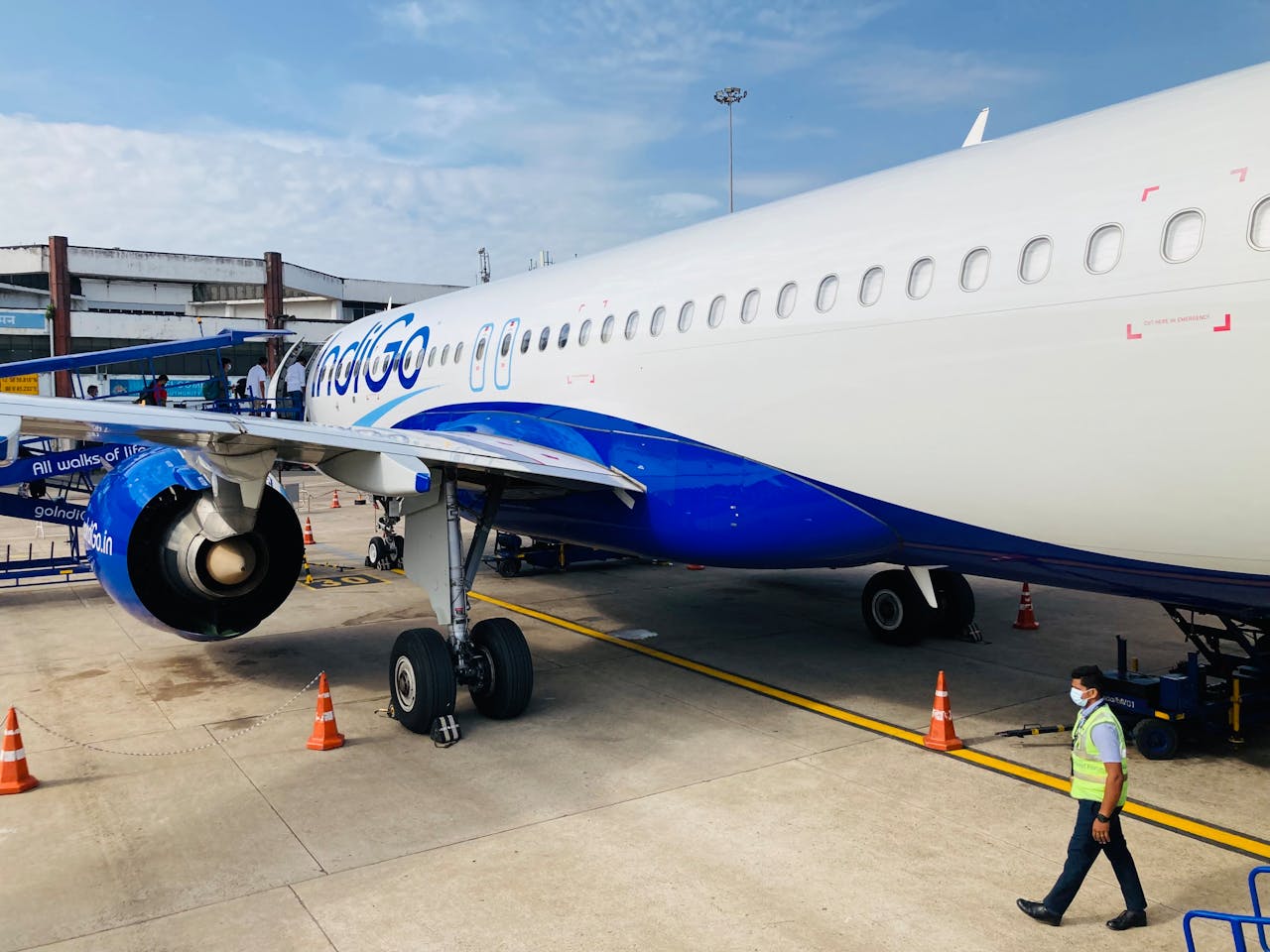
Airlines used to think in hub-and-spoke: big cities, big jets, big drama. Now a new chorus of long-range single-aisle aircraft — think Airbus A321neo/LR/XLR and the Boeing 737 MAX family — is quietly rewriting that playbook. Indian carriers are using these fighters-in-disguise to stitch secondary cities directly to places that once required a wide-body or an inconvenient connection. The result is more direct travel, leaner economics, and a clever way to grow without over-exposing airlines to the wild swings of costs.
Why the tiny-but-mighty jets make sense
Long-range narrow-bodies hit a sweet spot: they burn less fuel per trip than big twin-aisles, need smaller crews, and fit the “long-thin” market — routes with steady but not massive demand. That means airlines can run nonstop flights between, say, Hyderabad and Singapore or Kozhikode and Dammam without hoping a wide-body is suddenly full. For cost-conscious carriers in a volatile macro environment (fuel, forex, you name it), that trade-off—reach for less money—is irresistible.
Who’s flying what where (the fun, useful part)
- IndiGo is aggressively using A321neos and now planning for A321XLRs to open up longer city pairs — examples reported include Mumbai–Istanbul, Mumbai–Nairobi, Delhi–Jakarta, and recent additions such as Hyderabad–Singapore and Bengaluru–Bali. IndiGo also continues to expand long-haul routes using larger types when demand calls (e.g., 787 Dreamliners on some UK services).
- Air India (including Vistara fleet integrations) has placed LR/neo-family jets on medium-range international sectors — for instance Delhi–Hong Kong and services involving Denpasar — enabling flexible capacity matching across markets. The group is blending types so aircraft can be matched more tightly to route economics.
- Akasa Air has rapidly built a Gulf and regional footprint using MAX variants and smaller jets — flying to Doha, Jeddah, Kuwait and nearby leisure hubs while navigating delivery timing and growth headaches. (Yes, growth sometimes feels like a small comedy of errors when new aircraft arrive late; still, the strategy is clear.)
- Air India Express and other LCC arms are leveraging 737-8 MAX jets to plug gaps in Gulf connectivity from secondary Indian cities — an important market for migrant and VFR traffic.
The network effect: more direct city pairs, fewer painful connections
The practical outcome is that more Indian second-tier cities can get direct links to places in East Africa, Southeast Asia, the Gulf and even pockets of Europe and North Africa — bypassing the traditional transfer points. This “directness” attracts leisure travelers, the diaspora market, and business travelers who value time over a marginal fare saving. Data suggests narrow-bodies already operate a large share of India’s international flights under seven hours — evidence that the strategy is not theoretical, it’s happening.

The caveats (because every shiny thing has fine print)
- Passenger comfort & perception: Single-aisle long-haul flights can feel snug compared with wide-bodies. Airlines know this — some retrofit interiors with better IFE, premium seats or slightly different cabin layouts — but there’s a risk that brand perception could suffer if the experience doesn’t meet expectations on 5–7 hour trips.
- Cargo limits: Narrow-bodies carry less belly cargo than wide-bodies, which matters for revenue diversification. Markets that depend on cargo-heavy revenue will still require wide-bodies.
- Airport operations & ETOPS: Extended-range operations need strict ETOPS compliance and smooth airport turnaround systems to make these tight schedules work. Operational discipline becomes the unsung hero here.
Experts’ take — the hybrid thesis
Consultants and ratings analysts are nearly unanimous: the coming decade likely favors a hybrid fleet strategy. Narrow-bodies will drive reach — giving airlines the flexibility to test and grow new city pairs — while wide-bodies will anchor scale, premium product and cargo capacity on high-demand routes. In short: don’t expect a one-size-fits-all swap; expect plurality.
Tech & timing: why 2025 matters
The Airbus A321XLR — with its extra fuel payload and reach compared to earlier neo variants — is the disruptor on the block. Deliveries expected around 2025 (and airlines like IndiGo signaling initial XLR deployments) are a turning point: suddenly single-aisle jets reliably reach farther into Europe, North Africa and East Asia without stepping up to a wide-body. That changes route economics and destination lists in a tangible way.

What travelers should expect (and what’s actually fun about it)
- More direct flights from non-metro Indian cities to international leisure and business destinations. Less airport-hopping. More time sipping chai/coffee in a lounge — or, more realistically, trying to board before a family of five with three suitcases and two carry-ons.
- A wider variety of price-led options: airlines can sustainably operate thinner routes, so you may see more competitive fares on previously niche city pairs.
- A mixed cabin experience: some narrow-body long-haul flights will have nicer interiors and onboard amenities; others will be lean, efficient and no-frills. Read the product description like it’s a menu.
Bottom line: smarter growth, not just bigger wings
India’s carriers are playing chess, not checkers. By using long-range narrow-bodies alongside traditional wide-bodies, they can test new markets, capture direct traffic from secondary cities, and lower unit costs — all while preserving capacity where it truly matters (premium cabins and cargo). If executed well, the hybrid model could make India not just a busy aviation market but a creatively connected one. And for passengers? More doors open from more places — which is good news unless you enjoy layovers for the thrill of collecting passport stamps.
TL; DR
- Long-range single-aisle jets (A321neo/LR/XLR, 737 MAX) let Indian carriers fly medium-demand international routes nonstop.
- IndiGo, Air India (group) and Akasa are leading this push — opening routes from secondary cities to Africa, East Asia, the Gulf and beyond.
- Narrow-bodies reduce unit costs and increase utilization, but passenger comfort and cargo limits remain concerns.
- A hybrid fleet (narrow + wide) is the winning bet for flexibility, scale and premium reach — especially as A321XLR deliveries ramp up around 2025.
- Expect more direct flights out of non-metro India and smarter route experiments — fewer layovers, more choices, and a bit more aviation creativity.
Comment