Aeroflot Instructs Pilots to Turn Brakes Off In Some Airbus & Boeing Aircraft

Radhika Bansal
07 Aug 2023

The world of aviation is a meticulously orchestrated symphony of technology, safety, and precision. Airlines invest significant resources to ensure the seamless functioning of their aircraft. However, a recent development involving Russia's national carrier, Aeroflot, has raised eyebrows within the aviation community. Due to complications in procuring maintenance components for foreign aircraft, Aeroflot finds itself in an unprecedented situation, operating at least nine planes without brakes. This unusual step highlights the challenges airlines can face when supply chain disruptions disrupt routine maintenance procedures.
Maintenance Component Woes: The Complication
Maintaining an airline fleet involves a delicate balance between regular maintenance, component replacement, and operational efficiency. One critical aspect of aircraft maintenance is brake replacement. Brakes are an essential safety feature, ensuring that an aircraft can slow down and come to a safe stop during landing. However, Aeroflot's current dilemma stems from difficulties in obtaining the necessary maintenance components, particularly brakes, for its Airbus and Boeing aircraft.
Turning Off the Brakes: A Controversial Solution
To cope with the shortage of replacement brakes, Aeroflot has taken a controversial and unprecedented approach: instructing its pilots to turn off the brakes on certain aircraft. The Moscow Times reports that since the end of July 2023, the airline has been operating at least nine planes without functioning brakes. These aircraft include four Airbus models (A320, A330, and two A321s) and five Boeing 777s.
Navigating the Risks: Advisories to Pilots
Understanding the gravity of the situation, Aeroflot has not taken this step lightly. The airline's flight operations department has issued advisories to its pilots, outlining the potential risks associated with flying without brakes. These advisories serve as a reminder of the complexities and dangers involved in operating aircraft under such circumstances.
According to a message obtained and published by Aviatorschina, "When the brakes are not deactivated, the aircraft will tend to turn to the side." Keep this in mind, especially while landing on a wet runway with a crosswind!!! There are width restrictions on the runway. The risk of overrunning the runway!!!"
When worn-out parts cannot be replaced promptly, airlines are authorized to operate aircraft with deactivated brakes for a maximum of ten days, according to the publication. Following Russia's invasion of Ukraine, Western nations enacted sanctions that not only restricted the airspaces of the United States, United Kingdom, and EU to Russian aircraft, but also barred aviation companies from servicing or providing replacement parts to the country's aircraft.
As a result, Aeroflot, whose fleet comprises primarily Western-made Airbus and Boeing aircraft, is unable to obtain components and supplies directly from the original equipment manufacturers (OEMs). According to ch-aviation.com, the airline's fleet consists of 295 aircraft, 217 (about 74%) of which are Airbus or Boeing. Aeroflot has apparently begun sending aircraft to Iran for maintenance in order to circumvent these restrictions. Iran is thought to have accumulated vast experience in aircraft maintenance under such conditions after being subjected to harsh sanctions for several decades.
Industry Reaction and Broader Implications
Aeroflot's decision has undoubtedly garnered attention within the aviation industry and beyond. While the airline's efforts to manage the situation are commendable, the incident underscores the vulnerabilities in the global aviation supply chain. The complications faced by Aeroflot could potentially have far-reaching implications for other airlines as well. It prompts a broader discussion about the need for robust supply chain management strategies to prevent such scenarios from arising in the first place.
Conclusion
Aeroflot's current predicament is a testament to the intricate web of challenges that airlines can encounter in their pursuit of operational excellence. While the airline's decision to operate aircraft without brakes might seem unconventional, it highlights the lengths to which carriers may need to go when confronted with supply chain disruptions. The incident serves as a call to action for the aviation industry to reevaluate its supply chain strategies and ensure the consistent availability of critical maintenance components to uphold passenger safety and maintain operational integrity.
(With Inputs from AeroTime)
Read next


In a recent legal development, Indian low-cost carrier Go First's efforts to compel Pratt & Whitney to provide aircraft engines have been thwarted by a US court judgment. The US District Court's decision, handed down by Judge Laura Hatcher, has dismissed Go First's application to enforce a Singapore International Arbitration Centre (SIAC) judgment. This decision comes as a result of the tribunal's final ruling conflicting with its previous interim decision, highlighting the complexities and challenges of cross-border legal proceedings.
Background and Legal Proceedings
In late April, Go Airlines (India) Limited, operating as Go First, initiated legal proceedings by filing a motion in the US District Court to enforce the SIAC arbitration's interim ruling. The case, titled Go Airlines (India) Limited v. International Aero Engines, LLC (case no: 1:2023mc00249), revolves around Go First's attempt to compel Pratt & Whitney, along with some of its subsidiaries, to provide aircraft engines as per the arbitration's interim decision.
Before suspending flights and filing for voluntary administration earlier this year, Go First obtained an interim order from the SIAC requiring Pratt & Whitney to supply at least ten serviceable engines by April 27, 2023, and a further ten spare leased engines per month until December 2023. Go First has consistently maintained that continuing issues with the supply and maintenance of the Pratt & Whitney GTF PW1100G engines fitted to its Airbus fleet forced it to ground a major portion of its fleet, resulting in a financial crisis and eventual insolvency.
International Aero Engines appealed the SIAC's interim ruling in Delaware on May 11, claiming it exceeded the original contractual requirements. It also expressed reservations about Go First's capacity to pay for the engines, referring to the carrier as a "chronic defaulter."
The Role of the Singapore International Arbitration Centre (SIAC)
The SIAC, a renowned institution for resolving international disputes, played a pivotal role in this legal battle. Its arbitration process is designed to provide a neutral platform for parties involved in cross-border disputes to settle their conflicts outside of traditional court systems. Arbitration is known for its efficiency, confidentiality, and flexibility, making it an attractive option for resolving complex international disputes.
Conflicting SIAC Decisions
The complexity of the case became evident when the SIAC tribunal issued a final decision that contradicted its previous interim ruling. This contradiction likely led to the US District Court's decision to dismiss Go First's application for enforcement. The conflicting decisions raise questions about the interpretation of evidence, legal arguments, and the intricacies of international arbitration procedures.
Cross-Border Legal Challenges
The Go First v. Pratt & Whitney case underscores the challenges inherent in cross-border legal proceedings. Differences in legal systems, cultural nuances, and conflicting legal interpretations can complicate the resolution of disputes between entities from different jurisdictions. The case's outcome highlights the importance of clear and precise arbitration clauses in contracts, as well as the need for parties to be prepared for the potential complexities of enforcing arbitration judgments across international boundaries.
Implications for the Aviation Industry
The aviation industry heavily relies on various stakeholders working harmoniously to ensure safe and efficient air travel. Legal disputes, such as the one between Go First and Pratt & Whitney, have the potential to disrupt the industry's equilibrium. Delays in acquiring aircraft engines can impact flight schedules, operational costs, and the overall passenger experience. This case serves as a reminder of the legal intricacies that airlines and aircraft manufacturers must navigate to ensure smooth operations.
Conclusion
The dismissal of Go First's application by the US District Court, based on conflicting SIAC decisions, sheds light on the complexities of cross-border legal proceedings. The case emphasizes the importance of precise arbitration clauses, meticulous legal strategies, and a deep understanding of international arbitration procedures. As the aviation industry continues to evolve, legal disputes like these underscore the need for careful contract drafting and a proactive approach to resolving conflicts in a globalized world.
Read next
Air India - Vistara Merger Progress; Air India CEO Meets India's Antitrust Head
Radhika Bansal
07 Aug 2023

Air India Chief Executive Campbell Wilson has held talks with India's antitrust head on its pending merger with sister airline Vistara, weeks after the watchdog raised concerns about market power, people familiar with the matter said. The Competition Commission of India has been scrutinising the planned merger of Air India, which Tata Group took over last year, with Vistara, a joint venture between Tata and Singapore Airlines. The merged airline would challenge local rival and market leader, IndiGo.
Sharing new details of CCI's concerns, the first source said the watchdog's confidential notice to the airline has raised worries about the combined entity's market power on many international and domestic routes. The CCI also said its initial review showed the market share of the Tata Group could be more than 50% in at least seven domestic markets, raising competition concerns, the person added.
Following a request by the company, CEO Wilson and the General Counsel of Tata Group, Sidharth Sharma, in recent days met India's antitrust chief, Ravneet Kaur, to discuss the ongoing merger process, said two of the four sources. Such meetings are typically held to find a way forward and assuage the CCI's concerns, sources said, declining to elaborate further or be named as the talks are confidential.
It was reported in June that the CCI has been concerned that some Air India-Vistara merged routes and categories - such as business class travel - could have a monopoly. The "CCI has asked how Tata plans to think about pricing strategies ... The (market) power they will have, how will all this affect pricing," said the first person.
The CCI's scrutiny comes amid growing concerns within the industry about a duopoly, with a merged Air India-Vistara and IndiGo controlling more than 75% of the domestic market as smaller rivals such as SpiceJet and Go First struggle. For the first half of 2023, IndiGo's market share stood at 58%, while the Tata Group airlines, including AirAsia India, accounted for 25%.
Air India is yet to respond to CCI's concerns, two of the sources said. Once they do, the watchdog will review their submissions to decide on the merger or has the option to order a broader review if it's not satisfied. Vistara CEO Vinod Kannan said last month Air India-Vistara merger was expected to receive all regulatory approvals by April 2024.
Merger Will Nave No Adverse Impact on Competition
ata Sons-run domestic airlines Air India and Vistara have conveyed to the antitrust regulator Competition Commission of India (CCI) that a proposed merger of the two will not impact competition adversely as rivals are present on most routes that the combined entity will fly, according to a report. The CCI’s decision to review the Air India and Vistara merger will not have any material business impact, although it could delay the process, sources told The Economic Times.
Earlier, CCI had issued notice to the two airlines seeking reasons on why a probe of the impact of the merger should not be initiated. According to competition law, the antitrust body has the power to do a thorough investigation before giving the green light for a merger or acquisition (M&A) in case there are concerns about possible anti-competitive practices about the deal.
If the deal sees the light of day, it will make Air India the country's largest international carrier and second-largest domestic airline. Air India, which Tata Group took over last year, wants to modernise its fleet, operational systems and revenue management.
As the Tata Group plans to put its airlines in sync with each other and consolidate operations, it has come under the regulator's lens. Thus, the two airlines have not been given the expedited permissions sought by them. Moreover, the regulator has asked the two airlines why an investigation of the impact the merger would have on the industry not be conducted, the report said.
The Role of CCI
As per the competition law, the regulator can probe into the matter before giving the green light for a merger or acquisition in case there are concerns about possible anti-competitive practices in the deal. Section 29 of the Competition Act mentions the procedures for the probe of combinations. In CCI parlance, mixtures refer to mergers and acquisitions.
"Where the Commission thinks that a combination is likely to cause, or has caused an appreciable adverse effect on competition within the relevant market in India, it shall issue a notice to show cause to the parties to combination calling upon them to respond within thirty days of the receipt of the notice, as to why investigation in respect of such combination should not be conducted," as per the section.
In case, the regulator is not satisfied with the responses, it can go to the second stage wherein the parties will be asked to make the details of the proposed deal public and comments will be sought. Besides, CCI can seek additional information from the parties before deciding on the deal.
There have also been instances where parties to a combination submitted remedial measures to address anti-competitive concerns and after accepting them, CCI has given its conditional approvals. Additionally, the CCI can request further information from the parties involved before deciding on the merger.
In November 2013, the CCI approved a proposal by Gulf carrier Etihad to purchase 24% of grounded Jet Airways. The CCI then cited the insignificant increase in market share forecast on India-UAE routes as one of the reasons for the approval.
(With Inputs from Reuters)
Read next

In a significant announcement on Friday, August 4, 2023, Airbus, one of the world's leading aircraft manufacturers, revealed that its aircraft deliveries had soared by 11% during the initial seven months of the year. The company's steadfast commitment to innovation and excellence has resulted in this remarkable achievement, positioning Airbus to potentially achieve a record-breaking 720 deliveries by the end of the year.
Rapid Growth: A 65 Aircraft Delivery in July
According to Airbus's monthly commercial update, the manufacturer celebrated the delivery of 65 aircraft in the month of July alone. This notable achievement comes on the heels of a slower start to the year, implying a sharp acceleration in the company's delivery rate. This remarkable growth is a testament to Airbus's determination to excel and its ability to adapt to market dynamics.
Recovery and Progress Since May
The first few months of 2023 witnessed a relatively modest pace in terms of aircraft deliveries for Airbus. However, starting in May, the company experienced a pronounced uptick in its delivery numbers. This robust recovery is a reflection of Airbus's agile response to challenges and its dedication to fulfilling customer demands promptly.
Order List
Airbus also announced 60 gross orders in July, including previously announced agreements with Pegasus Airlines for 36 aircraft and Icelandair for 13 A321XLR, the planemaker's newest single-aisle type. So far this year, it has booked 1,140 gross orders or 1,101 after cancellations, with record demand from India dominating. New orders included a total of ten A350-900 long-haul aircraft from undisclosed clients, as well as one from IAG for Iberia.
IAG said last week that it was converting six Boeing 787-10 options owned by British Airways and one Airbus A350-900 option held by Iberia into firm orders, as well as taking up new options for another six 787-10. Airbus data also revealed that three A350-900 planes had been cancelled, without the name of the buyer ever being identified. Over and above the 17 privately owned planes that have yet to be delivered, about 7% of the outstanding Airbus order backlog of almost 8,000 airplanes remains unidentified.
Ambitious Target: Aiming for 720 Deliveries in 2023
Airbus's announcement doesn't merely highlight past achievements; it also underscores the company's ambitious aspirations for the remainder of 2023. With a target set at an impressive 720 aircraft deliveries for the year, Airbus has set the bar high. This goal serves as a testament to the company's confidence in its manufacturing capabilities, customer relationships, and market demand.
Earnings Report and Strategic Adjustments
During its recent half-year earnings report, Airbus reaffirmed its commitment to achieving the remarkable delivery goal of 720 aircraft for 2023. Despite this optimism, the company also made a strategic decision to revise its interim target for underlying output. Previously aiming to produce 65 narrow-body aircraft per month by the end of 2024, an increase from the current approximately 47 per month, Airbus has now chosen to reassess this target. This adjustment reflects the company's adaptability and responsiveness to evolving market conditions.
Conclusion
Airbus's announcement of an 11% increase in deliveries during the first seven months of 2023 signifies not only a remarkable achievement but also a manifestation of the company's dedication to progress. With a strong surge in deliveries since May and a goal of achieving 720 deliveries by the end of the year, Airbus is poised to leave an indelible mark on the aviation industry in 2023. The manufacturer's ability to set ambitious targets, respond to challenges, and strategically adjust its plans positions it as a key player in shaping the future of air travel.
(With Inputs from Reuters)
Read next
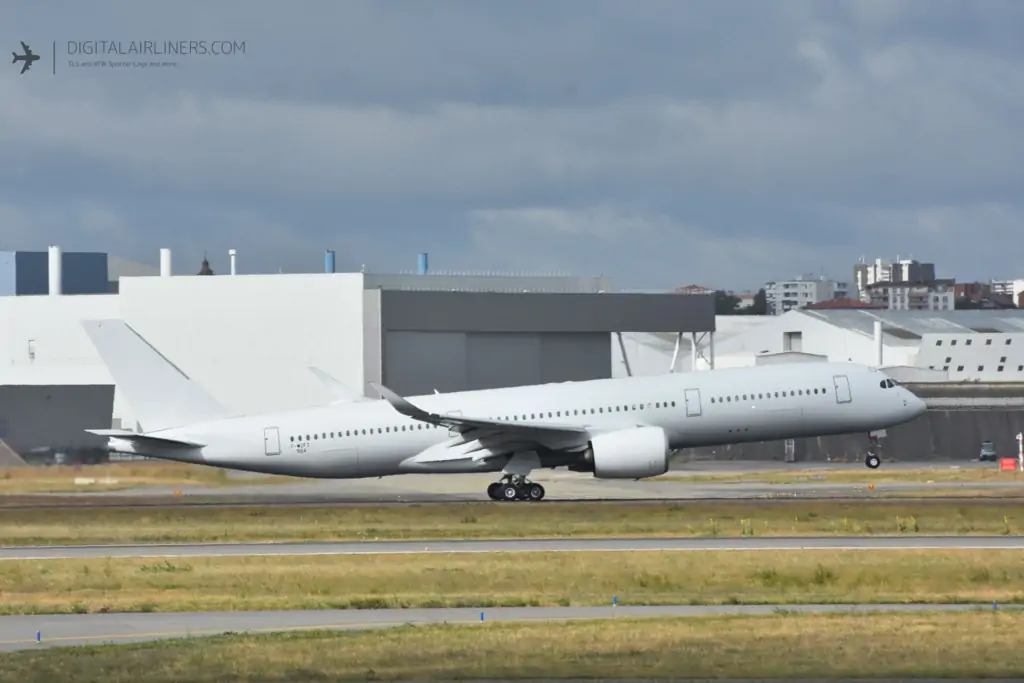
On a historic day for Air India, the airline's first Airbus A350-900 embarked on its inaugural flight, marking a significant milestone in the carrier's modernization efforts. Planespotters and aviation enthusiasts gathered at Toulouse Blagnac Airport (TLS) to witness and capture the momentous event, as the sleek white-liveried aircraft took to the skies.
A Glimpse of the Iconic Aircraft
The Airbus A350-900, registered under the test code F-WZFZ, displayed its elegance and advanced engineering as it gracefully departed from TLS at precisely 10:14 AM local time (UTC +2). The aircraft's maiden flight not only showcased Air India's commitment to enhancing its fleet but also represented a major step forward in aviation technology.
The aircraft, whose Manufacturer Serial Number (MSN) is 554, was not painted in Air India's livery, according to ch-aviation.com data. Instead, it was painted completely white. According to Planespotters.net, the aircraft was initially slated for Aeroflot, but the Russian airline was unable to accept possession owing to sanctions imposed upon Russia and its aerospace sector as a consequence of the unlawful invasion of Ukraine.
Soaring to New Heights
During its inaugural flight, the Airbus A350-900 achieved a commendable feat by reaching an impressive peak altitude of 43,000 feet (13,106.4 meters). This remarkable achievement occurred just south of the departure point, underscoring the aircraft's exceptional performance capabilities and reaffirming its suitability for long-haul journeys.
The Airbus A350-900: Redefining Air Travel
The Airbus A350-900 is a cutting-edge wide-body aircraft that boasts remarkable fuel efficiency, passenger comfort, and advanced technology. Equipped with state-of-the-art features, the aircraft offers passengers an enhanced travel experience, including quieter cabins, larger windows, and improved cabin pressure. Its long-range capabilities make it a preferred choice for airlines aiming to connect distant destinations seamlessly.
Air India's Strategic Move
The acquisition of the Airbus A350-900 aligns with Air India's strategic vision to modernize its fleet and provide world-class service to its passengers. By introducing this next-generation aircraft, Air India not only enhances its operational efficiency but also positions itself as a leading player in the competitive aviation industry. When Air India confirmed its enormous 250-aircraft order from Airbus at the Paris Air Show in June 2023, the manufacturer stated that the first A350-900 deliveries should commence "before the end of 2023." The order for 250 aircraft is split between 140 A320neo, 70 A321neo, six A350-900, and 34 A350-1000.
A Bright Future for Air India
As Air India's first Airbus A350-900 takes to the skies on its inaugural flight, it marks the beginning of a new era for the airline. The aircraft's advanced features, impressive performance, and commitment to sustainability set the stage for Air India's continued growth and success. With a renewed focus on providing exceptional travel experiences, Air India is poised to strengthen its position in the global aviation landscape.
Conclusion
The inaugural flight of Air India's first Airbus A350-900 is a momentous event that signifies the airline's dedication to embracing innovation and delivering excellence to its passengers. As the aircraft reaches new heights and embarks on its journey, it symbolizes Air India's aspirations for a bright and prosperous future in the ever-evolving world of aviation. This historic occasion reminds us of the remarkable progress aviation has made and the promising horizons that lie ahead.
Read next
SAUDIA to Expand its Fleet With Airbus A321 Neo Aircraft; Focus on International Growth
Radhika Bansal
04 Aug 2023
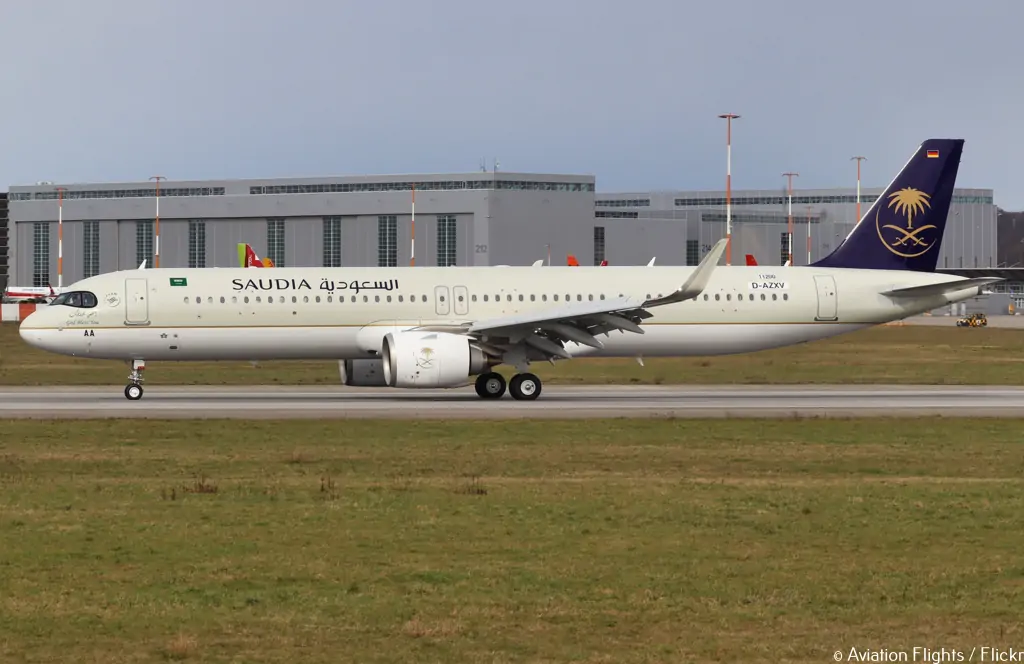
SAUDIA, the national flag carrier of Saudi Arabia, announced the expansion of its fleet with the addition of a new aircraft type, Airbus A321neo under the slogan “A neo-way of flying.” This feeds into SAUDIA’s expansion plans as the airline aims to add 20 more A321neo Aircraft to its fleet by 2026.
The A321neo aircraft is a narrow-body airliner part of the A320 family, the world’s most popular single-aisle aircraft family and airlines’ preferred choice with airlines around the world due to its reputation for high performance and superior comfort. The aircraft offers new levels of performance, seating 180 to 220 passengers in a typical two-class interior layout.
The main reason behind the purchase of the aircraft is its ability to run on much less fuel. The A320 family of aircraft have saved 20 million tons of Co2 since the A320neo came into service globally in 2016. By incorporating Sharklets, new fuel-efficient engines and the latest cabin innovations, the A320neo has also seen a 20% decrease in fuel burning and Co2 emissions, a 50% reduction in noise footprint, a 5% lower airframe maintenance costs and 14% lower cash operating costs per seat versus previous generation aircraft.
Captain Ibrahim Koshy SAUDIA CEO said: “We are excited to expand our fleet with the new Airbus A321neo aircraft. Our priority is to offer the best guest experience possible and to bring the world to Saudi Arabia and we will continue to purchase state-of-the-art aircraft from the world’s top manufacturers to deliver on that promise. We commend Airbus for continuously looking to improve the performance of their aircraft, which goes in line with SAUDIA’s ambition to provide the best guest experience possible while contributing to making aviation more sustainable.”
This partnership highlights the trust and historic relationship between SAUDIA and Airbus. It also feeds into the Saudi Aviation Strategy objectives which aim to turn Saudi Arabia into a leader in the global industry, by enhancing the customer experience, improving safety, and promoting environmental sustainability. The strategy aligns with SAUDIA’s expansion goals as the airline works towards bringing around 330 million visitors to the Kingdom by 2030.
By working with Airbus and expanding its fleet, SAUDIA is working towards its goal of becoming an industry-leading airline. expansion of SAUDIA’s fleet will also help create new job opportunities for pilots, cabin crew, and other operational positions.
Focus on International Growth
Saudi Arabian Airlines (SAUDIA) continues to implement its operational plan for Summer 2023 by providing over 7.4 million seats for domestic and international routes during July and August, a 10% increase compared to the same period in 2022. The airline will operate more than 32,400 flights, reflecting a 4% increase. These measures aim to meet high demand during peak seasons and ensure smooth operations, efficient reservations for scheduled and seasonal destinations, and streamlined processes at airports.
For international flights, SAUDIA is providing more than 4.2 million seats, achieving a 16% increase. Additionally, the airline is introducing over 14,800 flights, reflecting a 15% increase. On domestic routes, over 3.2 million seats will be available through 17,600 flights. The operational plan for the summer of 2023 is continuously monitored by a dedicated team from Saudia Aerospace Engineering Industries (SAEI) to evaluate its performance.
Earlier this year, SAUDIA Group announced the addition of 25 new international destinations, expanding its network to over 100 destinations. This expansion aims to provide more options for travellers and to connect the world with Saudi Arabia. As part of the global SkyTeam alliance, guests can access 1,000 destinations in 170 countries and enjoy over 790 first-class and business-class lounges worldwide.
Comment