
FedEx Pilots' Union Resumes Contract Negotiations Amidst Leadership Changes

Abhishek Nayar
04 Nov 2023
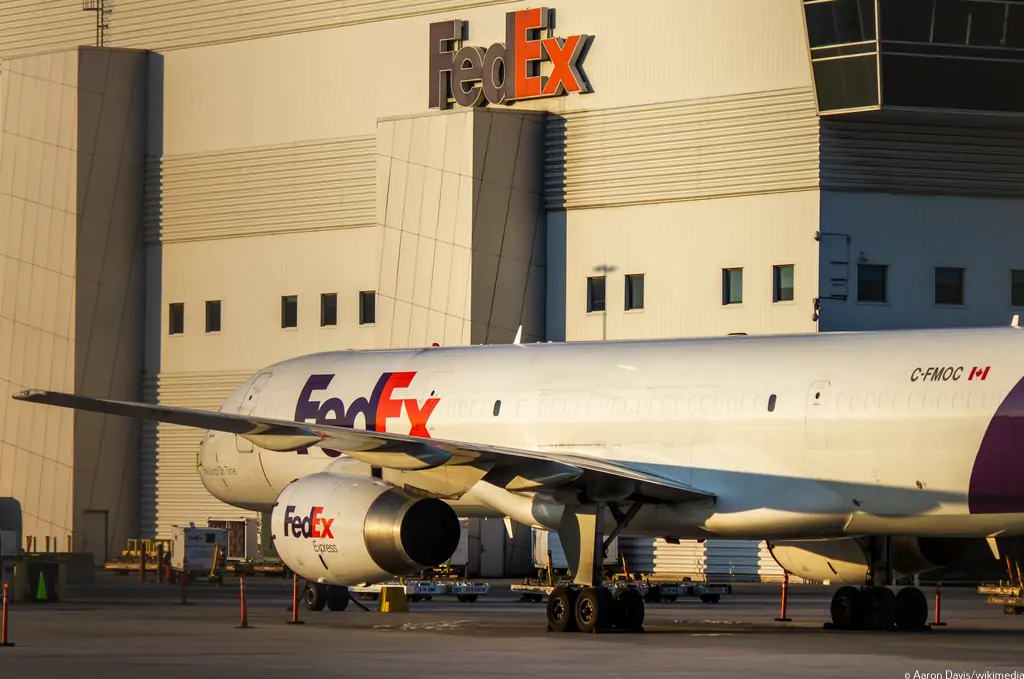
On Thursday, November 2, 2023, the union representing over 6,000 FedEx pilots made a significant announcement: contract negotiations with the delivery giant would resume the following week. This development follows the rejection of a proposed deal by union members back in July and a change in leadership within the FedEx Master Executive Council.
New Leadership at FedEx Master Executive Council
The governing body of the Air Line Pilots Association (ALPA) within FedEx, known as the FedEx Master Executive Council, elected Billy Wilson as its new chair on Monday, October 30, 2023. This change in leadership reflects the union's commitment to addressing the concerns of its pilot members and finding common ground in upcoming negotiations.
National Mediation Board's Role
To facilitate the negotiation process, the National Mediation Board has agreed to host the first negotiating session between ALPA and FedEx management. The session is scheduled to take place in Memphis on November 6-7. The involvement of the National Mediation Board demonstrates a commitment to reaching an agreement that benefits both parties.
Pilot Rejection of Previous Proposal
The tentative proposal presented by FedEx management, which was ultimately rejected by pilots, included a 30% salary raise over four and a half years and a 30% boost to their legacy pensions. The rejection signaled the pilots' dissatisfaction with the terms and their desire for more competitive compensation.

Demand for Competitive Compensation
Billy Wilson, the newly elected chair of the FedEx Master Executive Council, has been vocal about the need for compensation that aligns with industry standards. He argues that other commercial pilots have secured substantial raises, leveraging the current staff shortages in the industry.
Comparison with American Airlines
An illustrative example comes from American Airlines, where pilots represented by the Allied Pilots Association (APA) ratified a deal in August, resulting in a compensation increase of over 46% over the four-year duration of their contract. This remarkable increase highlights the growing bargaining power of pilots in the current aviation landscape.
UPS's Response to Industry Challenges
Meanwhile, FedEx's main rival, United Parcel Service (UPS), has taken a different approach to address the challenges in the industry. In response to slumping demand for air-based delivery services, UPS is offering early retirement packages to its pilots. This strategy aims to reduce costs while adapting to shifting market conditions.
Conclusion
The decision by the FedEx pilots' union to resume contract negotiations with new leadership signals a commitment to addressing the concerns and demands of its members. The rejection of the previous proposal and the call for competitive compensation indicate the pilots' desire to secure a fair deal. With the involvement of the National Mediation Board, the upcoming negotiations will be a crucial step in determining the future of pilot compensation within FedEx. As the aviation industry continues to face challenges and staff shortages, the bargaining power of pilots is on the rise, as exemplified by the recent deal secured by American Airlines pilots.
With Inputs from Reuters
Read next
Go First's Aircraft & Engines can be Returned to Lessors - DGCA to Delhi HC

Radhika Bansal
03 Nov 2023
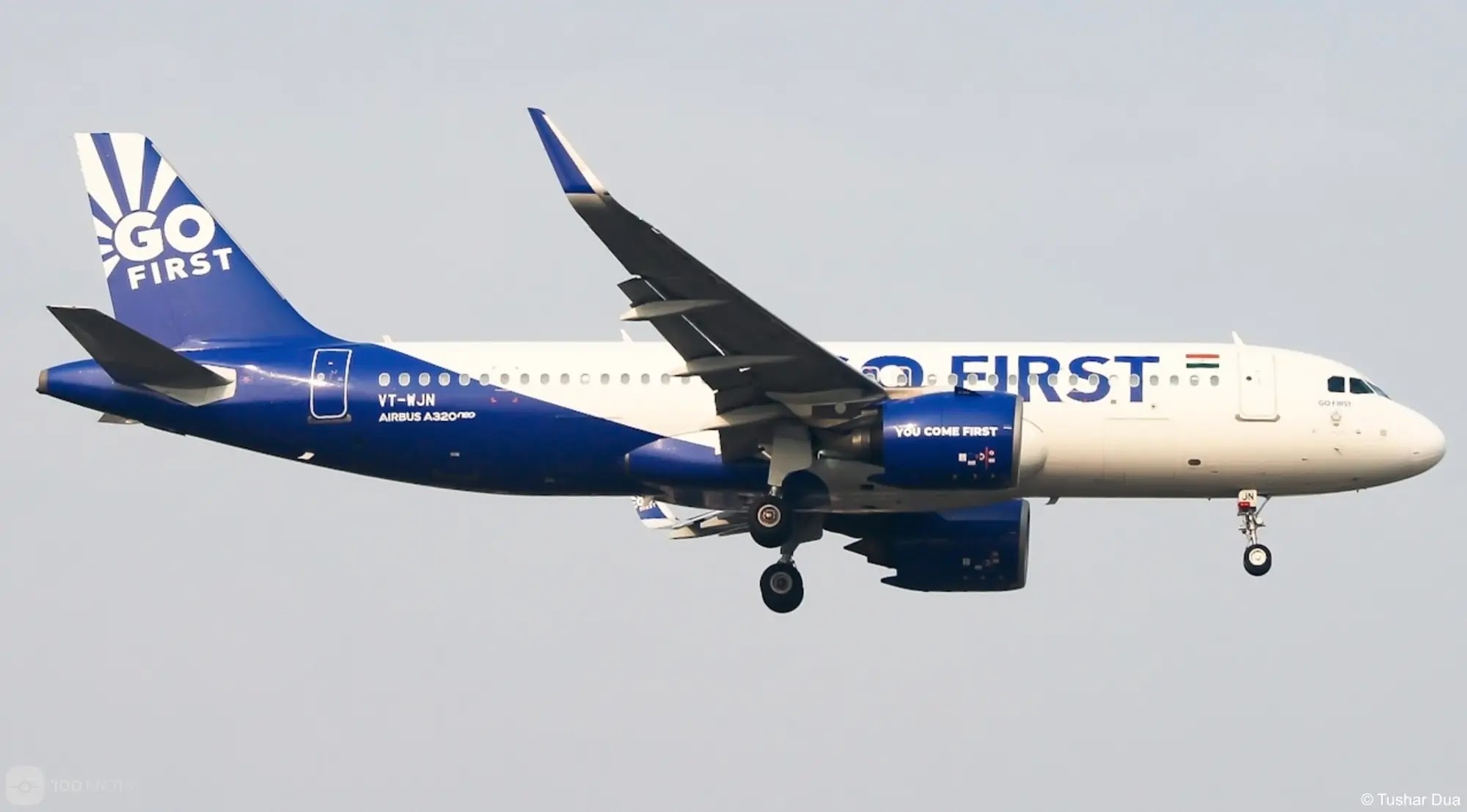
In a move that may further worsen Go First's chances of revival, the Directorate General of Civil Aviation (DGCA) has told the Delhi High Court that the airline's aircraft and engines can be returned to the lessors.
The regulator, in a filing, said that the amendment in the insolvency law that exempts aircraft objects from the ambit of the moratorium will be applicable retrospectively. The exemption under the Insolvency and Bankruptcy Code (IBC) came against the backdrop of various aircraft lessors launching legal battles to repossess planes leased to the grounded Go First, which stopped flying in early May and is undergoing an insolvency resolution process under the IBC.
On October 3, the corporate affairs ministry, through a notification, exempted aircraft objects registered in the international registry from the applicability of the moratorium under the IBC.
"It is submitted that the executive's notification is procedural and a necessary adjunct to a section in legislation, i.e., section 14(1) of IBC in this case, it needs to be given effect from the date on which the section comes into force," the filing read.
"As such, the above-mentioned notification was issued u/s 14(3) of the IBC 2016, and would have to be considered to have a retrospective effect," the aviation regulator said. However, DGCA said that since Go First's case is pending before the court, it "shall await the appropriate direction of this court before proceeding in the matter....the provisions of sub-section (1) of section 14 of the Insolvency and Bankruptcy Code, 2016 (31 of 2016), shall not apply to transactions, arrangements or agreements, under the Convention and the Protocol, relating to aircraft, aircraft engines, airframes and helicopters," as per the notification dated October 3.
Jindal Power to Withdraw from Bid
Section 14 of the IBC deals with the power of adjudicating authority (NCLT) to issue a moratorium when admitting a company into the insolvency resolution process. According to a report by the Economic Times (ET), Jindal Power, which had shown its interest in the airline, may not go ahead with its financial bid.
On October 19, the Delhi HC asked DGCA to file a response on whether or not notification exempting aviation leases from moratorium under the Insolvency and Bankruptcy Code, 2016, applies to the Go First case. The HC was hearing a case by aircraft and engine lessors of grounded airline Go First against DGCA for de-registration of their aircraft. The case is expected to be taken up for hearing on November 3.
Section 14 of the IBC deals with the power of adjudicating authority (NCLT) to issue a moratorium when admitting a company to the insolvency resolution process. Once a moratorium is imposed, activities such as institution of suits, continuation of pending suits, execution of judgments, transferring/disposing of assets and recovery or enforcement of security interest are prohibited.
As a result of this notification, a moratorium will not include agreements relating to aircraft, aircraft engines, airframes and helicopters. This would mean that aircraft, engine and helicopter leased and other agreements will not be bound by a moratorium.
The National Company Law Tribunal (NCLT) had admitted Go First to insolvency on May 10 after the airline filed for it voluntarily.
(With Inputs from The Economic Times)
Read next
Air India Express Takes Over AirAsia India as the Latter Brand Fades Away
Radhika Bansal
03 Nov 2023
The AirAsia India brand no longer exists from October 31, 2023 onwards. AirAsia India was launched in June 2014 and was a joint venture between the Tata Group and AirAsia Berhad. It had a turbulent journey due to the alleged control by the Malaysian partner. The flights are now operated under the brand AIX Connect before the legal merger into Air India Express is completed.
Things started clearing up only when Tatas decided to buy out AirAsia’s stake and decided to merge it with Air India Express (which they acquired last January) to create a mega low-cost carrier (LCC) as part of the Air India family. These two LCCs’ merger has been approved by the Competition Commission of India and is on track for this year’s end.
Aloke Singh, MD of Air India Express and AIX Connect wrote on LinkedIn - “The AirAsia India brand was sunset yesterday (Oct 31). Take a bow, to all who worked hard to build the India franchise of this amazing brand, and represented what the brand stood for. A vibrant, new brand now takes its place, with ambitions of fulfilling the aspirations of a new India. As we enter a new phase of our integration and transformation journey, it’s a privilege to work alongside an extraordinarily talented set of people, across two organisations, achieving one milestone after another. To new beginnings!”
Recently Aloke Singh also shared the vision the Tata Group has for the upcoming mega LCC — “providing seamless connections on Air India’s global network; a huge fleet; best in class value and warmth of Indian hospitality” with hot meals. For this mega LCC, 190 Boeing 737 MAX aircraft have already been ordered.
Air India Express' New Brand Identity
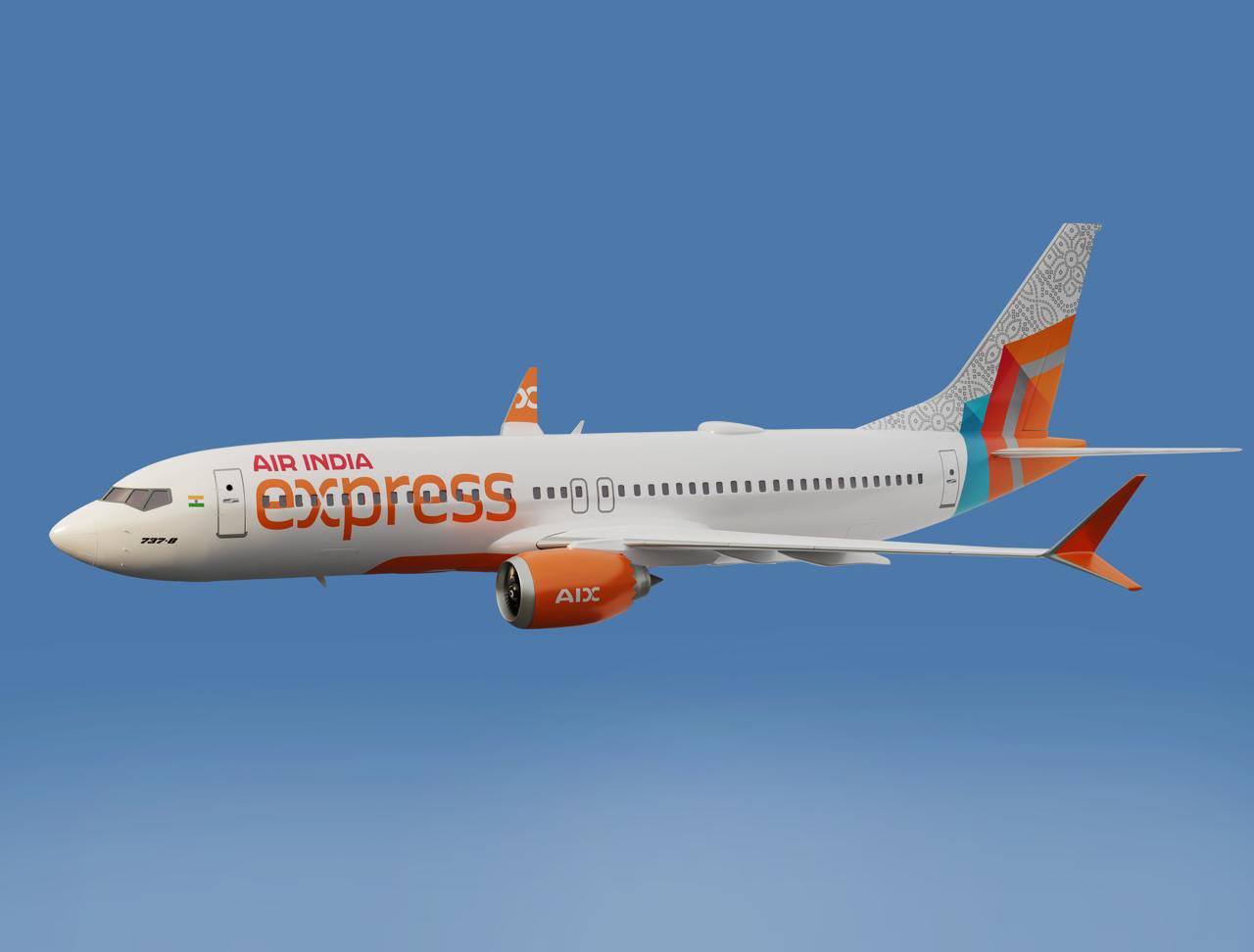
Air India Express unveiled the unified brand identity and a new aircraft livery inspired by arts and crafts heritage on its new Boeing 737 Max aircraft on October 18. The airline’s new visual identity features an energetic and premium colour palette of orange and turquoise. The livery of the first new Boeing 737-8 aircraft showcased at the launch is inspired by the Bandhani textile design. The upcoming aircraft being inducted will feature designs inspired by other traditional patterns including Ajrakh, Patola, Kanjeevaram, Kalamkari, etc, showcasing India’s artistic diversity.
“Our resolute vision encapsulates our key differentiators - making meaningful connections, delivering unique experiences and providing best-in-class value with Indian warmth. Our ambitions will ride upon our huge fleet and network expansion, in the domestic Indian market as well as short-haul international region - Unlocking synergies with the merger of the two entities, and network integration with Air India; Growth and expansion, for a meaningful market presence as well as cost-efficiencies; and achieving excellence in all areas, becoming a preferred brand for a confident new India,” Aloke Singh said during the launch of the new livery.
For the time being, the airline will retain the two designator codes (IX and I5) that are used for flight numbering. However, the services, sales and distribution will be done under the Air India Express branding.
Air India Express began as a low-cost arm of Air India in 2005 focusing largely on routes between South India and West Asia. At present, it has a fleet of 28 Boeing 737 planes which include two new Boeing 737 Max planes. AirAsia India which is being merged with Air India Express has 26 Airbus A320 aircraft.
“With 50 aircraft set to be inducted into the fleet over the next 15 months, we double in size in a short period. Over the next 5 years, we aim to grow to a fleet of about 170 narrow-body aircraft, with a network spanning domestic India and short-haul international markets,” Singh said.
Read next
Here is how Quantum Computing will revolutionize Global Air Cargo Operations

Jaideep Mirchandani
03 Nov 2023

Global air cargo operations, with their intricate logistics and the need to adapt to ever-changing conditions, present a multifaceted challenge for the aviation industry. With the explosion of e-commerce, these challenges have amplified, creating the need for a paradigm shift led by new technology like quantum computing. Though still nascent, this cutting-edge technology, has the potential to revolutionize various industries, including aviation, by processing complex data at unprecedented speeds.
‘Quantum computing, with its unmatched computational capabilities, is sure to untangle the complications of supply chain management, capacity optimization, security, documentation, & permission, as well as basic tracking for operators and customers. I look forward to a tech-based solution that can boost operations globally in a sustainable manner,’ said Jaideep Mirchandani, Chairman of aviation conglomerate Sky One FZE.
By using the principles of quantum mechanics to process and store data in a fundamentally different way from classical computers - it has the potential to revolutionize the industry. A recent report published by the European Commission stated that, when used to optimize airline schedules, quantum computing can create efficient travel plans for thousands of passengers, making journeys quicker, more cost-effective, and fuel-efficient.
While practical, large-scale quantum computers are not yet widely available, researchers and companies are working on building more powerful and accessible systems “It is expected to have a significant impact on aviation in the future, from calculating the best routes for fuel consumption to cargo optimization and logistics. Another aspect is the security and documentation of cargo to ensure not just permissions but also live tracking. Global air cargo needs the support of integrated solutions and advanced computing, which is sure to give companies a competitive edge in an industry where effective logistics are crucial for success,” Mr. Mirchandani added.
Recently, Quantum South, a quantum computing company, released the newest version of its cargo optimization software, which employs quantum-inspired algorithms to ascertain the optimal strategy for packing a consignment into an aircraft. With the help of quantum algorithms, the software considers multiple interrelated factors affecting optimal loading, such as maximum weight and length, the center of gravity, sheer, and airframe shape, ensuring compliance with necessary restrictions.
“The positive response within the airline industry to such software 0points to an exciting outlook for using advanced quantum technology and working towards increasing operational efficiency. We expect more such tools to propel air cargo transportation towards a more efficient and environmentally sustainable future," added Mirchandani.
A recent 'Markets and Markets' research, the global quantum computing market is projected to be valued at US$ 866 million in 2023 and is anticipated to reach US$ 4,375 million by 2028, exhibiting an impressive CAGR of 38.3 percent over the next five years.
Mirchandani reiterated that with its capacity to process vast amounts of data rapidly, quantum computing can aid airlines beyond just number-crunching. Regarding recent developments in which technical giants like IBM are launching a weather forecasting system integrated with quantum computing, Mr. Mirchandani noted, “Quantum-based precise weather forecasting will also help cargo airlines avoid adverse weather conditions and minimize delays."
While the quantum computing ecosystem is still evolving, reports indicate that major aircraft manufacturers have already established partnerships with computing companies to undertake aircraft-loading projects jointly. These initiatives primarily aim to leverage quantum technology in the aerospace services industry, focusing on enhancing fuel efficiency and cargo loading. Sky One FZE Chairman added that, ‘Once the early use cases begin to emerge, we can analyze the positive effects of such initiatives across various facets of the aviation industry and implement them,” concludes the aviation visionary.
Jaideep Mirchandani, Chairman of aviation conglomerate Sky One FZE, hopes to see the aviation industry harnessing the latest technologies like quantum computing to solve complex challenges of Global Air Cargo and change the future of aviation with improved inventory management, minimizing waste, and enhance overall efficiency.
Read next
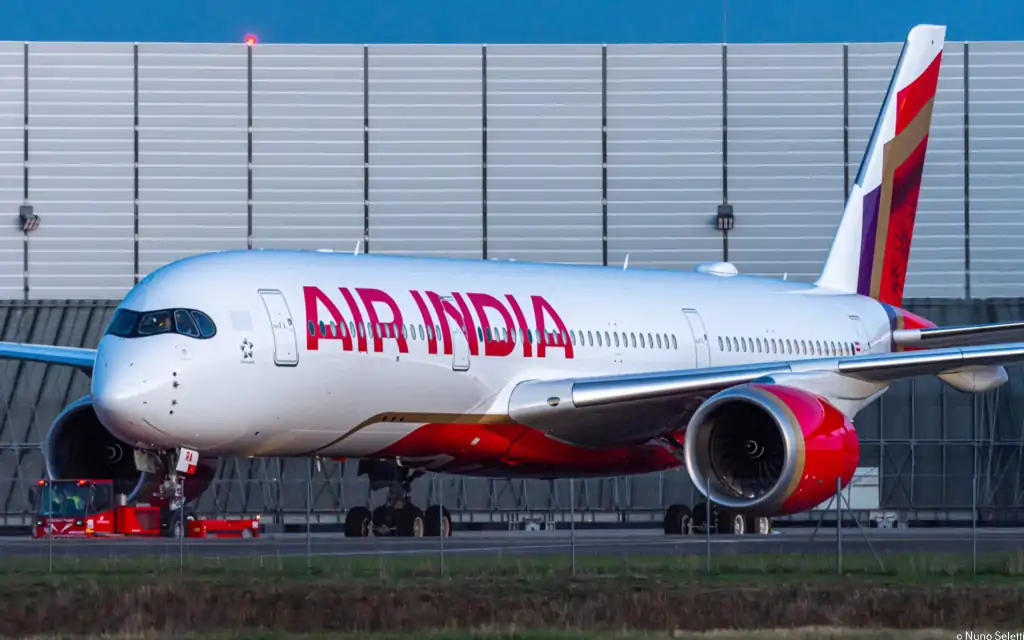
India's aviation industry is experiencing a remarkable transformation, making it one of the most dynamic and promising sectors in the country. With an unprecedented surge in aircraft orders, airport expansions, and growing middle-class aspirations, India's aviation sector is taking off.
The Growth Spree
Indian Airlines Lead the Way
India's largest airlines have placed staggering orders for nearly 1,000 jets, representing a significant financial commitment to a spending spree unmatched in the aviation world. This surge in investment is a testament to the rapid expansion of India's aviation sector, despite the country's historical reliance on trains. Notably, this massive aviation build-out is crucial in India's quest for a more prominent global role.

Meeting Middle-Class Aspirations
Balancing Growth and Profit
As India climbs the ranks of the world's largest economies, the aviation sector plays a crucial role in accommodating the burgeoning aspirations of its middle class. While air travel remains financially inaccessible to most Indians, a substantial percentage still amounts to millions of individuals eager to access domestic and international destinations for business and leisure. According to Kapil Kaul, CEO of CAPA India, the next two to three years are critical for the sector to achieve profitable growth, as previous growth has been largely profitless.
Economic Implications
Cargo, Investment, and Tourism
The effects of India's aviation spending spree extend far beyond the sector itself. Cargo transport accompanies the surge in passenger traffic, and foreign investment tends to follow closely. With an increased number of airports and more accessible routes, India is positioning itself as an attractive destination for international tourists. Low-cost carriers are expanding their networks to accommodate India's demand for foreign tourism, opening up opportunities for countries like Azerbaijan, Kenya, and Vietnam.

IndiGo Route Map
Infrastructure Development
Expanding Beyond Metropolitan Areas
India's airport infrastructure expansion is not limited to its premier metropolitan areas. Under the leadership of Prime Minister Narendra Modi, the number of airports has doubled in the last nine years, with plans to reach at least 230 by 2030. The government has invested heavily in airport development, with promises of more investments in the future. This expansion aims to make air travel more accessible to a broader section of the population.

Noida Airport Cargo Terminal
Challenges and Opportunities
Competition and Supply Shortages
The Indian aviation landscape is experiencing a scarcity of competition, primarily due to the emerging duopoly between IndiGo and Tata-led airlines. Smaller competitors have struggled, leading to bankruptcy and flight cancellations. Pilot shortages have also posed challenges. However, these supply shortages may be seen as a reflection of the sector's growth potential rather than a major setback.
Global Impact
Changing the Future of Aviation
With India's aviation growth steady at about 15 percent a year before the pandemic, the sector is poised to change the future of aviation worldwide. If the benefits of this growth can be distributed more equitably throughout the economy, it may set a precedent for other sectors as well.
Conclusion
India's aviation sector is undergoing a remarkable transformation, driven by unprecedented aircraft orders, airport expansions, and the aspirations of a growing middle class. While challenges remain, the growth of this sector holds the potential to reshape not only the Indian economy but also the global aviation industry. As India soars to new heights in aviation, the world watches anxiously.
With Inputs from The New York Times
Read next

Air travel has revolutionized the way we connect with the world, offering unparalleled convenience and speed. However, the safety of passengers and crew during these flights is of paramount importance.
A recent incident involving Air India has brought to light a critical safety lapse concerning the supply of emergency oxygen on a nonstop flight from Delhi to the United States. This incident underscores the vital role that oxygen plays in aviation and highlights the necessity of strict adherence to international regulations and safety standards.
The Importance of Oxygen in High-Altitude Flight
Oxygen is an essential element for human life, and its availability becomes crucial when flying at high altitudes. As an aircraft ascends, the decrease in air pressure reduces the amount of oxygen available for passengers and crew. To mitigate the risk of hypoxia (oxygen deficiency) at high altitudes, aircraft cabins are either pressurized to maintain a lower-altitude environment or equipped with supplemental oxygen systems.
At cruising altitudes commonly flown by commercial air transport aircraft, the loss of cabin pressurization can rapidly lead to incapacitation. The concept of "Time of Useful Consciousness" highlights the diminishing window of opportunity for passengers and crew to take corrective action as altitude increases.

Regulations and International Standards
National regulations for the provision and use of supplemental or emergency oxygen systems in aviation are based on the guidance provided in Annex 6 of the International Civil Aviation Organization (ICAO) Standards and Recommended Practices (SARPS). These guidelines categorize requirements based on the type of aircraft and the altitude at which the flight is conducted.
Key regulations stipulate that each aircraft must carry enough oxygen to provide a minimum of 10 minutes of oxygen for each occupant in the event of cabin depressurization. Additionally, large airliners are required to have procedures in place to ensure that both crew members and passengers are trained in the use of oxygen equipment and emergency procedures.

Oxygen System Requirements in India
Most aircraft are equipped with oxygen cylinders that can supply oxygen to overhead masks for 12-15 minutes per passenger. This provides sufficient time for a descent to 10,000 feet in case of cabin depressurization. However, when flying over high-altitude regions such as the Hindu Kush, additional oxygen cylinders are necessary to provide oxygen for 25-30 minutes. This is because flights may need to operate at higher altitudes for an extended period before safely descending to 10,000 feet.
Air India's Response
Air India, recognizing the need for extra oxygen supply on flights over the Hindu Kush, had taken necessary precautions for this specific route. Their older Boeing 777 aircraft were equipped with the required additional oxygen cylinders. However, a critical error occurred when a newer Boeing 777 aircraft lacking these essential supplies was mistakenly deployed for a nonstop flight to the United States.
The airline, upon realizing its mistake, promptly diverted the flight along a longer route that didn't require overflying the Hindu Kush. Flying over this mountain range without the necessary supplemental oxygen poses a significant safety risk, as the peaks can reach elevations of 19,000-26,000 feet, requiring 22-30 minutes of supplemental oxygen before safely descending to 10,000 feet.
Air India's Commitment to Safety
Air India has emphasized that passenger and crew safety remains their top priority, and they have stated that there is no compromise on safety. The airline had prepared for the Hindu Kush route in 2021, including simulator drills, trial runs, and special precautions to ensure the safety of all on board.
Conclusion
The recent incident involving Air India serves as a stark reminder of the critical importance of oxygen supply in aviation and the need for stringent adherence to international regulations and safety standards. Ensuring that aircraft are properly equipped with emergency oxygen systems and that crews and passengers are adequately trained in their use is vital for the safety of all those who take to the skies. Air India's commitment to safety is commendable, and it underscores the importance of a proactive approach to aviation safety to prevent such incidents in the future.
With Inputs from Times of India, Skybrary, Angle of Attack
Comment