
What Happens to Your Vistara Flight After the Merger with Air India? Here’s What You Need to Know!

Abhishek Nayar
08 Oct 2024
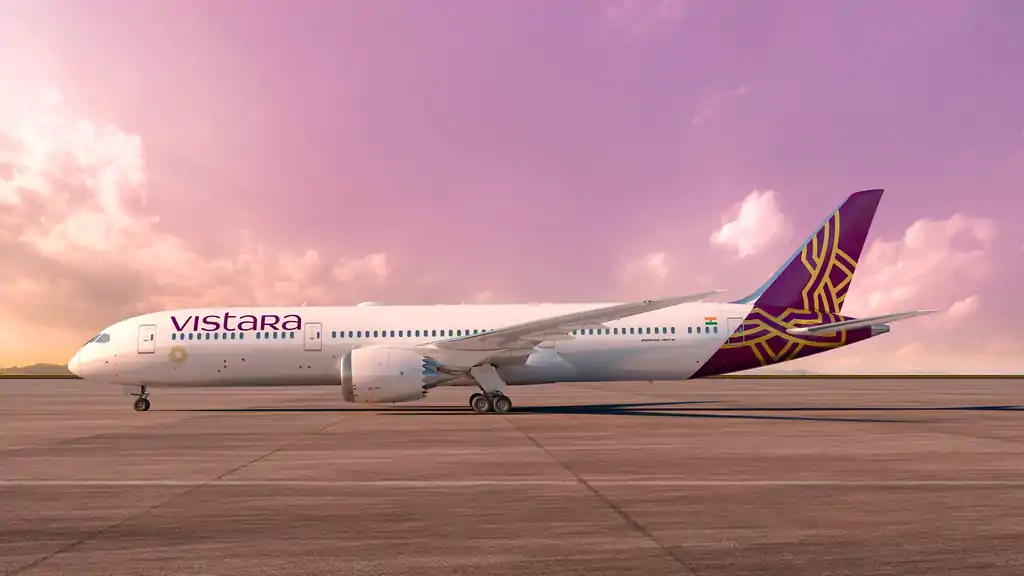
As Vistara prepares to merge with Air India in a significant step towards expanding its footprint, many customers are left wondering how their bookings will be affected. If you’ve booked a Vistara flight for travel after November 12, 2024, it’s essential to know that your flight will now be operated by Air India. But what does that mean for your travel plans?
Let’s walk through five key steps that will ensure your journey remains smooth and stress-free in light of this transition.
Verify Your Booking Details
Post-merger, all Vistara flights scheduled for November 12, 2024, and beyond will be operated by Air India. It is crucial to verify your booking details to ensure there are no changes or surprises.
How to Verify:
Visit the Air India website or mobile app, enter your PNR number and last name, and check your flight status. This will give you an updated view of your travel details, including any schedule adjustments or aircraft changes.
At the Airport:
Make sure to check in at the Air India counter when you arrive at the airport for your flight.
For Travel Agent Bookings:
If you booked your flight through a travel agent, you can manage your booking through Air India’s website or contact the Air India Call Centre directly for any assistance.
PNR and E-ticket Changes
After the migration, your PNR number will remain the same, but Vistara tickets will be replaced by new Air India-issued tickets with updated e-ticket numbers.
Why It’s Important:
Hold on to both your original Vistara ticket and the new Air India ticket. This will help resolve any discrepancies should they arise during your journey. Keeping records of these details ensures smoother communication with airline staff if needed.
Stay Informed About Flight Operations
While flight timings are expected to remain consistent post-merger, there may be occasional adjustments. Air India will notify you of any changes via email or SMS, ensuring you’re up to date.
Pro Tip:
Keep an eye on your flight status through the Air India website or mobile app to stay updated on any changes before the day of your travel.
Review Baggage Allowance, Purchases, and Lounge Access
Excess Baggage:
If you’ve purchased excess baggage with your Vistara booking, it will be honored on your new Air India flight, as long as the flight is scheduled after November 12, 2024, and complies with regulatory approvals.
Tip:
Keep any receipts or documentation related to excess baggage purchases handy to avoid any confusion at the airport.
Lounge Access and Special Services:
Lounge access and other exclusive services purchased via Vistara may not be valid once your flight is operated by Air India. However, if you’ve paid for such services, Vistara will process a refund where applicable.
Rescheduling and Cancellations
If you need to reschedule or cancel your flight, the applicable fees and procedures will depend on which airline is operating your flight.
What to Do:
Contact the customer service teams of either Vistara or Air India to clarify the rescheduling or cancellation process. Both airlines have their respective policies, so ensure you’re informed about potential fees or refund eligibility.
Final Thoughts: Stay Prepared and Stay Informed
While the merger marks an exciting chapter for Vistara and Air India, it’s essential to stay proactive about your travel plans. By verifying your booking details, keeping track of changes, and retaining key documentation, you can ensure your journey remains smooth and stress-free.
Have a flight booked? Check it out now to avoid surprises!
Read next
KLM Cutting Costs, Delaying Investments to Boost Profit Amid Industry Woes
Abhishek Nayar
05 Oct 2024
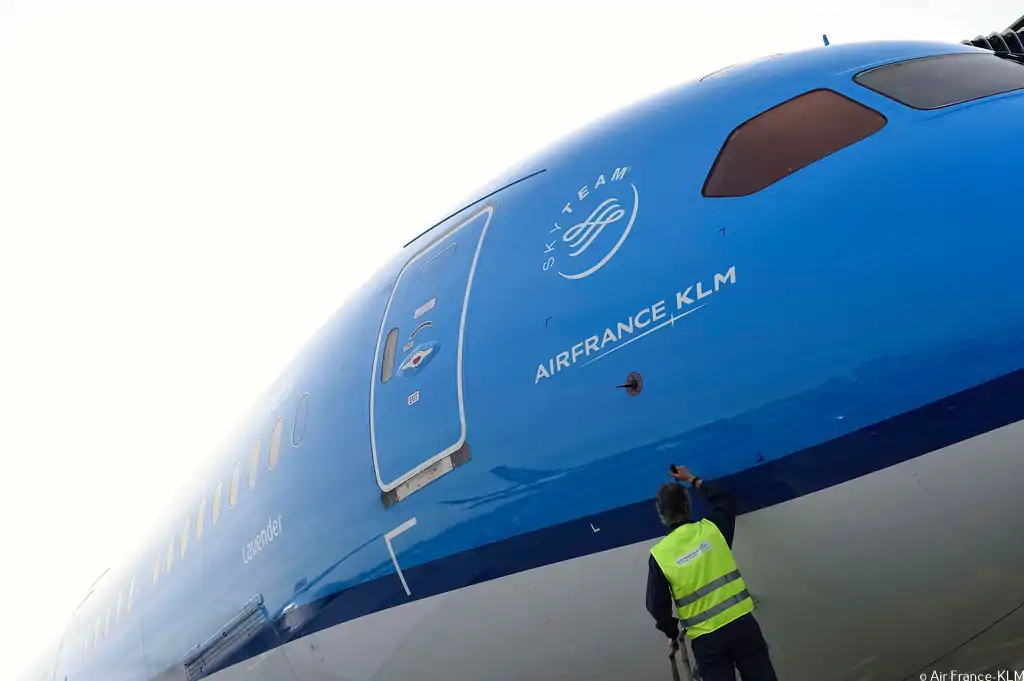
KLM, the Dutch subsidiary of Air France KLM, has revealed a strategic plan to cut costs and delay key investments as the airline industry faces increasing financial pressures. From rising equipment costs to staff shortages and airport fees, European airlines are being squeezed from all sides. But KLM’s new approach could help the airline navigate these turbulent skies and reach new profit heights.
KLM’s Path to Profitability: Targeting 450 Million Euros in Savings
In a bid to improve its financial performance, KLM is targeting an increase in operating profit by 450 million euros ($497 million) in the short term. The airline hopes to raise its profit margin to over 8% by 2028, a marked improvement from the 5.4% it posted in 2023. The decision to implement these changes comes in response to ongoing challenges such as high operational costs, aircraft delivery delays, and intensifying competition within the aviation sector.
Addressing Industry-Wide Challenges: High Costs, Staff Shortages, and Airport Fees
Airlines across Europe are grappling with the realities of rising operational costs, delays in aircraft deliveries, and a leveling off of the post-pandemic travel surge. According to KLM’s CEO, Marjan Rintel, these issues have put pressure on the airline’s ability to maintain profitability. "Just as many other airlines, KLM is suffering from high costs and shortages of staff and equipment," Rintel said in a statement.
These economic strains have been exacerbated by increased airport fees, as well as staff shortages, which continue to pose a challenge for KLM and its competitors.
Strategic Measures: Rebalancing Flights and Reducing Office Jobs
To combat rising costs, KLM is making several operational changes. The airline will introduce a new flight schedule that aims to strike a “better balance” between European and intercontinental flights. The goal is to improve capacity utilization, allowing KLM to get more flying hours out of its existing pool of pilots without increasing staffing levels.
KLM spokesperson Anoesjka Asperslagh noted that, while flight schedules are being reorganized, there will be no major cuts to the number of flights. However, productivity improvements through automation and mechanization will allow the company to reduce office jobs, further lowering costs.
Postponing Investments but Maintaining Fleet Renewal

As part of its cost-cutting measures, KLM has decided to postpone key investments in areas such as a new headquarters and maintenance facilities. These delays, however, will not affect its planned multi-billion-euro fleet renewal, which is seen as essential to maintaining operational efficiency and reducing long-term costs.
While delaying some projects, KLM will focus on enhancing its fleet to improve its profitability in the long run. The airline also plans to increase revenues by introducing new onboard products, expanding its catering offerings, and optimizing aircraft layout to attract more passengers.
Outsourcing and Streamlining Operations
To further reduce overhead, KLM has indicated it will consider outsourcing or discontinuing activities that do not directly contribute to flight operations. This shift is expected to streamline its business model and focus resources on areas that drive profitability, allowing the airline to remain competitive in a challenging market.
Market Reaction: Air France KLM Shares Buck Market Trend
Following the announcement of its cost-cutting strategy, Air France KLM shares rose by 1.5%, outpacing a generally weaker Amsterdam stock market. The market’s positive reaction suggests investor confidence in the airline’s ability to navigate industry challenges and improve its financial performance.
Looking Ahead: Collaboration with Unions to Boost Productivity
One key aspect of KLM’s strategy is the collaboration with pilot unions to optimize productivity without increasing headcount. Asperslagh emphasized that the airline is not operating at full intercontinental capacity, signaling the potential for growth within its existing pilot pool. By working with unions to explore solutions, KLM hopes to maximize flying hours while maintaining a strong workforce.
Conclusion: A Strategic Pivot in a Competitive Landscape
KLM’s decision to cut costs, postpone investments, and boost revenues comes as a calculated move in response to significant industry challenges. With a clear focus on improving operational efficiency, enhancing onboard services, and maintaining a leaner organizational structure, the airline is positioning itself for long-term profitability. Time will tell if these efforts allow KLM to soar above the competition, but the early market response has been encouraging.
KLM’s bold strategy may serve as a blueprint for other airlines struggling with similar pressures, offering a way forward in an increasingly competitive and costly environment.
With Inputs from Reuters
Read next

In a dynamic effort to bridge the cultural gap between Saudi Arabia and India, Saudia, the national flag carrier of Saudi Arabia, recently participated in the "Spectacular Saudi" event held in Mumbai, India. The event, organized by the Saudi Travel Authority, was a remarkable 9-day exhibition that ran from September 25th to October 2nd, featuring a range of cultural and promotional activities. The exhibition brought a slice of Saudi Arabia to the Indian audience, offering a unique cultural experience that blends tradition with modernity.
A Cultural Gateway: The Spectacular Saudi Event
The "Spectacular Saudi" event was a public celebration that showcased Saudi culture, heritage, and tourism opportunities to the people of Mumbai. It served as an immersive platform for visitors to experience Saudi Arabia's rich history, modern advancements, and hospitality. With various exhibits, interactive sessions, and cultural displays, the event made Saudi Arabia’s vibrant spirit tangible to a diverse Indian audience.
This event was not just a cultural exchange but also a promotional opportunity for Saudi Arabia to highlight its tourism potential, aligning with the Kingdom's broader objective of attracting international visitors as part of the ambitious Saudi Vision 2030.
Saudia’s Participation: Showcasing World-Class Services

Saudia’s presence at the event was particularly significant. As the Kingdom's flagship airline, it seized this opportunity to not only promote the destination but also highlight the premium services and world-class travel experiences it offers. Arved von zur Muehlen, Chief Commercial Officer at Saudia, expressed his excitement about the airline's participation, stating:
"It’s been exciting to participate in the Spectacular Saudi Event, and to stand side by side with the Saudi Travel Authority to support their efforts and vision. This event provided us with an excellent platform to engage with international visitors and showcase our premium products and services to a diverse audience. We were delighted to engage with guests and share the exceptional Saudia experience."
Through its participation, Saudia aimed to attract a greater number of international travelers, leveraging its high-quality services and extensive flight network to make Saudi Arabia a top destination for Indian tourists.
Saudia’s Longstanding Relationship with India

Saudia’s relationship with India dates back to 1965, when the airline launched its inaugural flight to Mumbai, marking the beginning of a lasting connection between the two nations. Over the years, Saudia has maintained a strong presence in India, now operating 54 weekly flights to six major Indian cities. These cities include Mumbai, Delhi, Hyderabad, Kochi, Bengaluru, and Chennai, ensuring seamless connectivity between India and Saudi Arabia.
As part of its long-term strategy, Saudia aims to increase this presence by aligning its objectives with the Saudi Vision 2030. A key part of this vision involves boosting tourism and positioning Saudi Arabia as a premier travel destination for international tourists. India, with its vast population and increasing interest in global travel, plays a pivotal role in this strategy.
Saudi Vision 2030: Aiming to Attract Millions of Indian Tourists
One of the most ambitious goals of Saudi Vision 2030 is to attract 7.5 million Indian visitors annually by 2030, making India the top source of tourists for the Kingdom. This aligns with the larger aim of transforming Saudi Arabia into a leading global tourism destination.
By participating in events like "Spectacular Saudi," Saudia and the Saudi Travel Authority are taking active steps toward realizing this vision. These efforts include creating more direct routes between Indian cities and Saudi Arabia, promoting cultural exchange programs, and offering unique tourism experiences that cater to Indian travelers.
Conclusion: Building Bridges Between Nations
Saudia’s participation in the Spectacular Saudi event reflects the airline's dedication to promoting Saudi Arabia as a world-class destination while highlighting its own top-tier services. By forging a deeper connection with India, Saudia is not only enhancing travel opportunities but also contributing to the broader objectives of Saudi Vision 2030. Through cultural events, strategic engagement, and expanding its flight network, Saudia is well on its way to becoming a key player in shaping Saudi Arabia’s tourism future, with India standing as an important partner in this journey.
The road ahead is promising, with continued efforts to deepen ties and create lasting memories for travelers seeking a unique cultural experience in Saudi Arabia.
Read next
Cebu Pacific’s Bold Expansion: 70 Airbus A321neo Jets Affirmed in Major Fleet Deal
Abhishek Nayar
04 Oct 2024

In a significant move that marks a new phase of growth, Cebu Pacific Air has officially confirmed a purchase agreement for 70 Airbus A321neo aircraft, reinforcing its ambitions to elevate both operational efficiency and environmental sustainability. This comes just months after the airline signed a memorandum of understanding (MoU) for a staggering 152 A320neo/A321neo aircraft, solidifying its position as one of the Asia-Pacific region’s leading low-cost carriers.
A Bold Move Towards Sustainability and Growth
On October 2, Cebu Pacific and Airbus formalized their agreement in a signing ceremony held in Manila, Philippines. Attendees included Mike Szucs, CEO of Cebu Pacific Air, and Benoît de Saint-Exupéry, Airbus' Executive Vice President of Sales for Commercial Aircraft. Szucs emphasized the airline’s ongoing commitment to innovation and sustainability, stating that the A321neo will enhance Cebu Pacific's service quality while significantly cutting carbon emissions.
“This milestone signals our ongoing dedication to expanding air travel accessibility and affordability, while supporting the Philippines’ broader economic growth and connectivity goals,” Szucs remarked during the ceremony.
The A321neo: A Choice for Efficiency and Expansion
The A321neo, part of Airbus’ highly successful A320 family, is a key player in Cebu Pacific’s strategic fleet expansion. Known for its fuel efficiency and eco-friendly profile, the aircraft fits well with the airline’s long-term goals to enhance operational efficiency and reduce environmental impact.
Airbus' Saint-Exupéry noted that the A320 family has been central to Cebu Pacific’s operations for the past two decades. The airline’s decision to continue its partnership with Airbus by selecting the A321neo underscores confidence in the aircraft’s performance and suitability for the airline’s next growth phase.
“We’re confident that these additional A321neo aircraft will contribute strongly to the all-Airbus operator’s next phase of expansion as one of Asia-Pacific’s leading low-cost carriers,” Saint-Exupéry added.
Flexibility and Market Adaptation
Back in July, when Cebu Pacific first announced the MoU with Airbus, Szucs had emphasized that the order would allow the airline flexibility in adapting to market conditions. With the option to switch between the A320neo and A321neo models, Cebu Pacific is well-positioned to adjust its fleet growth in line with demand and other operational needs.
This level of flexibility is critical for the airline as it navigates market dynamics in the wake of the pandemic, while also preparing for future expansion opportunities both regionally and globally.
Pratt & Whitney Engines: Efficiency Amid Challenges
Despite facing some frustrations with Pratt & Whitney’s PW1100G Geared Turbofan (GTF) engines, Cebu Pacific decided to power its new A321neo fleet with these engines. The GTFs, which have been praised for their fuel efficiency and environmental benefits, align with Cebu Pacific’s commitment to sustainability.
Pratt & Whitney’s President of Commercial Engines, Rick Deurloo, welcomed the airline’s decision, pointing out the engine’s value in terms of fuel savings and eco-friendliness for narrowbody aircraft. The decision to stick with the GTF engine, despite ongoing technical challenges and maintenance issues with earlier models, highlights the airline's long-term view of the benefits the engine offers.
Boost to Local Airline Industry and Philippine Economy
This fleet expansion is not only a significant development for Cebu Pacific but also for the Philippine airline industry as a whole. With 70 firm orders and options for more, this deal demonstrates Cebu Pacific's commitment to supporting the Philippines' broader economic and connectivity goals. The airline’s expansion plans are closely tied to the country’s recovery and growth post-pandemic, and this major investment will further strengthen the Philippines' position as a hub for travel and trade in Southeast Asia.
Looking Ahead: Expanding Horizons for Cebu Pacific
As Cebu Pacific moves forward with its ambitious fleet modernization program, the airline is positioning itself for continued growth in the highly competitive low-cost carrier market. The 70 A321neo aircraft are just one piece of the puzzle as the airline looks to expand routes, improve service, and enhance overall efficiency in its operations.
With sustainability as a central focus, Cebu Pacific is well on its way to not only achieving its growth targets but also contributing to global aviation’s push for reduced carbon emissions.
Conclusion: A New Chapter for Cebu Pacific and Philippine Aviation
The confirmation of this 70-aircraft order is a clear signal of Cebu Pacific’s intent to remain a major player in the Asia-Pacific aviation landscape. By committing to the A321neo, the airline is making strides toward operational excellence, environmental responsibility, and expanded accessibility for passengers across the region.
As the airline gears up for future challenges and opportunities, Cebu Pacific’s strategic partnership with Airbus and Pratt & Whitney will play a crucial role in shaping the next chapter of its success story, both in the Philippines and beyond.
Read next
Is Air India’s New Cabin Crew Policy a Game Changer or a Cause for Concern?
Abhishek Nayar
04 Oct 2024

Air India, under the ownership of the Tata Group, is implementing significant changes to the policies governing cabin crew members for both domestic and international flights. As the airline continues its integration efforts with Vistara and other entities within the Tata aviation ecosystem, the revised policies aim to streamline operations and align employee benefits across the board. However, some of these changes—such as mandatory room sharing during layovers—have raised questions among staff and industry observers.
Shared Rooms: A Controversial Move?
One of the most talked-about changes in Air India's revised policy is the introduction of room sharing for certain sections of cabin crew members during layovers. According to a source familiar with the situation, this policy will apply to crew members on both domestic and international flights, but it excludes in-flight managers and executives. These senior employees, typically with over 8–9 years of experience, will continue to have single rooms during layovers.
While room sharing is already common practice at Air India Express and Vistara, this will be the first time such a policy is introduced at Air India itself. Some employees may view the move as a cost-saving measure by the loss-making airline, but it also raises concerns about comfort and privacy during long, often exhausting, layovers.
Changes to Allowances: Better Compensation for International Flights
Alongside the room-sharing policy, Air India has announced an increase in layover allowances for cabin crew members on international flights. The previous allowance bracket of USD 75–125 has now been revised to USD 85–135. This change is likely to be welcomed by the cabin crew, especially given the rising costs of living in many international destinations.
However, for domestic flights, there is no change in the base allowance of ?1,000 per night. Cabin crew on these routes will now be eligible for an additional support allowance of ?1,000 per night, which may offer some relief but doesn’t signify a significant shift in overall compensation.

Why the Policy Overhaul?
These policy revisions come at a crucial time for Air India, which is in the midst of its merger with Vistara. The integration of the two airlines has necessitated the harmonization of policies to ensure a unified approach for all employees. An Air India spokesperson explained that the revised compensation and benefits packages are competitive and aligned with industry standards. However, the need for cost-saving measures and operational efficiency may also be driving some of the more controversial changes, such as room sharing.
The spokesperson also highlighted the introduction of a performance-linked compensation and benefits policy, rolled out in April 2023. This signals a broader shift in the airline's approach to employee benefits, tying rewards more closely to individual and organizational performance.
Employee Concerns and Labor Issues
The revised policy comes against the backdrop of ongoing labor disputes within the Tata Group’s aviation subsidiaries. A section of Air India Express cabin crew has sought redressal of their HR issues under labor laws, a case that is currently before the Central Labor Commissioner. These disputes highlight a growing tension between management and employees as the airline seeks to restructure and streamline its operations.
It remains to be seen whether the new policies will ease these tensions or exacerbate them, especially given the potential discomfort and dissatisfaction around room-sharing arrangements.
What’s Next for Air India?
With the formalization of the merger between Air India and Vistara, further policy changes and organizational restructuring are likely in the coming months. As the airline looks to turn its fortunes around after years of financial difficulties, these measures may be seen as necessary to remain competitive. However, Air India’s ability to maintain morale and ensure employee satisfaction will be a critical factor in its success.
The airline's spokesperson has emphasized that the new policies are benchmarked to industry standards, but whether these standards meet the expectations and needs of the cabin crew remains a pressing question.
Conclusion
Air India's revised cabin crew policy introduces a mix of benefits and challenges. While increased international allowances offer a financial boost, the introduction of room sharing during layovers may spark discontent among employees. As the airline continues its transformation under Tata Group ownership, it will need to strike a delicate balance between cost management and employee satisfaction. Only time will tell if these changes prove to be a game changer for Air India—or a cause for concern among its dedicated workforce.
Read next
Lufthansa's Turbulent Flight: Can New Aircraft and Strategic Investments Soften the Blow of Rising Costs?
Abhishek Nayar
03 Oct 2024

Lufthansa, the flag carrier of Germany, is facing a turbulent period as its core airline becomes the group’s new “problem child.” Delivery delays from Boeing and rising operational costs are putting the airline at a significant disadvantage compared to regional rivals. As Carsten Spohr, the CEO of Lufthansa Group, explained during a recent meeting in Frankfurt, the company’s financial situation is fragile, with a notable 10% decrease in share value over the past six months.
Lufthansa, part of a larger group that includes Austrian Airlines, SWISS, Eurowings, and Brussels Airlines, has been hard hit by a combination of cost pressures and missed aircraft deliveries, which has severely impacted its profitability. Spohr expressed his concerns, stating, “We are waiting for 43 Boeing aircraft that we should have flown now already. This includes the 777X and 787s.”
Delivery Delays: Boeing’s Impact on Lufthansa's Fleet Modernization

One of the biggest pain points for Lufthansa has been the delay in receiving new aircraft from Boeing. The airline had expected to have more than 40 new planes, including the much-anticipated Boeing 777X and additional 787s, in operation by now. However, due to certification delays and manufacturing issues, Boeing has pushed back its delivery schedules, with the first 777X now expected to arrive no earlier than 2026—well behind the original 2023 target.
According to data from ch-aviation, Lufthansa currently has 168 planes on order, with 95 of those coming from Boeing. This includes 40 737-8's, 21 777-9's, and 34 787-9's. Instead of the new, more fuel-efficient planes, Lufthansa has been forced to maintain a fleet of older aircraft that were slated for retirement. “We’re flying 23 aircraft that we didn’t want to fly anymore,” Spohr admitted.
While Spohr didn’t specify which models these planes were, it is widely assumed that many are older Airbus models, particularly the Airbus A340s, which have been in service for around 20 years. Keeping these older planes operational adds to the airline’s maintenance costs and reduces efficiency at a time when cutting expenses is critical.
Rising Costs and Competitiveness: A Tough Time to Fly
Compounding the problem, Lufthansa has been struggling with rising operational costs, which have had a severe impact on its competitiveness, particularly on long-haul routes. The closure of Russian airspace, for example, has forced Lufthansa to re-route flights, adding significant fuel costs and flight times.
A recent casualty of these rising costs was Lufthansa’s Frankfurt to Beijing route, which the airline announced it would discontinue. This move, reported by Simple Flying, reflects the carrier’s inability to compete effectively against Chinese airlines, which have lower operational costs and can still use Russian airspace.
Strategic Moves: ITA Airways and European Expansion

Despite these headwinds, Lufthansa has been taking steps to reanimate its finances. One of its major strategic moves was its investment in ITA Airways, a deal that was approved by the European Commission in July. This partnership is seen as a way to expand Lufthansa’s footprint in Europe and help offset the financial strain on its core business. However, the airlines are still working out the details of the deal, as Brussels is requiring certain concessions to ensure fair competition.
Boeing Delays and a 100-Year Plan: Lufthansa Looks to 2026
Lufthansa is determined to turn its fortunes around, setting its sights on 2026 as a key milestone. By this time, the airline hopes to have overcome its current challenges and be positioned for future success, just in time to celebrate its 100th anniversary.
The company has already taken steps to address the shortfall caused by the delayed 777X deliveries by purchasing seven additional 787-9 Dreamliners. Originally intended for other airlines, these aircraft are expected to help bridge the capacity gap caused by the delays. However, recent reports suggest that delivery of these planes may also be delayed, further compounding the airline’s woes.
Conclusion: Will Lufthansa Weather the Storm?
As Lufthansa navigates through delivery delays, rising costs, and strategic shifts, the airline’s management is confident it can turn things around by 2026. Yet, the pressure is mounting. With its share price dropping and profit warnings on the horizon, the next few years will be critical for the airline’s future.
The company’s success will depend heavily on whether Boeing can deliver its new aircraft on time, how well Lufthansa can manage its rising costs, and whether its strategic investments, such as ITA Airways, can provide the financial boost it needs. For now, the skies ahead remain turbulent, but Lufthansa remains optimistic that smoother flying awaits.
Comment