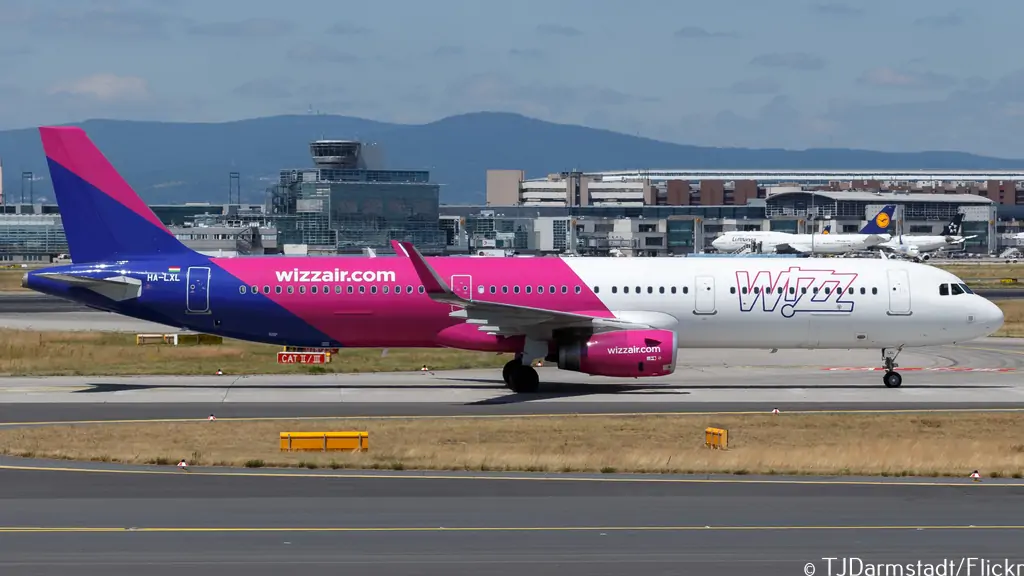
Wizz Air Holdings Plc said the expansion into India will become possible with its new long-range Airbus SE A321 models, potentially opening up a lucrative vein of future growth as demand for air travel surges in the world’s most populous nation. “There’s great potential in India, as the country has seen an immense development,” Wizz Chief Executive Officer Jozsef Varadi said in an interview in Budapest. “I think it may help Europe tackle its employment issues, while its emerging middle class will boost tourism. We’re looking into opportunities there, but this is more a medium-term issue.”
Wizz Air, a 20-year-old budget carrier from Hungary, may not have neem heard of in India but the airline plies a fleet of 121 Airbus aircraft to 155 cities in 45 countries primarily in Europe, the Middle East and Central Asia. Wizz Air has 47 of the long-range Airbus A321 XLR on order, with deliveries set to start sometime in 2024. The aircraft will allow the budget carrier to expand its operating parameter further east to markets including the Middle East, where Varadi said there’s also greater demand.
Varadi said the low-cost airline has seen growth in all its key markets, including Western Europe as well as the eastern part of the European Union and the Middle East. Predicting a busy summer and a return to higher capacity, the CEO said he doesn’t expect a slump into the latter part of the year during the seasonal downturn. Business travel is also rebounding as conferences pick up again and people resume face-to-face meetings after the pandemic.
One of the factors holding back Wizz is a “slight lag” in Airbus deliveries, Varadi said. The European planemaker has struggled with output, a combination of parts shortages and a lack of skilled workers. Airbus CEO Guillaume Faury said this week that supply-chain snags may extend into next year, while he’s confident he can maintain the company’s annual delivery goal of 720 jets.
By region, Varadi expects to see growth in the Middle East, particularly in the United Arab Emirates and Saudi Arabia. Wizz, which traditionally connected destinations in Eastern Europe, has expanded to the Middle East with a local unit in Abu Dhabi and is exploring options for a venture in Saudi Arabia. “There is a much bigger demand than what we can fulfil, but we need airplanes and staff for that, these are more of the restricting factors,” Varadi said.
Learning from a difficult last year, the company is now hedging its fuel costs, while the environmentally friendlier alternative, dubbed sustainable aviation fuel, is poised to burden the industry in coming years, the CEO predicted. “There are two issues: it’s expensive and unavailable,” Varadi said of SAF fuel, adding it’s unclear which entity would pay for the higher cost of the green option.
About Wizz Air
Wizz Air was legally incorporated in Hungary as Wizz Air Hungary, its headquarters is in Budapest, while parent company Wizz Air Holdings is in Jersey and listed on the LSE FTSE 250 Index. It has the largest fleet for any Hungarian airline but is not the national carrier and serves 44 countries.
Established in September 2003, it began operations in May 2004. It began trading on the LSE in February 2015. It employs around 5,500 people and is among the leading low-cost airlines in Europe, and the largest in Central and Eastern Europe, as per the company’s LinkedIn page. In 2016, it carried a milestone of 34 million passengers and followed it up with a new milestone of 200 million passengers in 2019, on its 15th birthday, the company website states.
It has a fleet of 153 Airbus A320 aircraft with an average age of 5.2 years, the company website says. These include 59 A320-200s, 41 A321ceos and 47 A321neos. It functions at more than 190 airports across 51 countries through over 1,100 routes, the website added.
In 2017, the airline launched Wizz UK and opened its London offices. In May 2019, the airline claims to have recorded the smallest environmental footprint per passenger in Europe at 56.5g CO2 per passenger/km. It expects to further cut emissions by CO2 emissions per passenger by a third by 2030. In 2020, Wizz was named the "Best Low-Cost Airline in Europe" by Airlineratings, an airline safety and product rating review website.
(With Inputs from Bloomberg)

Read next
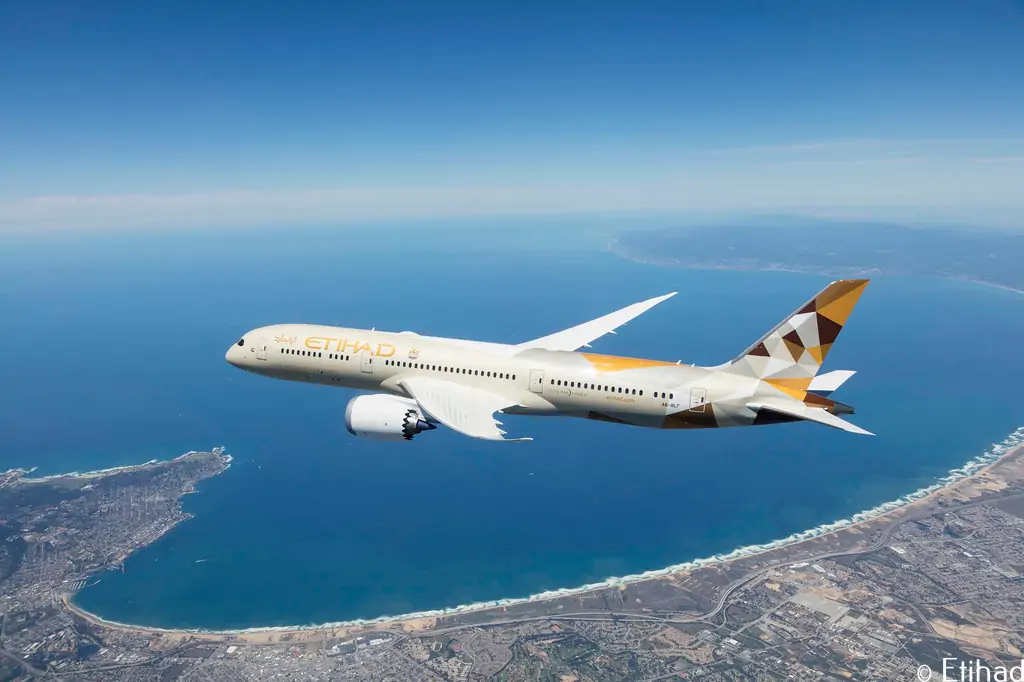
India is set to become the third-largest aviation market in the world in a period of the next four years, according to Etihad Airways Chief Executive Officer Antonoaldo Neves. Etihad has been operating in India for the last 19 years, and the country remains "one of the most important markets for us", Neves said. The airline wants to be "part of the India story", the Etihad CEO said, adding that its commitment to the Indian market is "solid".
Etihad is looking at expanding its capacity in India by increasing the frequencies and destinations. Further, it expects 20% growth from India in the next year. Although, it is not looking at any inorganic growth opportunities via the merger and acquisition route at this juncture. About 10 million passengers have travelled via Etihad in 2022 and it expects to clock 30% growth in 2023 owing to growth in China, Europe, the US, South East Asia and India.
Earlier in March, Etihad said it plans to restart direct flights between Kolkata and Abu Dhabi from March 26th onwards. With the restart of these services to Kolkata, Etihad will now fly to 14 destinations across the region — India, Pakistan, Bangladesh, Sri Lanka, and Maldives, the airline said in a statement. Etihad connects 10 Indian cities and has 185 weekly flights to India while the airline now looks to tap into the economic and tourism potential of the India-UAE FTA. Further, it is looking at deploying the remaining 10,000 weekly seat capacity in the next one year.
The Etihad CEO's remarks come a couple of months after Prime Minister Narendra Modi said India would soon emerge among the top three international aviation markets. "Shortly, India would become the third biggest market in the world in the aviation sector," Modi had said on February 14, when Indian private carrier Air India announced the mega deal to acquire 250 aircraft from Airbus.
As per a recent report released by the Directorate General of Civil Aviation (DGCA), the cumulative market share of Indian airlines - in terms of passengers carried on international flights - stood at 43.5% in October-December 2022, which is significantly higher than 39.2% in the corresponding pre-Covid period of 2019. According to the report, the maximum number of passengers 32.4% are carried to and from the UAE. The second on the list is Singapore (7.9%), Thailand (7%), Saudi Arabia (6.7%) and Qatar (6.3%).
Etihad’s Strategy Shift
Etihad Airways aims to triple the number of passengers it carriers to 30 million and nearly double its fleet to 150 planes by the end of the decade, the airline's chief told Reuters in an interview in New Delhi on Thursday. Etihad's plans come amid a shift in its strategy to focus on medium to long-haul destinations, moving away from operating ultra-long-haul flights where competition is intense and profitability challenging, CEO Antonoaldo Neves said.
Neves said that the idea is to connect places like China, Southeast Asia, India and GCC (Gulf Cooperation Council) countries to Europe and the East Coast of the United States. Air travel in India is surging with domestic passenger numbers reaching pre-COVID levels and international traffic gathering pace as the country's economy grows. Etihad, which flies to places like Delhi and Mumbai, has identified six other Indian cities it does not serve but wants to launch flights to, he said.
Last October, Abu Dhabi's sovereign wealth fund ADQ took full control of the airline, appointing Neves who had previously led a turnaround at Portugal's TAP. "Our mandate is very clear. We don't fly to places where we don't make money," he said.
Air travel in India is surging with domestic passenger numbers reaching pre-Covid levels and international traffic gathering pace as the country's economy grows. The deeper push into India also comes as Tata Group-owned Air India is mapping out an aggressive expansion with non-stop flights to Europe and the U.S. Budget carrier IndiGo is growing its international network through its codeshare deal with Turkish Airlines. Neves said the competition did not worry him and there is space for everyone in the world's fastest-growing aviation market.
However, Etihad has about 10,000 seats a week of unutilised flying rights between India and Abu Dhabi, he said, which puts it in a better position compared with rivals that are clamouring for more access amid government pushback to open its skies further. Etihad's growth will also be organic, Neves said, and while it wants to do more codeshare and interline agreements, it will not look at mergers or equity partnerships.
The CEO plans to capitalise on the US pre-clearance facility in Abu Dhabi in a big way to attract Indian customers, among other things. “When you fly to the US with Etihad, your immigration and customs check happens in Abu Dhabi. You arrive in the US as a domestic traveller. This is a big plus.”
The group has worked out a three-pronged plan to revamp Etihad in the next seven years. These include improving the customer experience. “We are now offering free WhatsApp to guests on our aircraft that have onboard WiFi. Etihad is now offering one-price unlimited onboard WiFi for prices starting at USD 9. We are bringing back our Airbus A380 for a short period of 4-5 years in which we expect to get our new planes like Dreamliners and Airbus A350s with brand new interiors,” Neves said. The other two strategies are to improve efficiencies across the board and having the “best team in the region”.
Read next
Air India Strikes A Deal With Sabre Corporation For Global Access To Seats & Fares
Radhika Bansal
28 Apr 2023
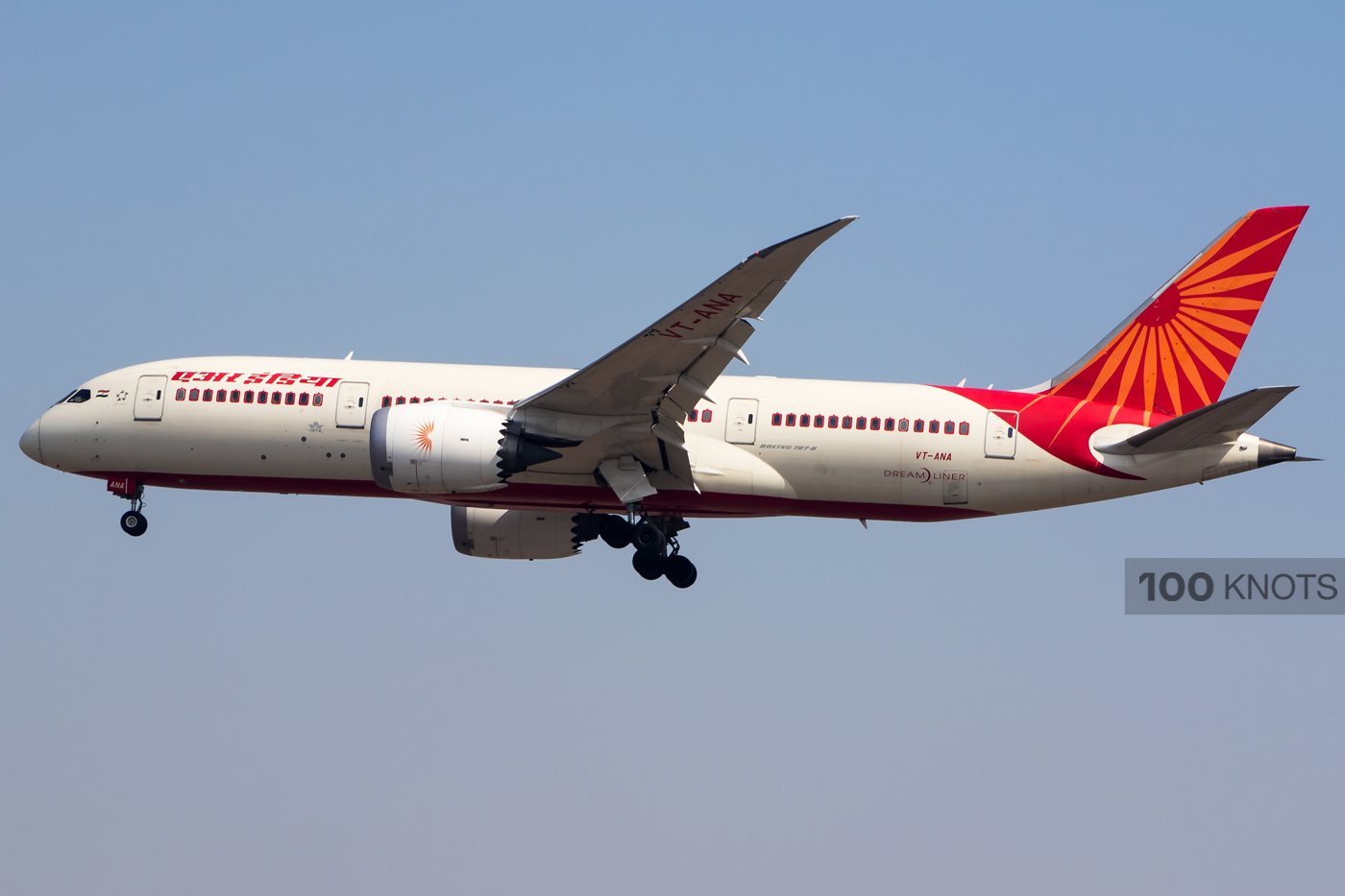
Air India announced a new multi-year deal with Nasdaq-listed Sabre Corporation to enable travel agents and corporations around the world to access the Indian airline's fares and seats through Sabre’s global travel marketplace. In addition to the distribution services, Air India is utilizing Sabre’s consultancy expertise to help determine optimal routes for its existing and new fleet, the company said in a statement. The deal value was not disclosed.
“The Indian travel market is back, and it’s coming back strong,” said Nipun Aggarwal, Chief Commercial & Transformation Officer, of Air India. “So, we’re delighted to have re-established, and enhanced, our relationship with Sabre at this transformative time for Air India, and the wider Indian travel marketplace. This long-term global distribution partnership will support our ambitious growth plans while paving the ground for our transition towards a more dynamic, merchandising-focused model, designed to unlock the value of Air India’s products and services.”
Sabre Corporation which is one of the leading software and technology providers that powers the global travel industry, and Air India, one of India’s leading airlines and a Star Alliance member, today announced a new multi-year deal that enables travel agents and corporations around the world to access Air India fares and seats through Sabre’s extensive global travel marketplace.
Air India's Transformation Plan
Air India, which Indian conglomerate Tata bought from the government as it was burning taxpayer's money with piling losses and debt, is seeking a multi-stage transformation roadmap towards becoming a “world-class global airline with an Indian heart." The airline is looking for a big leap into global skies and has this year placed the largest aircraft order in aviation history for 470 planes. The flag carrier is expanding its fleet and network, revamping its customer proposition, and improving reliability in operations.
Earlier in April, the airline said it had concluded the first phase of its five-year transformation plan, called Vihaan.AI. The first phase in the airline's transformation journey focussed on addressing legacy issues of the airline and laying the foundation for future growth. The new deal with Sabre also comes close on the heels of the company announcing it will use the artificial intelligence-driven chatbot and other initiatives as part of modernising the digital systems for which it has made an initial investment of USD 200 million.
The airline is now moving to the second phase which it calls the ‘Take-off’ chapter. This phase will focus on building the right platforms and progress faster based on the momentum that has been established in the first phase. The second phase is also likely to see all four airlines coming under one umbrella and developing a world-class training academy.
Some of the changes in the customer-facing and employee-related processes include a ChatGPT-driven chatbot, in-flight-entertainment system modernization, secure digital workplace tools, employee engagement and self-service portals, mobile devices for pilots, cabin crew, and airport operations crew, among others.
What Change Will Sabre Bring?
Sabre’s consultancy work with Air India includes an in-depth market evaluation, the development of new hub and schedule structural designs, and detailed planning of route network and capacity over a 10-year horizon, as well as the optimisation of fleet assignment across its system, the company said.
“We are confident Air India will gain substantial value by having access and reach to Sabre’s global network of travel agencies, in conjunction with benefiting from our route planning expertise,” said Roshan Mendis, Chief Commercial Officer, Sabre Travel Solutions. “And, our travel agency partners in India and around the world will gain greatly from having access to Air India’s products and services.”
The new deal marks an important new chapter in the relationship between Air India and Sabre and is a testament to Sabre’s commitment to the Indian travel market. The expertise housed in Sabre’s Bengaluru capability centre will provide close proximity support for Air India’s innovation and transformation journey. While historically, airlines building a schedule for the next season have relied on previous plans, clean-sheet scheduling gives carriers the ultimate flexibility to develop a more optimal schedule for operational efficiency, increased reliability, enhanced revenue, and traveller satisfaction.
Read next
Lufthansa Adds New Flights To India; Wants Bilateral Air Rights To Be Eased
Radhika Bansal
28 Apr 2023
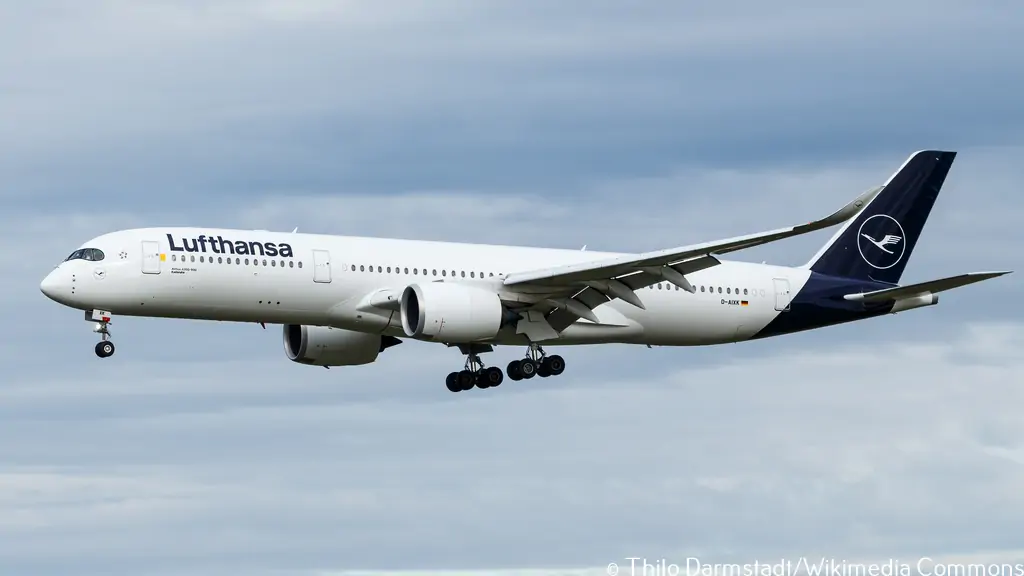
German carrier Deutsche Lufthansa AG on April 27 announced the introduction of two new routes – Munich to Bangalore and Frankfurt to Hyderabad. The new flights on the Munich-Bangalore route will be operational thrice a week, with the first on November 3, 2023. The flights from Frankfurt-Hyderabad will commence operations in the winter and combined these flights represent the first new routes in Asia Pacific for the Group, the company said in a statement.
According to the statement, with more than 50 weekly services to India, these new routes will strengthen its position as the leading European airline group on the subcontinent. Lufthansa will use its Airbus A350 on the Bengaluru - Munich route. The German carrier will also look to increase the frequency of flights on the Bengaluru - Munich route to five times a week if they see strong demand.
Lufthansa has got a long-term vision to strengthen its footprint in the Indian market by catering to the growing population of young working professionals through this expansion. “The brand intends to make the best of India’s s untapped growth opportunity by providing consumers with the most premium travel experiences during their international trips, be it for business or leisure,” a press release said.
The airline had planned to start the service in 2020 before the outbreak of the COVID-19 pandemic hit the world. Lufthansa operates about 80 flights a week between India and Germany. Lufthansa has ordered more than 200 aircraft to be the most modern fleet operating in Europe in the coming years.
Easing Bilateral Air Services Agreement
German carrier Lufthansa pitched for the liberalisation of bilateral air traffic rights. Lufthansa's comment comes in the wake of Indian authorities blocking any extension of bilateral rights to foreign airlines to promote Indian carriers. "The right assumption is that it has some kind of protectionism. In the long run, I think airlines would be better off if they do partnerships and if they understand that not one airline can generate a global network. It is simply impossible, "
Indian carriers will be better off if the restriction on bilateral rights is eased in the long term and if passengers have more choices for air travel, Harry Hohmeister, head of global markets & network, Lufthansa Group Airlines, said on Thursday, April 27.
For an airline to operate a scheduled flight between two countries, there must be a “bilateral air services agreement” in place, which is negotiated and signed by both countries. This agreement outlines the “bilateral rights”, which determine the number of flights or seats that the airline is allowed to operate per week between the two countries.
Civil Aviation Secretary Rajiv Bansal had said last month that the government had no plans “as of now” to accord additional bilateral rights to West Asian carriers. Emirates and Jazeera Airways, along with other West Asian carriers, have requested increased bilateral rights from the government to expand their flight operations.
Harry Hohmeister, Member of the Executive Board & Head of Global Markets and Network, at Lufthansa Airlines speaking in the press conference, said, “We have a long history in India; therefore, we will also have a long-lasting future. I'm very convinced here in India.” He added, "Lufthansa is investing in the future region, that is APAC and India is a focus area. India with the world for us will be even more important than before the Covid crisis. We have seen the numbers and the group feels the Indian market is very, very important.
Harry Hohmeister also said, “Based on numbers India's aviation market will grow yearly by roughly 10%. The GDP will grow in this country by 6 to 7% per year. This will allow us not just to block around profitability, but the real opportunity is to fulfil our purpose and to connect people, cultures, and economies sustainably.”
Lufthansa and Air India
Lufthansa and Air India are part of the airline group Star Alliance. Both carriers have a codeshare arrangement between them. Recent reports also suggest that Lufthansa Technik could join Air India to bid for MRO company AI Engineering Services Limited (AIESL).
“Of course, we (Lufthansa and Air India) have a partnership and would like to deepen the partnership,” Hohmeister said. “Air India has to first find its own way. I think they are restructuring right now. It is a company with new management and it is a company with ambitions. It is redesigning its strategy,” he added.
Currently, Lufthansa operates 54 flights a week which will be increased to 56 by June end and after adding more services, flights are expected to increase to over 60 per week. Lufthansa Group has had a presence in the Indian market for more than 90 years.
Read next

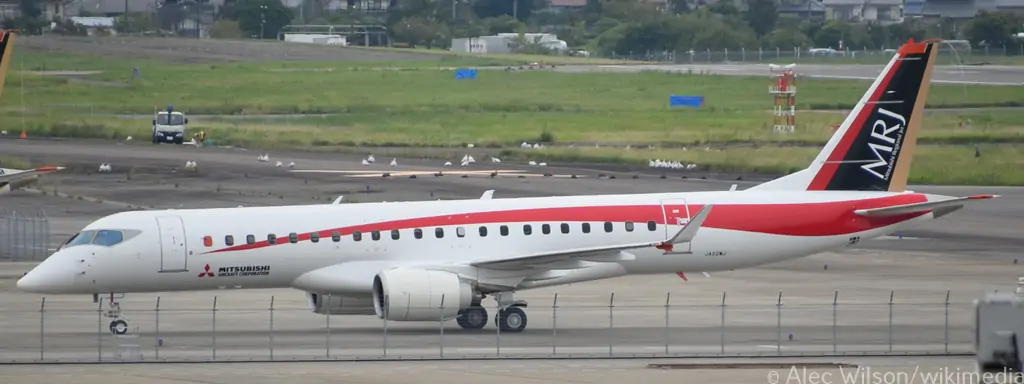
ANA, formerly All Nippon Airways, has officially ended its deal with Mitsubishi Aircraft Corporation to acquire SpaceJet regional aircraft. Since its debut in 2008, the SpaceJet programme, formerly known as the Mitsubishi Regional Jet, has experienced various difficulties, including delays in development and certification. The recent termination of the contract by ANA, on the other hand, has dealt a major blow to Mitsubishi Aircraft Corporation.
Background
The Mitsubishi SpaceJet was intended to compete with Bombardier and Embraer regional aircraft; however, the programme has been beset by delays and difficulties. The plane was meant to begin service in 2013, but the date has been pushed back several times. Mitsubishi stated in 2020 that the SpaceJet programme would be suspended indefinitely owing to financial issues.
Current Scenario
All Nippon Airways (ANA) was one of the airlines interested in Mitsubishi's Regional Jet (MRJ), later renamed the SpaceJet, and placed a definite order for 15 SpaceJet M90 aircraft in 2008. However, on February 7th, Mitsubishi announced the end of SpaceJet development after nearly 15 years.
The cancellation of the SpaceJet programme, which has had its aircraft launch date pushed back six times and incurred development expenses of around JPY1 trillion yen (USD7.6 billion dollars), also puts an end to Japan's dreams of rebuilding its domestic aircraft manufacturing industry. To save on development expenses, further work on the SpaceJet programme was halted in 2020.
The SpaceJet M90's History
Mitsubishi originally launched the programme in 2007, with the goal of developing an aircraft to meet the needs of airlines that require a twin-engine airliner to operate in regional markets and compete with the Embraer E170 and E175 aircraft types.
The Cancellation of the Contract by ANA
ANA has been a strong backer of the SpaceJet programme, but the airline's patience has run out. ANA cited "prolonged development timelines" and "a drastic change in market conditions" as grounds for terminating the contract in a statement. ANA has previously delayed delivery of the planes twice, with the most recent postponement expected to continue until 2022.
What Happened
The SpaceJet M90 was supposed to enter service in 2013, however due to development delays, the aircraft only flew for the first time in November 2015. The revised date of coming into service had been delayed to 2018.
The Implications for ANA and the Regional Aircraft Market
While ANA's purchase of SpaceJet jets has been cancelled, the airline is still seeking a regional aircraft to replace its ageing fleet of Bombardier planes. ANA is apparently evaluating planes from Embraer and ATR, as well as the new Embraer E175-E2 from Brazil.
Alternatives to consider
When it comes to regional aircraft, two extremely popular names that spring to mind are the Embraer E195-E2 planes and the Airbus A220 family series. Both aircraft types are new and technologically advanced, making them ideal candidates for regional air travel in the future. The Embraer E195-E2 and Airbus A220 both enjoy the trust of various operators throughout the world that use the aircraft types for regional flights.
Airlines such as AirBaltic and Air France operate the Airbus A220 in Europe, while Delta Air Lines and Air Canada operate them in North America. Qantas has also expressed confidence by acquiring 20 Airbus A220 planes for 2021. The Embraer E195-E2, on the other hand, has a number of regional operators, including KLM Cityhopper in Europe, Azul in Brazil, and Porter Airlines in Canada.
Conclusion
The ANA contract cancellation is a huge blow for Mitsubishi and the SpaceJet programme. The future of the programme is unknown, and it is unclear whether the business will be able to find new clients for the jet. However, ANA is still looking for a regional aircraft, and there are other alternatives.
With Inputs from AirInsightGroup, chaviation
Read next

Airbus, the world's largest aircraft manufacturer, recently announced plans to construct an aircraft lifecycle hub in China in collaboration with numerous partners. This move is intended to improve the company's assistance for its clients across the nation as well as its after-sales services.
Present Situation
Airbus is one of the world's largest commercial aircraft manufacturers, with a strong presence in Europe, the Americas, and Asia. The firm has operated in China for more than three decades, and numerous Chinese airlines employ its equipment. However, as the Chinese aviation business expands, Airbus will need to improve its after-sales services and give greater support to its clients.
The new facility will provide a comprehensive variety of aerospace services, including aircraft parking and storage, maintenance, upgrades, conversions, disassembly, and recycling.
The Concept of an Aircraft Lifecycle Centre
An aviation lifecycle centre is a facility that offers a variety of services to support an aircraft's whole lifespan. This comprises aircraft design and production services, as well as MRO and technical support throughout the aircraft's operating life.
Specifics about the new building
The proposed facility will have a storage capacity of 125 aeroplanes and a surface area of 717,000 square metres (7.71 million sq. ft). It will be part of a larger ecosystem that includes an adjacent aviation industry park that will house aerospace manufacturing and service enterprises in Chengdu's Shuang Liu District. The new centre will enhance China's aviation sector through aftermarket services by building on Airbus and China's previously established working partnership.
"This is yet another tangible contribution to the aviation industry's quest for sustainability, supporting the circular economy principle in line with Airbus' goal of pioneering sustainable aerospace." This one-of-a-kind facility will help in the expansion of Airbus' aviation services while also facilitating the execution of China's "Green Industry" policy, according to Klaus Roewe, SVP Airbus Customer Services. He went on to say: "China's aircraft phase-out is expected to increase exponentially over the next 20 years." Airbus is dedicated to investing in the area, and this one-stop shop, which is a first in China and outside of Europe, will position Airbus well in the Chinese aircraft ‘second life' services sector."
The Centre’s Role in China's Aviation Industry
China is one of the world's fastest-growing aviation markets, with a constantly expanding fleet of aircraft. However, the country confronts a number of obstacles in managing its aviation operations, including a trained labor shortage, insufficient infrastructure, and complicated laws.
Airbus' Worldwide Strategy and the Role of the Centre in It
Airbus' worldwide strategy is centered on increasing its presence in major countries like China. The Chinese market is critical for Airbus since it is likely to become the world's largest aviation market in the coming years.
Conclusion
The construction of the aircraft lifecycle facility in China is a key step for Airbus in increasing after-sales services and customer support in the nation. The hub will offer a variety of services to support Airbus aircraft during their entire lives, assisting Chinese operators in optimizing's their operations and lowering costs.
With Inputs from Airbus
Comment