Southwest Airlines Anticipates Boeing 737 MAX 7 Certification by April 2024

Abhishek Nayar
11 Nov 2023

Southwest Airlines, the largest customer of Boeing's 737 MAX 7, is gearing up for the certification of the aircraft by the U.S. Federal Aviation Administration (FAA) by April 2024. This development is eagerly awaited, as it marks a significant milestone for both Southwest and Boeing, allowing the carrier to integrate the latest addition to Boeing's MAX family into its fleet.
Certification Expectations
Andrew Watterson, Chief Operating Officer at Southwest, expressed confidence that the 737 MAX 7 would receive FAA certification by April 2024. While this estimate includes a buffer, he indicated that certification might occur earlier, possibly within this year or early 2024. Boeing has also echoed these sentiments, with company executives anticipating MAX 7 certification by the end of the current year.
Southwest's Strategic Orders
Southwest's commitment to the 737 MAX 7 is evident in its recent order for an additional 108 planes, scheduled for deliveries through 2031. The airline's strategic move reinforces its confidence in the aircraft and highlights the significance of the MAX 7 in Southwest's long-term operational plans.
Operational Timeline
Assuming certification in April, Southwest aims to start operating the 737 MAX 7 in the October-November 2024 timeframe. Watterson emphasized the need for flexibility in their internal planning, acknowledging the potential for certification before the projected date. This flexibility is crucial for Southwest as it seeks to align its operations with the evolving demand in the aviation market.
Progress and Challenges
Watterson expressed optimism about the progress Boeing is making in resolving open items on certification with the FAA. While the company is nearing the end of the certification process, challenges have necessitated Southwest to adapt. Delays in certification prompted the airline to convert several orders for the 150-seater MAX 7 into the larger 175-seater MAX 8 variant.
Strategic Importance of MAX 7
The MAX 7's introduction is expected to enhance Southwest's operational flexibility, allowing the airline to adjust capacity in response to varying passenger traffic. With the ability to cater to demand fluctuations based on time and day, the MAX 7 represents a strategic asset for Southwest as it seeks to optimize its fleet composition.
Conclusion
As Southwest Airlines anticipates the certification of Boeing's 737 MAX 7, the aviation industry watches closely, recognizing the significance of this milestone for both the airline and Boeing. The expected operational debut of the MAX 7 in late 2024 underscores Southwest's commitment to this aircraft model, positioning it strategically for the evolving dynamics of the aviation market.
With Inputs from Reuters
Read next
In a landmark ruling, the Court of Chief Commissioner of Persons with Disabilities has emphasized the crucial responsibility of all airlines, including foreign carriers operating in India, to implement the provisions of the Rights of Persons with Disabilities Act, 2016.
The court's intervention was prompted by a concerning incident at Bangalore airport involving SriLankan Airlines, where a child with Autism was allegedly ill-treated. This incident shed light on a broader issue of lack of awareness and sensitivity towards the needs of individuals with disabilities, not only on the part of the airline's employees but also the Directorate General of Civil Aviation (DGCA).
The Incident and Court's Findings
The court's inquiry into the incident revealed a distressing lack of awareness and empathy among SriLankan Airlines' employees regarding the unique needs of passengers with disabilities. Additionally, it pointed out a potential inconsistency in the airline's policy requiring medical clearance for select categories of persons with disabilities before boarding, stating that such a requirement is at odds with global civil aviation standards.
Universal Responsibility
The court unequivocally stated that all airlines, whether of Indian or foreign origin, are accountable for implementing the provisions of the Rights of Persons with Disabilities (RPwD) Act, 2016. Specifically referring to sections 40 and 41 of the acts, along with relevant rules and instructions, the court emphasized the importance of adherence to both the letter and spirit of the law. This ruling underscore the need for a unified commitment to protecting the rights and dignity of people with disabilities.
Global Civil Aviation Standards
Highlighting the inconsistency in SriLankan Airlines' policy, the court emphasized that it is essential for airlines to align their procedures with global civil aviation requirements. Any policy that may hinder the seamless travel of people with disabilities, including the imposition of additional medical clearances, should be reconsidered in light of international standards.
DGCA's Oversight Role
The court firmly asserted that the DGCA cannot be absolved of its responsibility to ensure the effective implementation of the RPwD Act. The regulatory body is tasked with ensuring that airlines, both domestic and foreign, adhere to the legal framework designed to protect the rights of persons with disabilities. This ruling serves as a reminder of the DGCA's pivotal role in upholding inclusivity in air travel.
Conclusion
In conclusion, the recent ruling by the Court of Chief Commissioner of Persons with Disabilities serves as a crucial step towards ensuring that the rights of persons with disabilities are safeguarded in the realm of air travel. The incident involving SriLankan Airlines has prompted a reevaluation of policies and practices within the aviation industry, emphasizing the need for heightened awareness and sensitivity. It is imperative for all stakeholders, including airlines, regulatory bodies, and airport authorities, to work collectively to create an inclusive and accommodating environment for all passengers, irrespective of their abilities.
Read next
Air India Enters Intermodal Interline Pact With WorldTicket to Offer Air-Rail Connections Across Germany

Radhika Bansal
10 Nov 2023
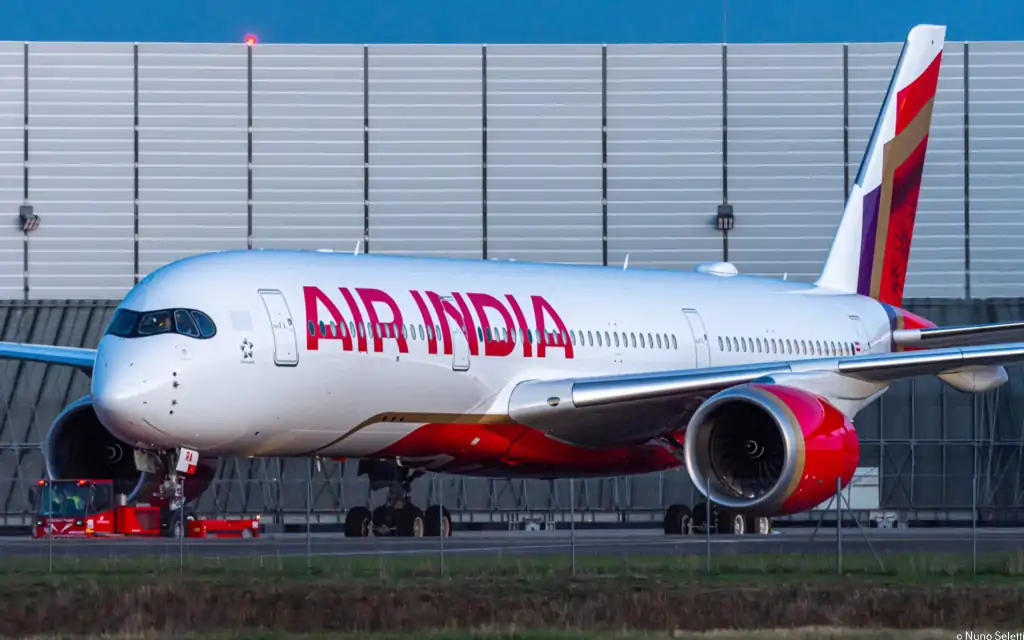
Air India has entered into an intermodal interline pact with WorldTicket that will offer its customers air-rail connections at 5,600 train stations in Germany with Deutsche Bahn on a single ticket. WorldTicket is the exclusive distributor for Europe's largest railway operator, Deutsche Bahn.
This comes on the back of a similar intermodal partnership to provide guests easy access to an extensive network of rail and bus operators in the UK, Italy, Austria, Belgium, and the Netherlands. The collaboration will enable Air India guests to travel on a single intermodal ticket beyond Frankfurt with convenient train connections to or from other cities and towns across Germany, including those without airports, on Deutsche Bahn, the airline said.
As per the company, this strategic accord permits Air India travellers to use a single intermodal ticket and take the on-ground train and bus connections to over 100 cities and towns in Austria, Belgium, Germany, The Czech Republic, Hungary, Italy, and the United Kingdom via its European gateways of Amsterdam, Birmingham, London Heathrow, London Gatwick, Milan, and Vienna. Customers will have the same baggage allowance on these rail or bus operator services as offered on Air India's flights, the company said in a statement.
Travellers can also take Deutsche Bahn trains to and from Amsterdam, Brussels, and Zurich via Air India's Frankfurt gateway, it said. WorldTicket is an IATA travel partner with its own AOC-holding airline, FlexFlight, bearing designator code W2, thus making intermodal journeys on a single ticket possible, according to Air India.
AccesRail’s network of rail and bus operators including Avanti West Coast (UK), Great Western Railways (UK), London North Eastern Railways (UK), National Express (UK), Trenitalia (Italy), ÖBB Austrian Railways (Austria), SNCB Belgian Railways, and Thalys (Netherlands/Belgium) are available under this agreement.
The partnership also allows Air India guests to enjoy the benefit of the same baggage allowance on the rail routes as offered by Air India on its own flights, it said. The airline also plans to extend the facility to its own sales channels progressively, Air India said.
"While we continue to expand our own route network globally, such partnerships help us to provide an extended network to our guests, and make journeys to their final destinations more convenient," Nipun Aggarwal, Chief Commercial and Transformation Officer, of Air India, said.
He said Air India has observed substantial passenger traffic on its Frankfurt flights that further connect to and from other German cities and towns, and this partnership addresses the needs of an increasing number of such guests. Currently, intermodal tickets with Air India are available for booking through travel agents globally.
Flights Between India & Germany
Air India currently operates daily flights between New Delhi’s Indira Gandhi International Airport (DEL) and Frankfurt Airport (FRA) on its Boeing 787 Dreamliner aircraft, offering more than 15,000 return trip seats every month. Vistara, too, flies to Frankfurt from Delhi and Mumbai, offering 78 monthly return flights, translating to almost 23,000 seats. These flights will likely become part of Air India’s consolidated network after its merger with Vistara.
Lufthansa currently dominates the India-Germany sector. The airline operates flights to Frankfurt from Bengaluru, Mumbai, Delhi, and Chennai. It also flies between Munich and Delhi, Mumbai, and Bengaluru. Per Cirium, Lufthansa had more than 350 return flights between the two countries in November, offering more than 122,000 seats.
With more airlines integrating air and rail connections globally, this market is growing rapidly. Earlier this year, Indian full-service carrier Vistara partnered with WorldTicket to offer Deutsche Bahn train network rail connections from Frankfurt to Germany and other European cities on a single itinerary.
Last year Dutch flag carrier KLM started rail connections between Brussels and Paris using French 'TGV' high-speed trains. Lufthansa, Air France and Vueling Airlines are other global carriers that offer air-rail tickets for seamless connectivity from the airport to various cities throughout the country.
Read next
IndiGo Parent InterGlobe & Archer Aviation Join Hands to Launch All-Electric Air Taxi Service in India
Radhika Bansal
10 Nov 2023
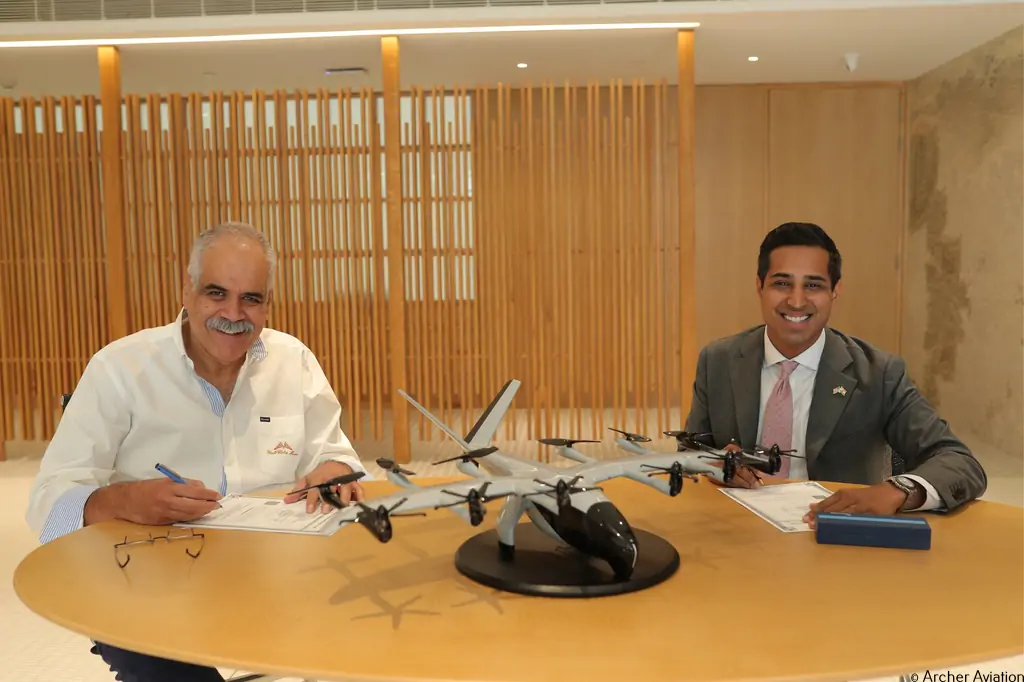
InterGlobe Enterprises, which owns India's largest airline IndiGo, and Archer Aviation on November 9 announced that they entered into a memorandum of understanding (MoU) to partner to launch and operate an all-electric air taxi service in India. The two companies plan to launch an all-electric air taxi service across the country in 2026.
The partnership plans to finance the purchase of up to 200 of Archer’s Midnight aircraft for the India operations. The Midnight aircraft is a piloted, four-passenger electric vertical takeoff and landing aircraft designed to perform rapid back-to-back flights with minimal charge time between flights. These 'Midnight' e-aircraft can carry four passengers and a pilot for up to 100 miles (roughly 161 kilometres).
The InterGlobe-Archer flight will allow their customers to fly the 27-km Delhi trip from Connaught Place to Gurugram, typically taking 60 to 90 minutes by car, in approximately 7 minutes. The low-noise electric air taxi service is a safe, sustainable, and cost-competitive solution with ground transportation.
InterGlobe Enterprises, a travel and hospitality and Archer Aviation, electric vertical takeoff and landing (eVTOL) aircraft company aim to provide revolutionary transportation for improving urban mobility with all-electric air taxi services.

Rahul Bhatia, Group Managing Director of InterGlobe said, “We are excited at this new opportunity of bringing an effective, futuristic and sustainable transport solution by introducing Archer’s electric aircraft to India.”
The companies intend to work with select in-country business partners to operate Archer’s aircraft, finance and build vertiport infrastructure, and train pilots and other personnel needed for these operations.
“To bring Archer midnight aircraft to Indian cities, Archer Aviation with InterGlobe will start transforming fundamental mobility across cities with Delhi, Mumbai, and Bengaluru”, said Nikhil Goel, Chief Commercial Officer of Archer Aviation.
Goel said India is one of, if not the largest, opportunity for eVTOL aircraft utilisation in the world as the country is home to the world's largest population of over 1.4 billion people and its largest cities face some of the greatest congestion challenges in the world.
“India is one of, if not the largest opportunity for eVTOL aircraft utilization in the world, as it is home to the world’s largest population of over 1.4 billion people and its largest cities face some of the greatest congestion challenges in the world. Archer’s all-electric Midnight aircraft is designed to provide a revolutionary transportation solution that can help address these congestion issues,” said Adam Goldstein, Archer Aviation’s founder and chief executive officer.
A New Beginning With the Air Taxi
In addition to urban air taxi services, the parties plan to pursue a variety of other use cases for electric aircraft in India, including cargo, logistics, medical and emergency services, as well as private company and charter services. They intend to work with select in-country business partners to operate Archer's aircraft, finance and build vertiport infrastructure, and train pilots and other personnel needed for these operations.
Apart from aviation, InterGlobe Enterprises is also into hospitality, logistics, airline management, travel commerce, advanced pilot training, and aircraft maintenance engineering. IndiGo is the country's largest airline with a domestic market share of more than 63% in September, as per official data. It has around 970 aircraft on order.
Urban congestion is not sustainable, with the World Bank projecting that the urban population will more than double by 2050, with short road commutes taking up to 2 hours in many of the world’s largest cities.
As the name suggests, an eVTOL aircraft runs on electricity to hover, take off, and land vertically. eVTOL aircraft are being seen as the future of urban mobility. Apart from air taxis in urban areas, other potential use cases for eVTOL aircraft include segments like package delivery, air cargo, agriculture, and emergency medical services. Several developed countries have announced plans to launch eVTOL-based air taxi services over the next few years.
Archer Aviation, backed by the likes of Chrysler-parent Stellantis, Boeing and United Airlines, makes electric vertical takeoff and landing (eVTOL) aircraft that have been touted as the future of urban air mobility. Archer secured a USD 142 million deal from the U.S. Air Force in July to provide six Midnight aircraft and said in October it would launch an air taxi service in the UAE. Incidentally, Boeing is developing its own eVTOIL Wisk that is the airspace major says will be the “world’s first self-flying, (autonomous) all-electric, four-seater air taxi.” While autonomous air taxis are a while away, possibly towards the end of this decade, manned eVTOLs like the ones Archer is developing are aiming for an entry into service within the next two years.
Archer Aviation's shares were up 1.5% in U.S. premarket trading on Thursday, November 9 while InterGlobe Aviation's closed up 0.12% ahead of the news.
Read next
AIESL Thiruvananthapuram MRO Soars to New Heights by becoming the first MRO in India with Historic Boeing 737-8 Max Major-Check Completion

Pankaj Kumar Karn
10 Nov 2023
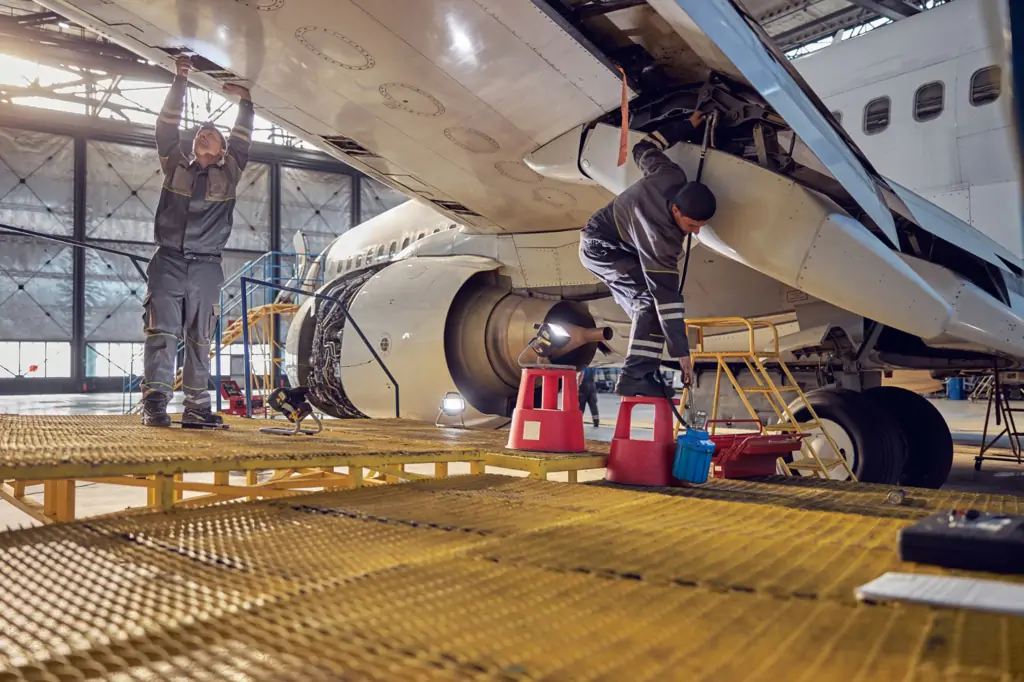
In a remarkable achievement for the Indian aviation industry, Air India Engineering Services Limited (AIESL) Thiruvananthapuram Maintenance, Repair, and Overhaul (MRO) facility has reached a significant milestone by successfully completing the first Boeing 737-8 Max aircraft major check in India. This remarkable feat follows closely on the heels of their accomplishment of performing the first major check approved by the Federal Aviation Administration (FAA) on an A320 NEO aircraft. AIESL Thiruvananthapuram MRO's journey to excellence is a testament to its dedication to precision, quality, and innovation.
Significance of the Boeing 737 Max & Airbus A320 NEO aircraft major Check Completion
Completing the first Boeing 737 Max major check in India is a groundbreaking achievement for AIESL Thiruvananthapuram MRO and the entire Indian aviation industry. The major check is one of the most comprehensive and complex maintenance tasks, involving a thorough inspection, repair, and overhaul of the aircraft's critical components. TRV MRO is certified by DGCA, India & FAA, US for completing major checks on Boeing 737NG & MAX aircraft and the Airbus A320 family with both CEO & NEO engine versions. TRV MRO is currently in the process of obtaining certification from the European Union Aviation Safety Agency (EASA). Once EASA approval is secured, the MRO facility anticipates an influx of foreign carriers' aircraft for comprehensive maintenance checks.
TRV MRO boasts a cutting-edge component overhaul division that maintains B737 aircraft wheels, brakes, batteries, and pressure vessel components. Additionally, the facility is in the process of establishing a comprehensive structural repair shop, complete with advanced composite repair facilities.
This milestone underscores several key points:
Safety and Compliance: The successful completion of the Boeing 737 Max & Airbus A320 NEO major check is a testament to the facility's commitment to safety and adherence to international aviation standards, including stringent FAA regulations.
Enhanced Reputation: TRV MRO's achievement further establishes India as a destination for high-quality aircraft maintenance services, attracting both domestic and international carriers seeking top-notch maintenance solutions.
Cost Efficiency: The ability to perform major checks on ultra-modern Boeing 737 Max and Airbus A320 NEO aircraft within the country reduces maintenance costs for Indian airlines and enhances their competitiveness.
A Glimpse into the History of AIESL Thiruvananthapuram MRO
The journey of AIESL Thiruvananthapuram MRO, located near the Trivandrum International Airport, was inaugurated by then Civil Aviation Minister (State) Mr. Vyalar Ravi on 16th Dec 2011. Over the decade, it has evolved into a state-of-the-art facility specializing in aircraft maintenance, repair, and overhaul. Initially established to serve Air India Express's fleet, the facility has since expanded its services to cater to a broader clientele, including SpiceJet and Vistara Airlines. The MRO boasts a team of highly skilled and trained professionals, advanced equipment, and cutting-edge technology to ensure top-notch aircraft maintenance services.
Importance of AIESL Thiruvananthapuram MRO for Kerala
Economic Boost: AIESL Thiruvananthapuram MRO is pivotal in bolstering Kerala's economy. The MRO facility is a source of employment for skilled technicians and engineers in the region, contributing to job creation and economic growth.
Skill Enhancement: The MRO facility has become a hub for skill development in the aviation sector. It offers training programs and apprenticeships, enabling young professionals to acquire specialized skills and pursue rewarding careers in aircraft maintenance.
Technological Advancement: AIESL Thiruvananthapuram MRO is at the forefront of technological innovation in the aviation industry. Its successful completion of the Boeing 737 Max C check demonstrates its capability to handle the latest aircraft models, enhancing India's reputation in the global aviation market.
Comment