
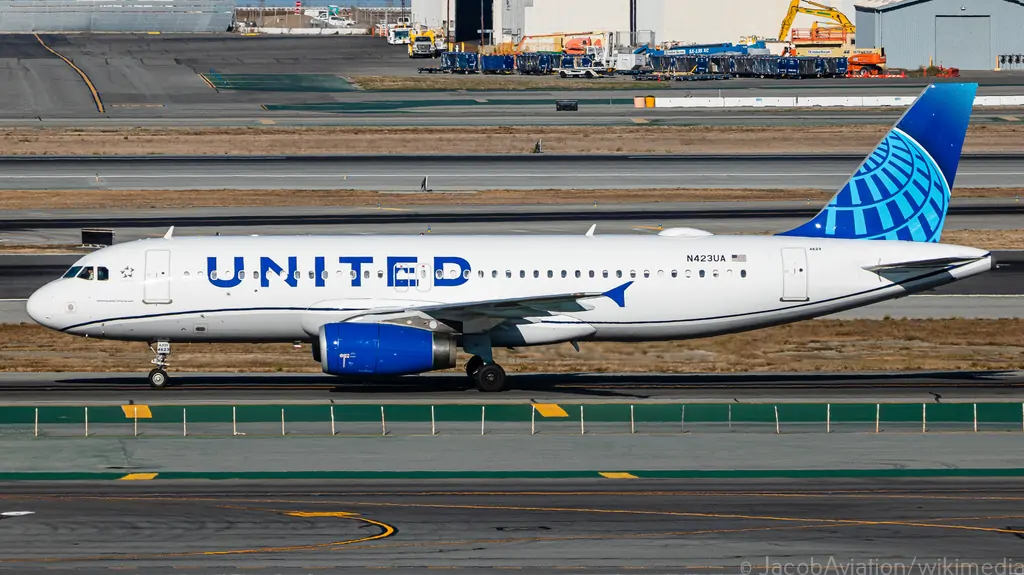
On April 18, 2023, United Airlines aircraft, UA-1274, was flying from Bradley International Airport (BDL) to Dulles International Airport (IAD) when an unforeseen in-flight emergency occurred. One of the flight deck windows 'popped open' during the trip, causing the aircraft to be diverted to a neighboring airfield. While there were no casualties, this occurrence raises questions regarding aeroplane maintenance and the significance of safeguarding the safety of all people on board.
What Causes Flight Deck Windows to Open in the Middle of a Flight
Flight deck windows are built to resist changes in pressure and temperature. However, they can fail for a variety of causes, including fatigue, corrosion, or manufacturing flaws. In certain situations, bird strikes or other debris can also damage the glass, resulting in a mid-flight collapse.
How Frequently do Situations like this Occur
While events involving 'popping open' flight deck windows in mid-flight are uncommon, they are not unheard of. An Air India flight was forced to make an emergency landing in 2018 when a cockpit window smashed mid-flight. Similarly, in 2019, a Delta Air Lines flight was forced to detour due to a damaged windscreen.
The Incident
A United Airlines Boeing 737 was forced to make an emergency landing in the United States at Bradley Airport. According to The Aviation Herald, this unexpected detour was caused by an alleged event of a cockpit window rapidly 'popping up' while the jet was in mid-air. On April 18, a United Airlines Boeing 737-900 aircraft, UA1274, was flying from Windsor Locks Bradley International Airport (BDL) to Washington Dulles International Airport (IAD) in the United States when the flight crew announced an emergency landing. The flight, flown by a nearly nine-year-old Boeing 737-900 with the registration code N66825, carried 178 passengers. The flight was planned to leave at 6:00 a.m. and arrive at 7:23 a.m. The aircraft took off from runway 24 at 6:11 a.m., almost exactly on time, but it did not get very far. The pilots levelled out at 4,000 feet and reported an emergency after a window in the cockpit burst up after take-off.
According to accounts, the incident occurred mid-flight when the flight deck glass 'popped open'. The pilots promptly launched emergency procedures and redirected the plane to the nearest airfield. Passengers were told to buckle their seat belts and be calm. The passengers were safely disembarked upon landing. A United Airlines spokesperson told Insider that the plane returned to its original route to "address an unlatched cockpit window." The plane landed safely, and we re-accommodated our passengers on another plane." According to Flightradar24.com, the rescheduled flight finally took off at 12:21 PM local Bradley time, resulting in an almost six-hour delay. Fortunately, a substitute aircraft, a month-old Boeing 737 MAX 9 registered N37555, was quickly obtained to take over the interrupted trip. Passengers arrived at their destination at 1:34 PM.
Interestingly, this was not merely a case of the jet returning to the airport, closing the cockpit glass, and resuming the journey. Rather, the plane stayed on the ground for about 12 hours before taking off again at 6:30 p.m. that evening for a journey to Chicago. The underlying reason of the incident is unknown, since it has yet to be confirmed if it was caused by probable human error or by a mechanical issue, such as a maintenance issue.
What Steps Does the Aviation Sector Take to Guarantee Flight Safety
To guarantee that aeroplanes are safe to fly, the aviation sector has strong safety processes and regulations in place. These include frequent aircraft inspections and maintenance, thorough training for pilots and crew members, and continuous flight operations monitoring. Furthermore, all airlines must adhere to national and international safety standards established by regulating authorities such as the Federal Aviation Administration (FAA) and the International Civil Aviation Organization (ICAO).
The Value of Aircraft Maintenance
The maintenance of aircraft is a vital part of aviation safety. Regular maintenance ensures that all components of an aircraft are in proper working order, lowering the chance of unforeseen faults during flights. Neglecting maintenance can lead to potentially hazardous circumstances, such as the one that occurred with the United Airlines Boeing 737. In recent years, there have been multiple cases of aircraft accidents due by poor maintenance, such as the 2018 Lion Air disaster in Indonesia, which killed all 189 passengers and crew members on board.
In the Event of An Emergency, What Should Passengers Do
In the event of an emergency, passengers are asked to stay calm and follow the flight crew's instructions. This involves buckling their seat belts, putting on their breathing masks, and, if required, following the evacuation protocols. Prior to take-off, it is critical to pay attention to the safety briefing and become acquainted with the emergency exits and procedures.
Implications for the Aviation Industry
The United Airlines Boeing 737 incident emphasizes the significance of ongoing awareness and adherence to aviation safety regulations. All parties concerned, from airlines and manufacturers to regulatory agencies and maintenance staff, must prioritise safety. This event serves as a warning that even little issues can have serious implications, emphasizing the significance of continual training and readiness for all aviation employees. Regulators may also use this occurrence to evaluate and enhance existing policies or processes to guarantee that similar accidents do not occur in the future.
Conclusion
The event involving United Airlines Boeing 737, UA-1274, serves as a reminder of the necessity of aircraft maintenance and the aviation industry's need for ongoing monitoring. To maintain the safety of passengers and crew on flights, all parties must collaborate. While there were no injuries reported in this occurrence, it emphasizes the possible consequences of failing to follow standard maintenance practices. The aviation sector must continue to learn from such tragedies and work to enhance safety measures for all air travellers.
With Inputs from onemileatatime

Read next
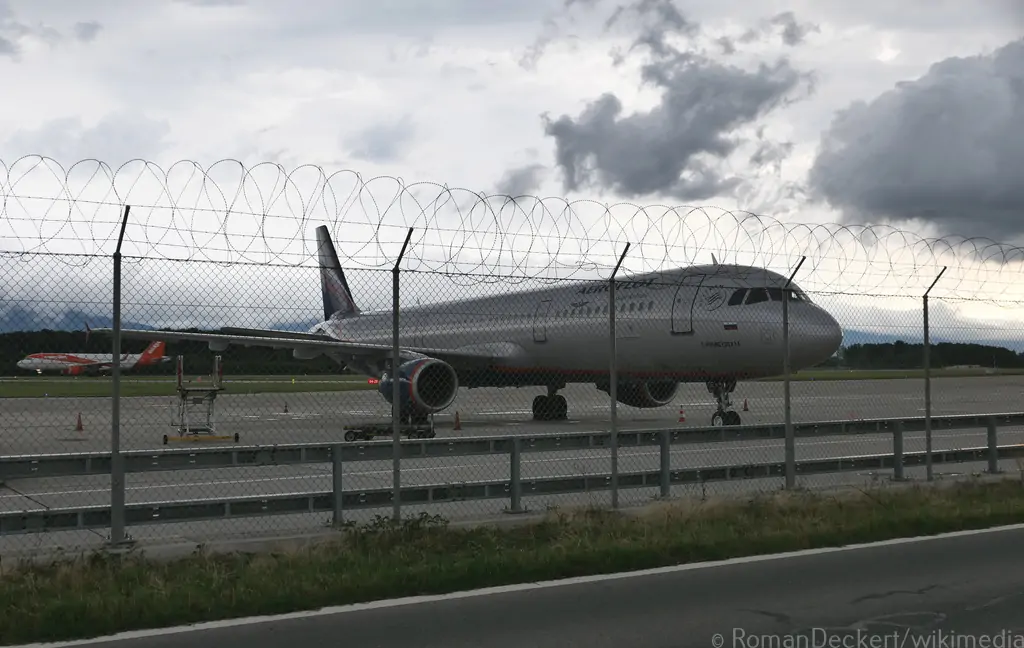
In the face of Western sanctions, Russia's flag airline, Aeroflot, has chosen to reactivate its storage aircraft in order to meet rising demand for air travel. The airline had grounded a large number of its planes owing to the COVID-19 outbreak, and the advent of western sanctions had hampered its operations even more. However, with rising demand for air travel, the airline is making moves to re-enter the skies.
Western Sanctions' Impact on Aeroflot
Since 2014, Western sanctions have been placed on Russia in response to the country's annexation of Crimea, with increased sanctions being imposed due to the ongoing Russia-Ukraine War. These sanctions have had an impact on numerous areas of the Russian economy, including aviation. These sanctions have had a significant impact on Aeroflot, Russia's flag carrier. It has had difficulty procuring replacement parts, maintenance services, and aircraft finance.
Grounding of Aeroflot Aircraft due to COVID-19 Pandemic
The COVID-19 outbreak has exacerbated Aeroflot's predicament. Due to the closing of international borders and a drop in air travel demand, the airline was forced to ground a large number of its aircraft. This was not an isolated incident for Aeroflot; other airlines throughout the world had similar difficulties.
Aeroflot's Efforts to Reactivate Stored Aircraft
Despite the difficulties, Aeroflot has chosen to reactivate its storage aircraft in order to fulfil the growing demand for air travel. The airline has taken the following actions.
Grounded Aircraft Maintenance: Before the grounded planes can be re-launched, they must be serviced and equipped for flight. During the epidemic, Aeroflot has been focusing on aircraft maintenance. It has been maintaining its grounded aircraft to assure their airworthiness and passenger safety.
Hiring of extra Pilots and personnel: Aeroflot has started hiring extra pilots and personnel to operate its revived aircraft. During the epidemic, the airline had to lay off some of its employees, but it is currently in the process of employing additional employees to satisfy the increased demand for air travel.
Routes and Destinations: In order to meet the rising demand for air travel, Aeroflot is extending its routes and destinations. New routes to Europe, Asia, and Africa have been announced by the airline. It is also expanding the number of flights to popular locations.
Marketing techniques: Aeroflot has been developing marketing techniques in order to attract more passengers. The airline has been advertising its services and offering cheap flights through various means. It is also concerned with providing its passengers with a safe and enjoyable travel experience.
Aeroflot's Challenges in Reactivating Its Aircraft
While Aeroflot is working to revive its storage aircraft, the process is not without hurdles. Here are some of the issues that the airline is dealing with.
Sanctions: As previously stated, Western sanctions have had an impact on Russia's aviation industry, particularly Aeroflot. Because of the sanctions, the airline has had difficulty obtaining replacement parts, maintenance services, and funding for its aircraft.
Safety precautions: Aside from maintenance, the airline must adopt safety measures to avoid the spread of COVID-19. This involves supplying passengers and staff with personal protective equipment (PPE), sanitizing aircraft, and implementing social distancing measures.
Personnel management: Due to the epidemic, Aeroflot had to let some of its employees go, and it may take some time to find and train new employees. This might have an impact on the airline's capacity to operate all of its planes.
Present Situation
Aeroflot, Russia's national airline, is one of the world's oldest and largest airlines. It has been in operation for about a century and had a fleet of over 250 aircraft, but due to a global epidemic and the international sanctions imposed on the fleet, the number has been reduced to 179. According to local media sources, Aeroflot, Russia's flag airline, has begun reactivating numerous storage aircraft. This summer, twelve Boeing and Airbus planes will re-enter service as local and international air transport inside the country continues to revive. According to Vedomosti, a combination of Boeing B777 and B737 and Airbus A321 and A350 aircraft will join Aeroflot's fleet during the next several months. At least two planes, a 777 (RA-73139) and a 737 (RA-73110), have already resumed operation.
Following a steep drop in aviation travel prompted by international sanctions against the country, the planes were stored last year. With passenger traffic increasing by around 50% year over year between January and March, the airline has sought to reinforce its fleet. Three other planes, a B737, an A321, and an A350, are also scheduled to fly "in the near future." "Storage was a band-aid solution.” The measure enabled Aeroflot to "avoid unjustified losses and focus on a complete rethinking of the network of international routes and an effective increase in the presence in the domestic transportation market, including, to a large extent, on regional routes with tourism potential," an Aeroflot source told Vedomosti. This comes after the Russian Ministry of Transportation announced that the domestic flight subsidy programme would be extended. Earlier this month, various rumors surfaced claiming that the discontinuation of this programme would result in a 15% to 30% increase in ticket prices.
Current Fleet
Aeroflot presently operates 179 aircraft, the majority of which are contemporary Airbus A320 and Boeing B737 family narrowbodies, as well as 22 Boeing 777s, 12 A330s, and 7 A350s. Following a fleet transfer to its affiliate Rossiya in 2022, the carrier also has one Sukhoi Superjet 100. Despite having a reasonably large fleet, the carrier is nonetheless subject to international restrictions, which limit its maintenance, repair, and overhaul (MRO). Aeroflot said earlier this month that it has begun outsourcing work to Iran, with one Airbus A330-300 (RA-73700) being dispatched to Mahan Air's maintenance facility in Tehran (THR) for repairs. The 11-year-old plane landed in Iran on April 5 after spending many weeks on the ground at Moscow Sheremetyevo (SVO), and it is still there as of April 21.
Conclusion
Aeroflot's choice to restart its stored aircraft in the face of Western sanctions and the COVID-19 outbreak demonstrates the company's dedication to satisfying the rising demand for air travel. However, the airline continues to confront a number of obstacles, including the impact of Western sanctions, safety procedures, and its workforce. Despite these obstacles, Aeroflot is committed to providing its passengers with safe and enjoyable flight travel.
With Inputs from AeroTime
Read next

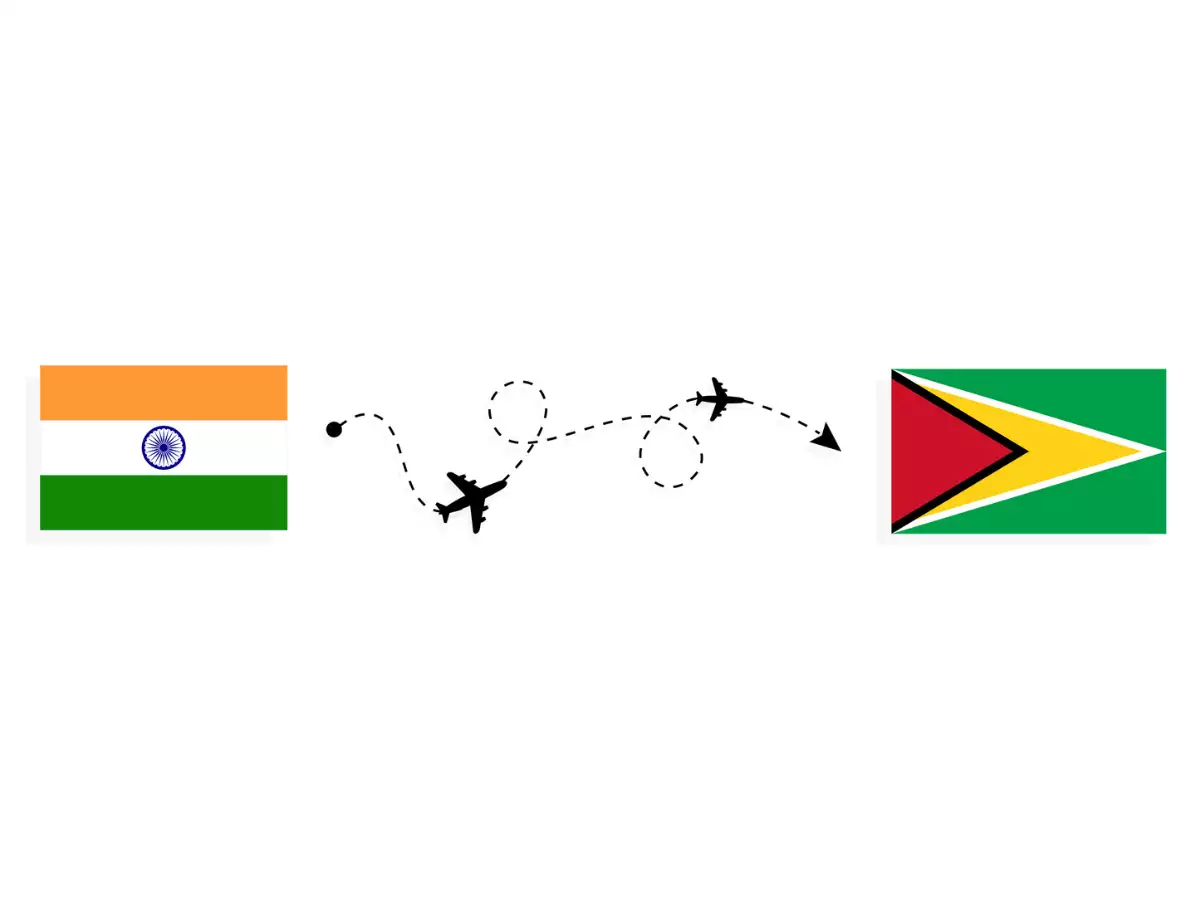
India and Guyana signed an Air Services Agreement (ASA) on Saturday, April 22 to facilitate easier travel between the two nations, News Room Guyana reported citing the release from the Ministry of Public Works of the country. The agreement was signed between Minister of Public Works Bishop Juan Edghill, M.P and the High Commissioner of India to Guyana KJ Srinivasa, and in the presence of External Affairs Minister S Jaishankar who is on a 3-day visit to Guyana.
The agreement's signing is consistent with the government's objective to establish ties between Guyana and the rest of the world. It will also complement the more than 50 Air Services Agreements Guyana has negotiated with other ICAO governments to advance interstate air travel.
Along with Jaishankar, Minister of Foreign Affairs and International Cooperation of Guyana, Hugh Todd; Permanent Secretary of Ministry of Foreign Affairs and International Cooperation, Ambassador Elizabeth Harper; Director General of the Guyana Civil Aviation Authority, Lt. Col. (ret'd) Egbert Field, and other Technical Officials from India and Guyana were also present while the agreement was being signed, reported Guyana's leading broadcast and online news media, News Room Guyana.
Approval from Cabinet
The Agreement encourages the development of international air services between the two nations and a global airline market. It also addresses important matters Grant of Rights; Designation and Authorization of Airlines; Revocation or Suspension of Operating Authorization, Principles governing the operation of Agreed Services, Application of Laws, User Charges, Customs Duties and Charges, Aviation safety and security, and more, reported News Room Guyana. As the two countries signed the air services agreement, new investment opportunities for Guyanese-owned airlines to have direct market access to international airports in India and vice versa will be now accessible.
The Union Cabinet in February approved the signing of an air services agreement between India and Guyana that will pave the way for flight services between the two countries. The agreement will come into force after the exchange of diplomatic notes between the parties confirming that each party has completed the necessary internal procedure for entry into force of the pact. India and Guyana are signatories to the Convention on International Civil Aviation (Chicago Convention). The delegations representing India and Guyana met in Nassau, Bahamas, on December 6, 2016, during the ICAO Air Services Negotiations event. At that time, both countries had initiated the text of an air services agreement for scheduled air services between the two countries. Currently, India has air services agreements with around 110 countries.
Guyana and Trans Guyana Airways
Guyana officially the Co?operative Republic of Guyana, is a country on the northern mainland of South America. Guyana is an indigenous word which means "Land of Many Waters". The capital city is Georgetown. Guyana is bordered by the Atlantic Ocean to the north, Brazil to the south and southwest, Venezuela to the west, and Suriname to the east. With 215,000 km2 (83,000 sq mi), Guyana is the third-smallest sovereign state by area in mainland South America after Uruguay and Suriname, and is the second-least populous sovereign state in South America after Suriname; it is also one of the least densely populated countries on Earth. It has a wide variety of natural habitats and very high biodiversity.
Guyana’s domestic aircraft industry, servicing the country’s hinterland and coastal destinations, has rapidly expanded over the past 20 years with Trans Guyana Airways leading the way in this expansion. Trans Guyana Airways Limited is a Guyanese airline which commenced operations in 1956 in Georgetown, Guyana, with a single float airplane. Since then, the company has expanded their fleet to provide domestic and regional transportation, and to Guyana's remote areas. Trans Guyana Airways is a member of the Correia Group of Companies amember long with Caribbean Aviation Maintenance Services, Evergreen Adventures, Baganara Island Resort and the Correia Mining Company.
In addition to serving Guyana's interior, Trans Guyana Airways works in cooperation with Gum Air to provide a scheduled air link between Paramaribo (Suriname) and Georgetown (Guyana). The carriers operate seven days a week between Eugene F. Correira International Airport (SYEC) and Zorg en Hoop Airport (SMZO). Trans Guyana linked with KLM in 2019 to provide flights from Guyana to the Netherlands via Suriname in 12 hours.
TGA currently owns and operates an expanding fleet of 13 aircraft (10 Cessna 208 Caravans and 3 Beechcraft 1900Ds), flying approximately 22 domestic commercial flights per day and 2 international flights each day to Suriname. The airline employs 26 highly experienced Captains holding many thousands of hours, trained and qualified for the special conditions and demands of hinterland flying.
Read next
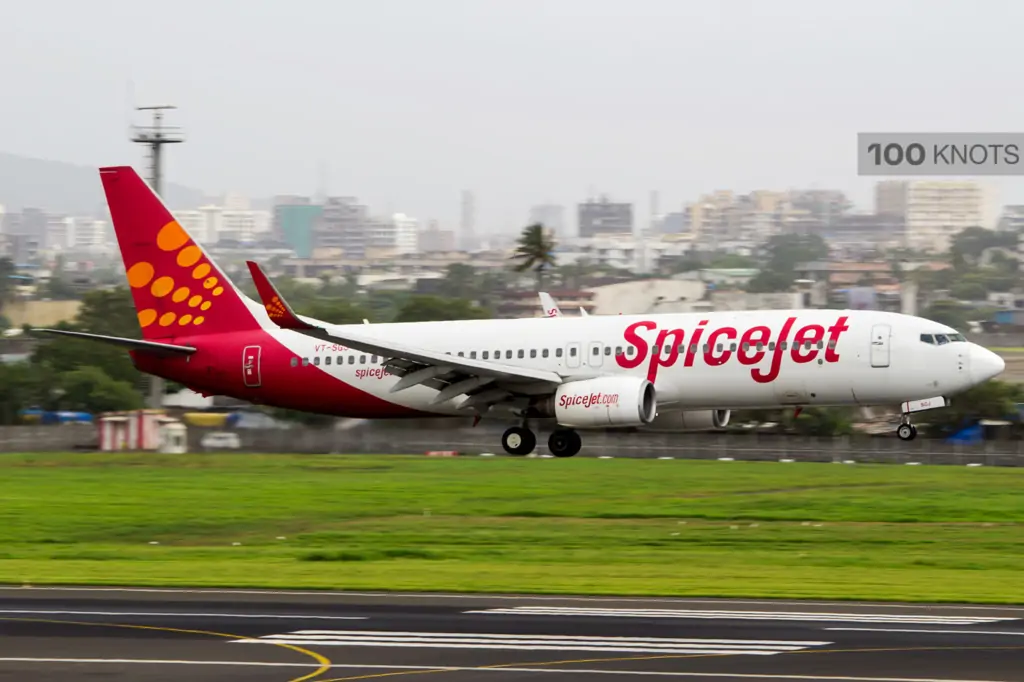
Beleaguered Swiss bank Credit Suisse has moved the Supreme Court against SpiceJet, alleging contempt of court over the failure of the domestic carrier to comply with a court-approved settlement plan for payment of dues. SpiceJet, however, told the apex court on April 21 that it would pay a tranche the same day and the next in May. The Supreme Court put the contempt plea on hold and will now hear the case on May 17.
In May 2022, SpiceJet Limited and Credit Suisse AG entered into a settlement on a payment dispute. The dispute arose over the non-payment of dues by SpiceJet to Switzerland-based SR Technics, which maintains, repairs and overhauls aircraft for airlines. SpiceJet had defaulted on dues to the tune of USD 20 Million.
The dispute dates back to an unpaid engine maintenance and repair agreement signed in 2011 when former promoter Kalanithi Maran was in charge of the airline. In 2013, Credit Suisse filed a case in the Madras High Court alleging that SpiceJet did not honour its commitment to pay bills worth over USD 24 million for maintenance, repair, and overhauling of the aircraft engines and components. In December 2021, the court ordered winding up the airline, but SpiceJet then moved to the Supreme Court. The apex court had on January 28 stayed the high court order and granted three weeks to the budget carrier to resolve the commercial dispute.
This dispute led to the Madras High Court ordering the winding up of SpiceJet. The order was also upheld by a bigger high court bench, which the airline challenged in the Supreme Court. It secured a reprieve from the country's top court, which stayed the order in January 2022. The court asked both sides to settle the dispute instead of litigating over it.
A settlement agreement was drawn up in May 2022 and it required SpiceJet to pay a certain amount upfront and the balance over a mutually agreed timeline. The settlement arrived after SpiceJet successfully settled its previous disputes with De Havilland Aircraft of Canada Limited (DHC), Boeing, CDB Aviation, BOC Aviation and Avolon.
SpiceJet’s Response
At today’s hearing, SpiceJet conceded before the top court that it had fallen behind on prescribed timelines for payment of settlement dues and assured that one tranche will be paid today. The airline has also said that a subsequent tranche of payment will be made in May.
“The Supreme Court did not issue any notice on the contempt petition and posted the matter on May 17. SpiceJet has made the applicable April payment as per the schedule and has submitted to the Supreme Court that the payment for May shall also be as per schedule. The payment of settlement amount was subject to RBI approval and hence the company could not start the payment as per applicable schedule under the consent terms,” a SpiceJet spokesperson said.
The Supreme Court has put Credit Suisse's contempt plea against SpiceJet on hold. It shall resume hearing on May 17 to review the payment status. On SpiceJet’s appeal, the Supreme Court put a Madras High Court order on hold and asked the parties to settle the dispute. The High Court had directed SpiceJet to wind up the airline as it refused to acknowledge outstanding dues.
Both Credit Suisse and SpiceJet then agreed to withdraw their litigation. They, however, had the liberty to approach the Madras High Court to withdraw a bank guarantee of USD 5 million.
Read next

The Adani Group has halted the proposed INR 400-crore acquisition of maintenance, repair and overhaul (MRO) company Air Works owing to a major shareholder in the target entity being forced into liquidation, said a report by The Economic Times.
Adani Group could not close the deal as the Punj Lloyd Group, which holds a 23% stake in the company, went under liquidation, causing inordinate legal delays in closing the deal, reported Economic Times citing sources. The report said that a Memorandum of Understanding (MoU) signed between Air Works and the Adani Group to close the deal has already expired twice, and the latest deadline was set in Q4FY23.
Last year in October, Adani Defence Systems & Technologies Ltd. (ADSTL) signed definitive agreements to acquire Air Works, a highly diversified independent MRO with the largest pan-India network presence across 27 cities.
Air Works has developed extensive operational capabilities for key defence and aerospace platforms within the country. From the first P-8I aircraft Phase 32 checks to Phase 48 checks and MRO on the landing gear of the Indian Air Force’s 737 VVIP aircraft, Air Works undertakes base maintenance for ATR 42/72, A320 and B737 fleet of aircraft from its EASA and DGCA-certified facilities at Mumbai, Delhi, Hosur and Kochi.
Adani Group’s bonds and shares tumbled after Hindenburg Research released a critical report in January that accused it of fraud. Due to the scathing report, the listed Adani firms lost over USD 100 billion in market value. The ports-to-power conglomerate has vehemently denied the short-seller’s allegations.
About Air Works
Air Works is one of the oldest private MRO companies in the country. It was established in 1951 by P.S. Menon and B.G. It was done by two friends named Menon. It provides its service in 27 cities of the country. The group has recently completed 73 years of operations. The group aims to expand its business in two ways: by purchasing more airports and entering various segments of airport services, such as MRO, ground handling, and duty-free stores.
Air Works Group, with a pan-India presence across 27 cities, competes with 50 standalone Indian MRO players including Government-run AI Engineering Services Ltd and GMR Aero Technic. As of March 31, 2021, GTI Capital Group, an India-focused investment company, was the largest shareholder in Air Works Group with a 25.75% stake, followed by Punj Lloyd Aviation, a subsidiary of Punj Lloyd (23.24%), and the Menon family (15%), who founded the company in 1951.
Over the years, the Adani Group has signed a slew of deals in the defence sector including the acquisition of the Bengaluru-based Alpha Designs, a firm which also caters to the aerospace sector, and a joint venture with Israeli firm Elbit Systems. It also acquired a 51% stake in the small arms business of Gwalior-based PLR Systems in an all-cash transaction.
At the same time, the government-owned Air India Engineering Services Limited is the largest MRO company in the country. In 2021-22, it handled 450 aircraft and its profit was INR 840 crore. Tata Group has also formed a group in agreement with Germany’s Lufthansa and France’s Air France-KLM to buy this company. The company has 6 hangars.
According to a Deloitte report from November 2021, the Indian MRO industry is projected to expand from USD 1.7 billion in 2021 to USD 4 billion by 2031, with a CAGR of 8.9%. Indian airlines typically meet their aircraft maintenance needs abroad. However, the government has now eased taxation norms for the MRO sector. In March, it lowered the GST on domestic MRO services from 18% to 5%, attracting new companies. Furthermore, Safran Engineering announced in July that it is investing up to USD 200 million in an MRO facility in Hyderabad. At the same time, the government is also seeking to privatize AI Engineering Services by early 2023.
Have a look at Air Works' CEO and MD D Anand Bhaskar's talk about bringing the Indian MRO industry up to scale in the January edition of the 100 Knots magazine.
(With Inputs from The Economic Times)
Comment