
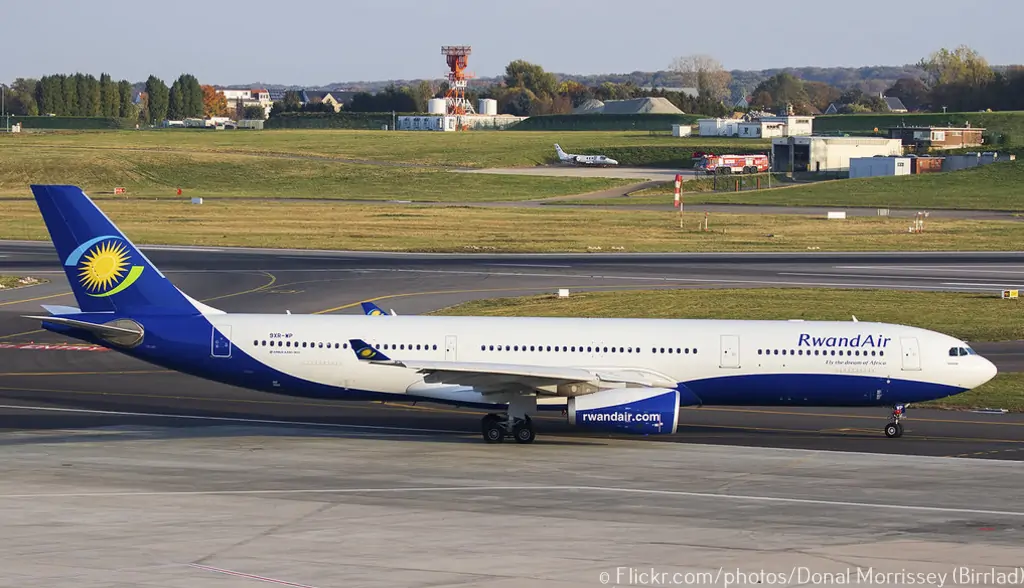
African carrier RwandAir will open services to Paris Charles de Gaulle towards the middle of this year. The airline is to commence the flights on 27 June, operating the route from Kigali thrice weekly. Addition of the Paris link with expand the carrier’s network to 25 destinations.
“France is a major market for RwandAir,” says the airline’s chief executive, Yvonne Makolo. “Launch of our first-ever flights to Paris is an exciting development.” RwandAir’s reservations engine indicates that it will use an Airbus A330-300 for the connection, but also shows that the flight will continue onwards to Brussels, replacing its non-stop service to the Belgian capital.
The eight-and-a-half-hour flight between KDG and CDC will be operated by Airbus A300-300. The aircraft has a capacity of 274 seats, with 30 lie-flat business class seats, and 244 seats in the economy class. Flight WB700 will depart KGL on Tuesdays, Thursdays, and Saturdays at 12:30 AM and arrive at CDG at 9:30 AM the same day. The return flight WB701 departs CDG at 9:30 PM on Tuesdays, Thursdays and Saturdays and will arrive at KGL the following day at 6:00 AM.
The carrier has the A330-300 and -200 variants of the twinjet in its fleet of 13 aircraft, including Boeing 737s and regional types. RwandAir says it aims to double its fleet over the next five years, and will shift its base to the Bugesera international airport which is expanding.
RwandAir's Europe Expansion
RwandAir notes Paris-originating passengers can connect via KGL to the airline’s "extensive network of flights reaching across Africa to countries such as Ghana, Kenya, Nigeria and South Africa.” Adding Paris means that RwandAir has a daily service to Europe. The three-weekly Kigali-Paris-Brussels service is supplemented by a four-weekly Kigali-London Heathrow operation.
The flight will continue to Brussels, Belgium, as Brussels was recently separated from London Heathrow (LHR)For travellers flying from Brussels to KGL, the route will now non stop in CDG before heading to KGL. The route will now be BRU-CDG-KGL, and both flights will be operated by the same aircraft.
The latest UK CAA data is for January 2023. That month, RwandAir had 6,303 London passengers. With 8,844 seats for sale, it achieved a low load factor of just 71.3%.
About RwandAir
RwandAir is the national carrier of Rwanda, based at Kigali International Airport. Formerly known as RwandAir Express, the carrier operates services to Central, Eastern and Southern Africa, with interline services to Europe, the Middle East and China. Rwandair is owned 100% by the Government of Rwanda. As of May 2021, an agreement to sell a 49% stake to Qatar Airways is said to be in the final stages. The government hoped to privatise the airline after 2013, once it became profitable; the process had been abandoned in 2008 after it emerged that nobody at the time was willing to offer the amount expected from the sale.

Read next
Fuselage of Qatar Airways A350 Damaged After Tailstrike at Islamabad Airport
Radhika Bansal
18 Apr 2023
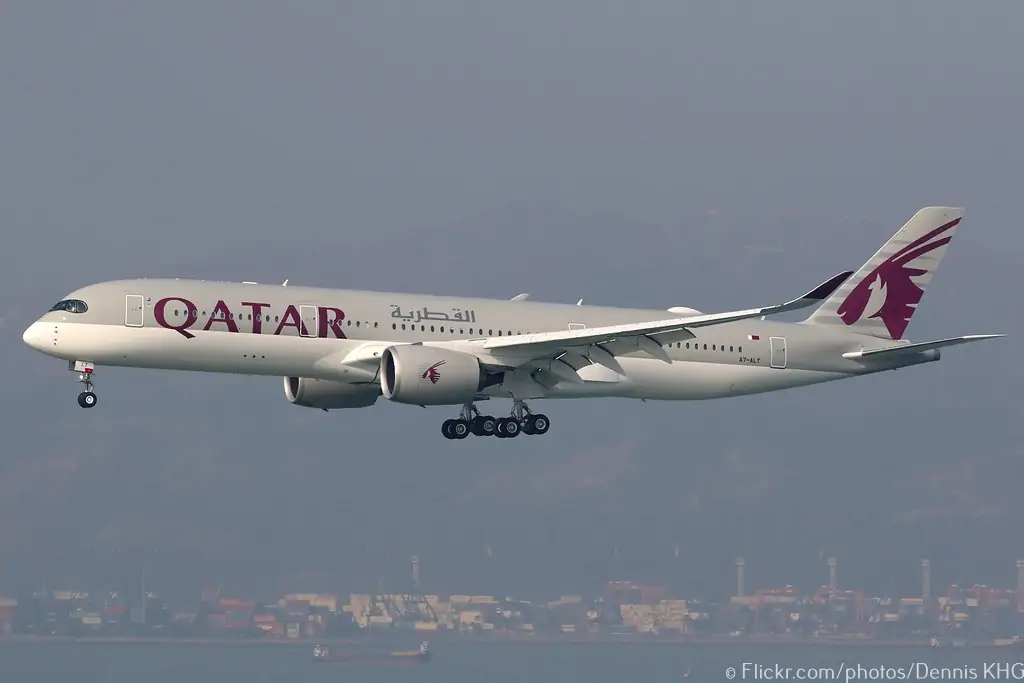
A Qatar Airways Airbus A350’s aft fuselage was damaged during a tailstrike incident at Islamabad International Airport (ISB), Pakistan. The Airbus A350-900, registered as A7-ALN, was operating flight QR614 between Doha Hamad International Airport (DOH) and ISB on April 16, 2023, when the incident occurred while landing. After performing a go-around, the wide-body aircraft landed at ISB safely.
According to flightradar24.com data, the Airbus A350-900 initially landed at ISB at 7:47 AM local time (UTC +5) with the flight crew initiating a go-around immediately afterwards and trying to land at the airport once again. During the second approach, the Qatar Airlines aircraft reached a peak altitude of 5,075 feet (1,546 meters) before finally landing at ISB at 8:00 AM local time (UTC +5).
The aircraft has remained at ISB since the incident with two return journeys from the Pakistani city to DOH on flight QR615, scheduled for April 16 and April 17, 2023, were cancelled, per flightradar24.com data. On April 16, 2023, the return journey was supposed to be operated by the aircraft involved in the incident, while on April 17, 2023, it was scheduled to be operated by one of the airline’s Boeing 787-8s. Qatar Airways other flight to Doha, flight QR633, departed ISB on a Boeing 777-300, registered as A7-BAZ, on April 17, 2023.

The flag carrier of Qatar took delivery of the Airbus A350-900 on February 27, 2017, utilizing the wide-body jet extensively. As of January 31, 2023, it has a total of 29,086 flight hours (FH) and 4,412 flight cycles (FC), according to ch-aviation.com data.
In an email statement sent, the airline confirmed “Qatar Airways can confirm that flight QR614, an Airbus A350-900 operating from Doha, Qatar to Islamabad, Pakistan, performed a go-around before landing safely shortly afterwards on Sunday, 16 April.” According to them, “the aircraft is currently being inspected for a potential tail strike and a delay to the return flight is expected while these checks are performed”.
“We apologise to our customers for the delay they are currently being provided hotel accommodation and will rebook on to flights to Doha at the earliest opportunity. The safety of our crew and customers remains Qatar Airways’ top priority,” concluded the spokesperson.
Blood and urine samples of the cockpit crew have been taken for medical tests and the aircraft was examined by Pakistan’s Aircraft Accident Investigation Board (AAIB) representatives at Islamabad Airport. Information about the incident also has been sent to Airbus. Following the engineers’ inspection, the aircraft was declared ‘aircraft on the ground,’ while the airworthiness and AAIB members finalise their report on the incident.
Airbus and Qatar Airways settle A350 paint dispute
Airbus and Qatar Airways have settled a dispute over the degraded surface of grounded A350 jets averting a potentially damaging UK court trial. The "amicable settlement" ends a bitter dispute over the safety of corrosion left exposed by cracked paint, which had led Airbus to revoke dozens of jet orders from the Gulf airline. Airbus said the deal was not an admission of liability by either party, both of whom would move forward as partners.
This long-going saga started towards the end of 2020 when Qatar Airways complained that it had detected cracks in the paint of some of its newly acquired A350 aircraft and subsequently grounded part of its fleet. Airbus rejected all allegations that safety could have been compromised due to this issue. Qatar Airways had 53 Airbus A350 aircraft (34 of the –900 version and 19 of the –1000 one), in its fleet plus outstanding orders for 19 more of the type when this conflict erupted.
Read next
The Sri Lankan cabinet has given the go-ahead to amend the country's civil aviation law to allow public-private partnerships in the aviation sector, a development that may open up opportunities for Indian companies. Sri Lanka may allow the participation of private companies in ground handling at the airports at the initial stage, said people familiar with the matter.
In December 2022, the Indian High Commissioner to Sri Lanka, Gopal Baglay, said that India was ready to work with the Sri Lankan government to upgrade and expand the facilities at the Palaly international airport in Jaffna. He had said that it would especially benefit the small and medium segments of the business, apart from strengthening the traditional ties between the people of the two countries.
Sri Lankan Carriers Flying to India
Recently, SriLankan Airlines said it would start operations from additional three cities in India, including Ahmedabad, to attract more Indian customers. At present, it operates in nine Indian cities. FitsAir, Sri Lanka's first privately owned international airline, inaugurated its flights on the Colombo-Chennai sector in February. Chennai is its first destination in India.
FitsAir’s extension to Chennai is part of the company’s ongoing expansion effort and demonstrates its commitment to providing customers with increased travel options and improved connectivity. The airline operates a modern fleet of 3 Airbus aircraft and employs a team of highly skilled and experienced professionals. FitsAir is the fourth carrier to fly in the sector, the other airlines being Air India, IndiGo and Sri Lankan Airlines. Alliance Air, the Government of India’s feeder airline, operates in the Chennai-Jaffna sector.
SriLankan Airlines has also focused on Visakhapatnam, the proposed new capital of Andhra Pradesh, as part of its global restructuring plan to tap the tourism potential in South India and Sri Lanka. The airlines had operated between Visakhapatnam and Colombo for one-and-a-half years since 2017, and the services were stopped later as part of the restructuring plan.
The airline remains the largest foreign airline operating in India, offering services to 14 different destinations. The airline operates services in 42 different cities in 20 different countries. SriLankan Airlines participates in oneworld, which allows the airline to offer its passengers service to over 1,000 cities in 160 different countries.
SriLankan Airlines also codeshares with other airlines such as Air Canada, Air India, Etihad Airways, Qatar Airways, and several others. The airline also has an interline agreement set up with Pakistan International Airlines. SriLankan Airlines currently has 24 aircraft in its fleet, all Airbus planes. The airline operates 12 Airbus A330 planes in two variants and an assortment of Airbus A320 and A321 planes. In December, it was reported that the airline was trying to lease five additional A320s and five more A330s as well.
The Famous Island Nation
Directorate General of Civil Aviation (DGCA) data for January-March 2020 shows SriLankan as the ninth biggest airline in terms of flying passengers in and out of India with a 3.1% share of the pie (same as Oman Air at the eighth spot). Many passengers from India transit via Colombo to London and Paris in the west to Tokyo and Sydney in the east.
In the past few years, the island’s airline — Sri Lankan — has emerged as one of the biggest international airlines in India in terms of the number of flights. A significant number of Indian travellers fly Sri Lankan to transit via Colombo. The DGCA-approved summer schedule-2022 shows Sri Lankans’ 128 weekly flights to and from India are second only to 170 of Emirates — the international airline with maximum flights here.
Air India in April 2022 reduced its India-Sri Lanka services from 16 flights per week to 13 flights per week from April 9 due to poor demand. Sri Lanka was experiencing its worst economic crisis in history at that time. With long fuel lines, cooking gas, essentials in short supply and long hours of power cuts, the public has been suffering for weeks.
Read next
Wadia Group Likely To Sell Stake In Go First; To Receive INR 600 Crore More By April End
Radhika Bansal
18 Apr 2023
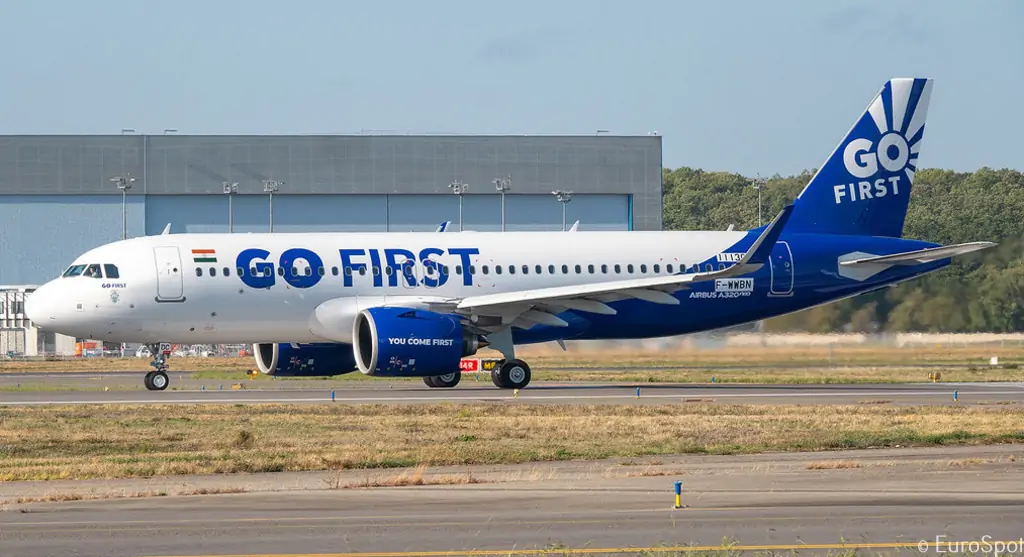
Loss-making Go First is likely to get new owners as current ones - the Wadia Group - have begun talks with strategic partners to either sell a significant stake in or entirely exit the airline, top officials close to the development told The Economic Times. The Wadia Group, which owns the loss-making 18-year-old budget carrier Go First, has begun talks with strategic partners to either sell a significant stake in or entirely exit the airline, sources told the paper.
Go First Engine Issues
Go First has also been tackling huge operational issues in the past few months as half of its aircraft have been grounded due to supply chain disruptions about Pratt & Whitney (P&W) jet engines. At present, 23 aircraft out of the airline’s fleet of 57 are grounded because of fuel troubles, supplied by American engine maker Pratt and Whitney. The official said that the airline is working on a war footing to bring all the aircraft back into service.
The airline says it is suffering significantly from constant issues with the GTF. It fears that the continued grounding of aircraft could derail the upcoming summer season. Earlier this month the Directorate General of Civil Aviation had taken up issues with P&W after more than 60 Airbus aircraft of IndiGo and Go First were grounded due to maintenance problems and a lack of spare parts.
There are industry-wide complaints about the GTF, which on the A320neo family, A220, and Embraer E2-Jets suffer from higher internal wear than anticipated and need to come off wing earlier. With repair shops swamped with engines, it takes up to eight months before airlines get their engines back. P&W is promising improvements but these take time.
For now, the airline is operating one extra flight with serviceable aircraft to mitigate the impact of the grounding. “Our aircraft are currently operating 14.5 hours a day, which is the highest in the industry and leads to one extra flight. We are in discussions with lessors and vendors and have received support from them to help manage our cash flows,” the official said.
Of the 720 aircraft currently registered in India, around 120 are grounded, impacting the entire industry, the official said. Daily domestic passenger numbers have been higher than the pre-Covid levels despite the grounding of airplanes.
Financial Crunches of the Airline
In FY23, the domestic carrier took at least two loans worth INR 203.5 crore under the government’s Emergency Credit Line Guarantee Scheme to deal with its cash crunch. This is not the first time the Wadia Group has looked to offload a stake in the airline. According to a Financial Express report in 2018, the airline promoters had appointed a UK-based merchant bank to gauge buyers’ interest and be the transaction adviser for the deal if it materialises.
In an otherwise upbeat domestic aviation market, Go First has lost a significant amount of money lately. Initially, it covered INR 600 crore under the Centre's Emergency Credit Line Guarantee Scheme (ECLGS). Separately, Wadia Group infused INR 3,000 crore over the past 15 months in the airline.
"It is a difficult situation that is being tackled. We are burning money with our aircraft on the ground. We have spent Rs 3,000 crore in the last 15 months to keep the airline afloat...All options are being considered, and multiple scenarios have been planned. The last option, unfortunately, will be to exit the airline business," an official aware of the matter was quoted as saying in the report.
Go First made its highest annual financial loss to date in FY22. The airline's net worth, according to Capitaline, has fallen from (-) INR 2,361 crore to (-) INR 3,317. During the same period, its losses widened from INR 870 crore to INR 1,804 crore. The airline was also planning to launch its initial public offer (IPO) earlier in 2021 but it got delayed due to the Covid-19 pandemic. Go First filed the draft red herring prospectus (DRHP) in May 2021 to raise INR 3,600 crore. It received the regulator's nod in August 2021. However, the approval expired on August 26, 2022.
Go First commenced operations in November 2005. The airline’s website says that it has a fleet of 59 aircraft of which 54 are Airbus A320neo and the remaining are A320ceo models.
Go First to receive Rs 600 crore more by the April end
Go First will receive INR 600 crore more as promoter equity and bank debt by April end. This will help it meet immediate capital requirements, a top airline official said. The Wadia family and banks would provide INR 300 crore with each.
The Indian aviation sector, which was hit hard by the outbreak of the Covid-19 pandemic and the Russia-Ukraine war, has seen a rebound since last October, with domestic traffic crossing 450,000 almost daily
“The promoters are completely committed to the airline. In the last 20 months, the promoters have invested INR 3,000 crore and will provide another INR 290-300 crore as equity by the end of April. An additional INR 300 crore will come in the form of bank debt under the Emergency Credit Line Guarantee Scheme (ECLGS) scheme of the Indian government by April or May,” said the official, asking not to be named.
The capital infusion is being led by the Wadia Group, which will reportedly provide INR 300 crore, along with a consortium of banks that have also committed to investing the same amount. Go First is expected to use the funds to address supply chain disruptions that have grounded over 50% of its planes, leading to significant operating losses in the last fiscal year.
Go First's financial struggles have been well documented, with the airline posting its highest operational loss in FY22. The company has been exploring various options to improve its fortunes, including expanding its operations and exploring new markets.
Read next

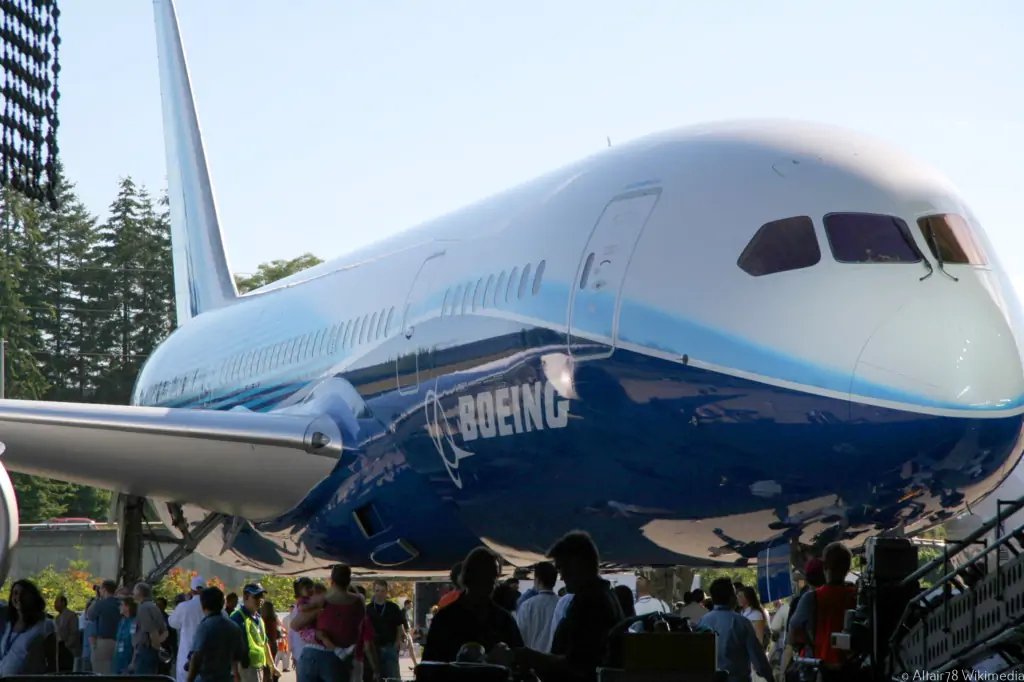
Boeing, one of the world's top aerospace corporations, recently announced its intentions to pay up to $10,000 in referral bonuses when hiring new employees. This move comes as the firm seeks to increase production and staff in order to fulfil rising demand for its products and services throughout 2023 and the next three years.
What Exactly Is the Boeing Recommendation Bonus Program?
The Boeing recommendation bonus program is a referral program that compensates existing workers for referring excellent candidates for available positions inside the firm. Employees who suggest a candidate who is finally employed by Boeing can get a bonus of up to $10,000 under this scheme. The amount of the bonus is determined by the role for which the candidate is hired as well as the location of the work.
Significant Incentives
According to Leeham News, Boeing is providing referral bonuses of up to $10,000 to existing employees at its Puget Sound, Washington, operations. Workers who recommend experienced aerospace experts to available positions in a variety of disciplines, including structural mechanics and general machinists, may be eligible for the incentive. The business builds the 737 MAX, 777, and 777X, as well as the 767F and the KC-46A, a military variant of the 767, in Puget Sound.
Why is Boeing Offering Recommendation Bonuses?
Boeing's move to give recommendation bonuses is part of the company's larger attempts to attract and retain top talent in a competitive market. With the aviation sector projected to recover rapidly in the next few years, the firm plans to boost production and expand its personnel to fulfil demand for its goods and services.
How does the recommendation bonus program work?
All qualified Boeing workers are eligible for the recommendation incentive programme, and they can refer applicants using an online referral portal. After being suggested, a candidate will be evaluated for any vacant opportunities that match their credentials and experience.
What are the advantages of the recommendation bonus program?
The recommendation bonus program may be a cost-effective solution for Boeing to attract and retain outstanding staff. The organisation may access a larger pool of competent applicants and perhaps save on recruiting costs by using the networks and skills of its existing workers.
Staffing Shortages throughout the Industry
For several months, the sector has been suffering from a labor shortage. Boeing said in January that it intended to boost its workforce by 10,000 this year.
Conclusion
To summarize, Boeing's recommendation bonus programme is a novel method to attracting and keeping top people in a competitive market. By motivating its workers to assist find and suggest excellent individuals, the firm may get access to a larger pool of talent while possibly saving money on recruiting expenditures. For employees, the programme may be a means to earn extra money while also contributing to the company's success. When the aviation sector recovers, programs like this are expected to become more widespread as businesses attempt to develop and survive in a post-pandemic environment.
With Inputs from AeroTime
Read next
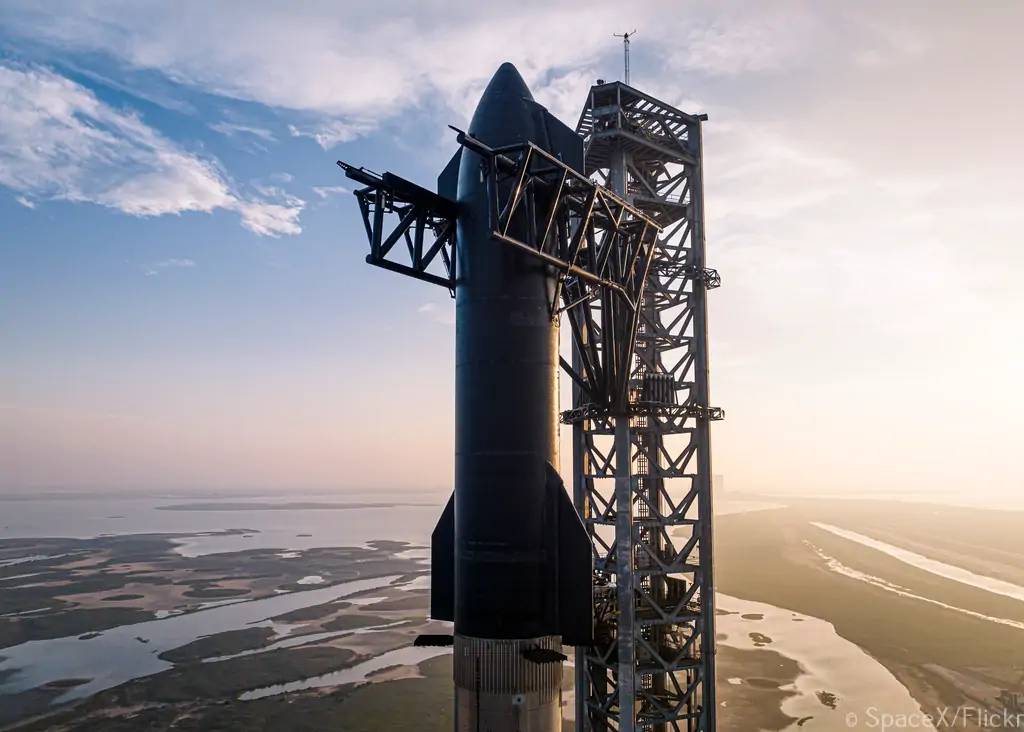
SpaceX, Elon Musk's private American space exploration corporation, has been working on the creation of its next-generation spacecraft, the Starship, for several years. The Starship is intended to be the most powerful rocket ever constructed, capable of transporting personnel and goods to the Moon, Mars, and beyond. But, the Starship's first flight has been postponed again and again, raising fears about the program's viability.
The History of SpaceX's Starship
The Starship from SpaceX is a fully reusable spacecraft that combines a rocket and a spaceship. The Super Heavy rocket is the most powerful rocket ever built, with 33 Raptor engines, 13 in the middle and the rest 20 surrounding the booster's aft end, providing 200 tonnes of thrust apiece. The Starship can transport up to 100 passengers and 100 metric tonnes of goods into space. The Starship can land on any surface in the solar system, including the Moon and Mars.
The Launch
SpaceX has set Thursday as the day for the next attempt to launch Starship, the most powerful rocket yet constructed.
Even after deciding to cancel the launch attempt, the crew proceeded to carry out certain launch procedures and left the countdown clock running in a "wet dress rehearsal." They eventually suspended the countdown clock with 40 seconds remaining.
The Effect of the Delay
The delay in the Starship's inaugural flight has significant consequences for SpaceX and its future ambitions. For starters, that means SpaceX will be unable to reach its initial goal of sending humans to the Moon by 2024 as part of NASA's Artemis program. NASA chose SpaceX to deliver a lunar lander for the mission, however due to the Starship's delay, it will not be completed in time. Second, the delay may have financial consequences for SpaceX. The Starship programme is expected to cost billions of dollars, and delays might raise the overall cost. Finally, the delay may have an impact on public view of SpaceX and its capacity to deliver on its promises. SpaceX has earned a reputation for being inventive and ambitious, but frequent delays might jeopardise the company's trust.
The Mission
At liftoff, the 230-foot-tall Starship "Super Heavy" first stage, powered by 33 methane-burning Raptor engines, will create 16 million pounds of thrust, which is double the power of NASA's Space Launch System moon rocket.
Musk attempted to dampen expectations in the run-up to Monday's launch, stating, "Success is not what should be expected." That would be insane." He noted that if the Super Heavy rocket exploded on the launch pad, it might melt the steel infrastructure surrounding it, forcing SpaceX to reconstruct the launch site for many months.
SpaceX envisions someday launching a Starship into orbit and then refuelling it with another Starship to continue on its voyage to Mars or beyond. Elon Musk stated that the objective is to make Starship reusable and reduce the cost each trip to a few million dollars. "We should attain full and quick reusability in the long run - long run meaning, I don't know, two or three years," he remarked.
Landing on the Moon
SpaceX, located in California, is currently focused on the Moon with Starship, having received a $3 billion (€2.7 billion) NASA contract to put people on the lunar surface as early as 2025 utilising the upper-stage spaceship.
Conclusion
The delay in the Starship's inaugural flight is a setback for SpaceX and its goals for the future of space travel. While the reasons for the delay are acceptable, it is unclear when the Starship will eventually take to the skies. SpaceX has declared that it will continue to support the Starship programme and its objective of transforming mankind into a multi-planetary species. The delay, however, serves as a reminder that space exploration is a complicated and difficult enterprise that needs patience, tenacity, and a determination to overcome hurdles.
With Inputs from edition.cnn.com, cbsnews.com
Comment