

In early August 2024, WestJet and Aergo Capital completed a significant sale-and-leaseback transaction involving eight Boeing 737-800 aircraft. This deal marks the first collaboration between the Canadian carrier and the Dublin-based lessor, adding another key client to Aergo Capital's expanding portfolio. The deal, announced by Aergo's CEO, Fred Browne, signals a strategic move for both companies in an ever-evolving aviation landscape.
The Aircraft and Their Journey
The eight Boeing 737-800 airframes involved in the transaction are now officially part of Aergo Capital's growing fleet. These aircraft include
- C-FCSX (MSN 60126)
- C-FDMB (MSN 61027)
- C-FKRF (MSN 6123)
- C-FLBV (MSN 40836)
- C-FPLS (MSN 60132)
- C-FWJS (MSN 39076)
- C-GWBU (MSN 39075), and
- C-GWUX (MSN 60124)
Notably, one of these aircraft, C-GWBU, is currently grounded due to damage from a hailstorm in Calgary on August 5, which affected 10% of WestJet's fleet.
WestJet’s Expanding Fleet: A Closer Look
WestJet, one of Canada's leading airlines, currently operates a fleet of 182 aircraft. Among these, 104 are leased from 20 different lessors, including Aergo Capital, marking a diverse and strategically leased fleet. WestJet's lessor partners include notable names such as AerCap, Aero Capital Solutions, Aviation Capital Group, and BOC Aviation, among others. This diversification in leasing strategy is crucial for WestJet as it navigates the complexities of fleet management and growth.
Aergo Capital's Growing Canadian Presence
For Aergo Capital, this transaction represents more than just a business deal. It signifies the lessor's growing presence in the North American market, particularly in Canada. Aergo's CEO, Fred Browne, expressed his satisfaction with the deal, emphasizing the importance of adding a Canadian carrier like WestJet to their client base. This partnership not only expands Aergo's portfolio but also strengthens its position in the competitive leasing market.
What’s Next for WestJet and Aergo?
This sale-and-leaseback transaction is a strategic move for both WestJet and Aergo Capital. For WestJet, it provides the financial flexibility needed to manage its fleet while continuing to expand its services. For Aergo Capital, it marks a successful entry into a new market and the opportunity to build long-term relationships with Canadian carriers.
As the aviation industry continues to recover and evolve post-pandemic, strategic partnerships like this one will be crucial for airlines and lessors alike. Both WestJet and Aergo Capital are poised to benefit from this collaboration, paving the way for future deals and continued growth in the industry.
With Inputs from ch-aviation

Read next

Air Canada pilots are on the brink of a major strike, sending shockwaves through the airline industry and raising concerns among travelers. In an overwhelming show of solidarity, 98% of Air Canada’s pilots voted in favor of authorizing a strike, signaling their readiness to take drastic action if necessary. As negotiations continue, the clock is ticking, with a potential strike date looming in mid-September.
A Resounding Message: Pilots Demand Fair Treatment
The recent union vote, where 98% of participating pilots backed strike action, underscores the frustration brewing within the Air Canada cockpit. With more than 5,400 pilots represented by the Air Line Pilots Association (ALPA), the message to management is clear: pilots are prepared to go the distance for a contract that truly reflects their value.
First Officer Charlene Hudy, Chair of the Air Canada ALPA Master Executive Council, voiced the collective sentiment: “Today, more than 5,400 Air Canada pilots sent a clear message to management that we are willing to go the distance to secure a contract that reflects the value we bring to Air Canada.” Hudy emphasized that while the goal is to avoid a strike, the current situation has been driven by management's failure to address the pilots’ needs.
The Core Issues: Compensation, Retirement, and Quality of Life
The crux of the dispute lies in what ALPA describes as “fair compensation, respectable retirement benefits, and quality-of-life improvements.” Negotiations for a new agreement began in June 2023, but despite months of discussions and private mediation, a resolution remains elusive. The pilots, who are at the heart of Air Canada's operations, believe that their contributions have not been adequately recognized or rewarded.

The Road to a Strike: Mediation and Conciliation
After mediation efforts between January and June 2024 failed to yield results, ALPA filed a notice of dispute, leading to a formal conciliation process. Despite ongoing talks in Toronto hotels under the guidance of a federal conciliator, there has been little progress. The conciliation period is set to conclude on August 26, 2024, after which a 21-day cooling-off period will begin.
The earliest date on which a strike could be called is September 17, 2024, leaving Air Canada and its passengers on edge as the deadline approaches.
The Stakes: Avoiding Disruption and Brand Damage
While the threat of a strike looms large, both sides appear committed to avoiding the severe disruptions that would follow. “Air Canada pilots are committed to avoiding a strike and the flight disruptions that would follow, and that’s why we continue to negotiate in good faith,” said Hudy. She also warned that Air Canada’s management has the power to avert the crisis by recognizing the value of their employees and addressing their demands.
Conclusion: A Delicate Balancing Act
As the clock ticks toward a potential strike date, the future of Air Canada's operations hangs in the balance. Will the airline’s management and pilots reach an agreement in time to prevent a full-scale walkout? Or will Air Canada face the consequences of grounded flights and frustrated passengers? The coming weeks will be crucial in determining the outcome of this high-stakes standoff.
Read next

Frontier Airlines, known for its low-cost operations, has recently taken a strategic step to bolster its financial position and operational capabilities. The American carrier has announced a sale and leaseback agreement with BOC Aviation, a Singapore-based leasing company, involving 15 of its Airbus A320neo aircraft. These aircraft are slated for delivery between 2025 and 2026. But what does this move really mean for Frontier Airlines, and how will it impact its future?
The Sale and Leaseback Strategy: A Financial Lifeline?
Sale and leaseback agreements are not uncommon in the aviation industry, especially among airlines looking to improve liquidity without compromising their operational fleet. In this arrangement, Frontier Airlines will sell the 15 A320neo aircraft to BOC Aviation and then lease them back, allowing the airline to continue using the planes while freeing up capital.
This strategy is particularly beneficial for airlines like Frontier, which may need to increase liquidity in the face of financial challenges. By converting the aircraft into cash while still retaining their operational use, the airline can reduce financial strain and possibly reinvest in other areas of its business.
Expanding Operations While Maintaining Financial Stability
The sale and leaseback agreement aligns with Frontier's broader strategy to expand its operations sustainably. As the largest operator of the A320neo aircraft in the United States, Frontier has an extensive order of 197 aircraft from the A320neo family, expected to be delivered by 2031. This deal with BOC Aviation allows Frontier to maintain a steady flow of new aircraft while managing its finances prudently.
Frontier's long-standing relationship with BOC Aviation made this partnership an obvious choice. The airline’s decision to enter into this agreement reflects a commitment to balancing fleet expansion with financial health, especially as the industry continues to recover from the impacts of the COVID-19 pandemic.
Fleet Adjustments: A Strategic Rethink
While the sale and leaseback deal is a significant part of Frontier's strategy, the airline has also made other notable changes to its future fleet plans. Recently, Frontier announced the deferral of some aircraft deliveries originally scheduled for 2025 and 2026. Additionally, the airline canceled its order for 18 Airbus A321XLR aircraft, opting instead to convert 18 of its A320neo orders to the larger A321neo jets.
These adjustments suggest that Frontier is carefully managing its fleet expansion, balancing the need for new aircraft with the realities of current market conditions. The deferrals and cancellations indicate a cautious approach, likely influenced by the airline's recent financial performance.
Navigating Financial Turbulence: Frontier's Recent Performance
Frontier Airlines recently released its financial results for the second quarter (Q2) and the first half (H1) of 2024. Although the airline posted a small profit, its revenue has declined compared to the same period in 2023. This dip in revenue has likely prompted the airline to reassess its fleet and route network, making necessary adjustments to ensure long-term stability.
In addition to its fleet changes, Frontier has also reduced its route network by cutting over 40 routes. The airline has stated that it will reassess these routes and consider reintroducing them in 2025, depending on available capacity and seasonal travel demand.
What’s Next for Frontier Airlines?
Frontier Airlines’ sale and leaseback agreement with BOC Aviation is a strategic move designed to strengthen its financial position while allowing for continued fleet expansion. However, the airline's recent fleet adjustments and route cuts indicate a cautious approach as it navigates a challenging market environment.
As the industry continues to evolve, Frontier’s ability to adapt its strategy and make prudent financial decisions will be key to its success. The sale and leaseback agreement is just one part of a broader plan to ensure the airline remains competitive while maintaining financial health.
Will these moves be enough to secure Frontier’s future? Only time will tell, but for now, the airline appears to be making calculated decisions aimed at long-term sustainability.
Read next
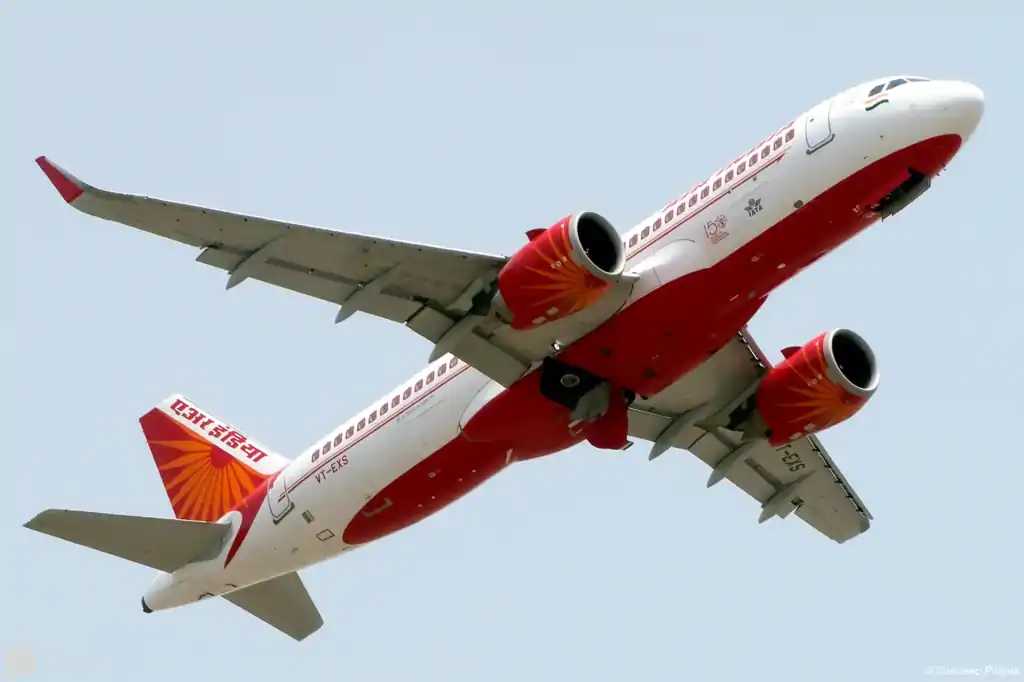
In a significant move highlighting the importance of safety in aviation, the Directorate General of Civil Aviation (DGCA) has imposed a hefty fine of Rs.90 lakh on Air India. The penalty comes in the wake of an incident where the airline operated a flight from Mumbai to Riyadh on July 9, 2024, with an unqualified crew. This breach of protocol has raised serious concerns about the airline's operational standards and commitment to passenger safety.
The Incident: An Unqualified Crew Takes to the Skies
On July 9, Air India operated a Mumbai-Riyadh flight under circumstances that have now drawn the ire of the DGCA. The flight was commanded by a non-trainer line captain paired with a first officer who had not yet been released for line flying. According to regulations, a junior pilot, still under training, must only operate flights under the supervision of a Line Training Captain, a Type Rating Instructor, or a Designated Examiner. However, in this instance, the intended training captain fell ill, and the airline's rostering system replaced him with a non-training captain, leading to what the DGCA has termed a "serious scheduling incident."
DGCA’s Investigation: A Closer Look at Operational Lapses
The issue came to light when Air India voluntarily reported the incident to the DGCA on July 10. Following this, the aviation regulator launched a thorough investigation into the airline's operations, including an examination of documentation and an on-site inspection of the scheduling facility. The investigation revealed multiple violations of regulatory provisions, which the DGCA has noted could have significant safety implications.
Fines and Accountability: Who Pays the Price?
As a result of these findings, the DGCA has levied fines not only on Air India but also on key individuals within the airline's management. The Director of Operations has been fined Rs.6 lakh, while the Director of Training faces a penalty of Rs.3 lakh. These fines reflect the DGCA's stance that accountability must extend beyond the airline as an entity to include those responsible for ensuring adherence to safety protocols.
The Safety Ramifications: A Wake-Up Call for the Industry
This incident serves as a stark reminder of the critical importance of adhering to safety protocols in aviation. The DGCA’s response underscores the potential risks involved when such protocols are not strictly followed. The aviation industry, where safety is paramount, cannot afford lapses that endanger lives, and this case will likely serve as a precedent for how future violations are handled.
Conclusion: Air India’s Path Forward
As Air India navigates the repercussions of this incident, it faces the challenge of restoring confidence among passengers and regulators alike. The airline must not only address the specific lapses that led to this fine but also reassess and reinforce its overall operational and training protocols to prevent future occurrences. For the DGCA, this case is a reaffirmation of its role as a vigilant guardian of aviation safety, ensuring that airlines operate with the highest standards of care and responsibility.
With Inputs from Economic Times
Read next
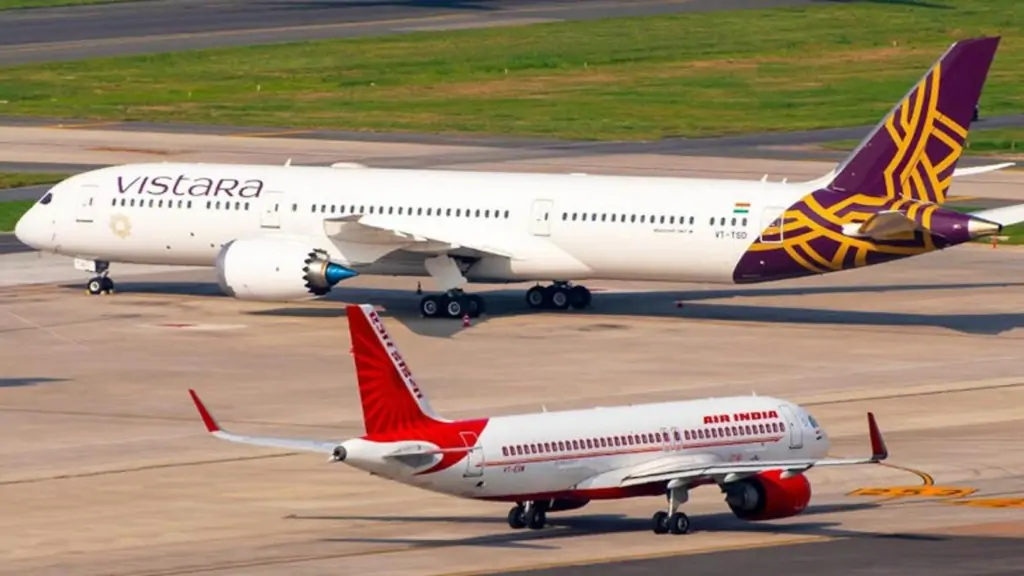
The much-anticipated merger of Vistara into Air India is set to move forward, with the final approval for foreign direct investment (FDI) from Singapore Airlines (SIA) expected as soon as Saturday. This critical approval will allow SIA, which held a 49% stake in Vistara, to acquire a 25.1% stake in the merged airline by investing Rs.2,059 crore. The Tata Group will hold the remaining 74.9% stake in Air India, marking a significant shift in the Indian aviation landscape.
Regulatory Green Lights: A Smooth Path Ahead
According to reports from the Times of India, all necessary approvals from regulatory bodies, including the Competition Commission of India (CCI) and the Directorate General of Civil Aviation (DGCA), are already in place. Once the government's FDI clearance is secured, the merged entity is expected to announce timelines for the merger to passengers, particularly for those who have booked tickets on Vistara flights after the merger date. Passengers will be informed about the new Air India flight numbers and timings, ensuring a seamless transition.
Strategic Timing: Post-Diwali Window for the Merger
Sources suggest that the merger is likely to take place after Diwali, around November 1, to avoid potential disruptions during the peak festive travel season. The period between post-Diwali and the onset of winter fog, typically beginning around December 20, is considered ideal for the merger. This timing allows the airline to address any initial merger-related issues before winter weather adds further challenges.
Fleet and Branding: A Gradual Transition

Vistara's fleet of 70 aircraft will continue to operate under its current livery until they undergo heavy maintenance checks, at which point they will be repainted in Air India's new livery. Grounding aircraft solely for repainting is deemed impractical, especially since Vistara's aircraft offer a superior cabin product compared to Air India's older planes. This phased approach ensures that the fleet remains operational and maintains high service standards during the transition.
Employee and Passenger Experience: Navigating the Challenges
The merger process has already seen key developments, including the transfer of Vistara's frequent flyer miles to Air India's loyalty program and the relocation of several Vistara employees to Air India's new headquarters in Gurgaon. Concerns had been raised about the potential downgrade of Vistara passengers, particularly those booked in business or premium economy classes, being shifted to economy on Air India flights due to limited availability in those classes. However, sources have assured that such occurrences will be rare, and efforts will be made to maintain passenger satisfaction.
A Shift in Strategy: From Premium Product to Integrated Entity
Initially, Air India's management considered delaying the merger until its fleet was upgraded, retaining Vistara as a premium product carrier in the meantime. However, this plan was abandoned due to growing concerns from Vistara employees about key positions in the merged airline being filled by Air India officials. As a result, the merger is now set to proceed before the end of this year, even as Air India's broader transformation remains a work in progress.
Conclusion: What Lies Ahead for Indian Aviation?
The merger of Vistara into Air India represents a significant consolidation in the Indian aviation sector, with the potential to reshape the industry. As the two airlines prepare to unite, passengers and industry observers alike are eager to see how this move will impact service standards, operational efficiency, and the competitive landscape. Will this merger herald a new era for Indian aviation, or will it face turbulence along the way? Only time will tell.
Read next
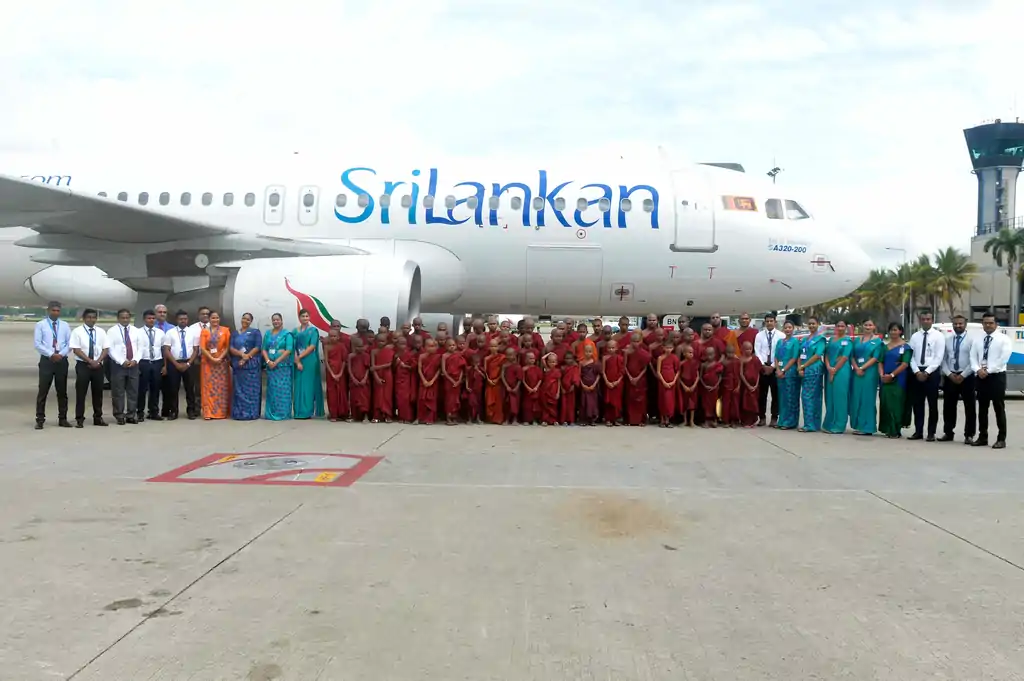
SriLankan Airlines, in collaboration with Airport and Aviation Services (Sri Lanka), marked a significant milestone today, 22 August 2024, by hosting a special event that will be remembered for years to come. As the airline approaches its 45th anniversary on 1 September 2024, it chose to celebrate in a manner that reflects both its cultural heritage and community values.
The airline delighted a large group of Buddhist child monks, known as 'Samaneras,' by offering them a unique experience—a guided tour of Bandaranaike International Airport and their first opportunity to board an aircraft.
A First-Time Experience for Young Monks
The group, consisting of young monks aged five and older from the Ganewatta Purana Rajamaha Viharaya in Waskadubedda, Deldoova, Kalutara, was accompanied by several Venerable Theros and volunteers from SriLankan Airlines. These young monks were treated to an informative and inspiring tour of the airport, where they were introduced to various ground operations by airport officials.

The highlight of the tour was when the Samaneras boarded a SriLankan Airlines Airbus A320, parked on the tarmac. For these young monks, it was their first time experiencing the world of aviation up close, making it a day of excitement and discovery.
Honoring Traditions with an Almsgiving Ceremony
In keeping with Sri Lanka's rich religious traditions, the event concluded with a special almsgiving (Dana) ceremony. The group of Samaneras and Theros were offered a traditional almsgiving and pirikara in the airport's Silk Route Arrival Lounge. This ceremony was attended by SriLankan Airlines staff volunteers, members of the airline’s senior management team, and senior managers from Airport and Aviation Services (Sri Lanka).
A Meaningful Milestone for SriLankan Airlines
This event not only highlighted the airline’s commitment to community and cultural values but also added a meaningful chapter to its 45-year history. By providing these young monks with such a unique experience, SriLankan Airlines demonstrated its dedication to giving back to society and celebrating its anniversary in a way that resonates with its identity.
As the airline prepares for its official anniversary celebrations on 1 September, this heartwarming event serves as a reminder of the impact that thoughtful and culturally sensitive initiatives can have on both the community and the organization’s legacy.
Comment