
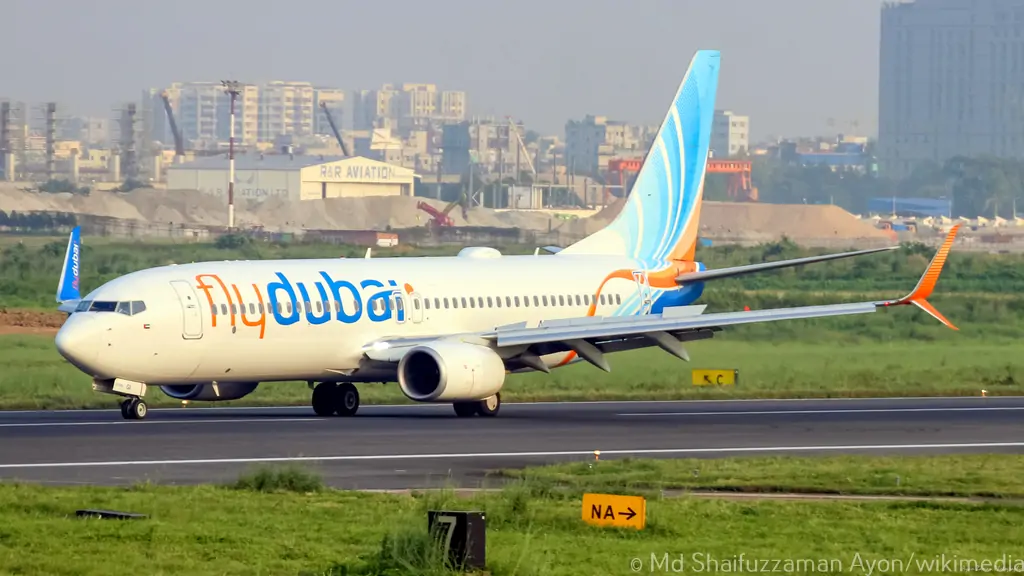
FlyDubai's Nepal and Airport Manager was barred entry at Kathmandu's Tribhuvan International Airport on April 24th, 2023, owing to a bird strike. The incident caused minimal damage to the jet, but it emphasizes the hazards of bird hits on aeroplanes and the precautions that airports and airlines take to avoid them. However, in an uncommon turn of events, CAAN claims differently.
What Exactly is a Bird Strike
A bird strike happens when an aeroplane collides with a flying bird or flock of birds. Bird hits can cause considerable damage to the aircraft's engine, windscreen, and other components. Bird hits can cause a catastrophic loss of control, culminating in a crash in some situations.
What Causes Bird Strikes:
Why Are Bird Strikes Risky:
How Do Airlines and Airports Prevent Bird Strikes:
Bird Strikes and FlyDubai
Several bird strikes have occurred on FlyDubai in the past. A bird strike prompted a FlyDubai aircraft from Kathmandu to Dubai to return to the airport in November 2019. Another FlyDubai flight from Karachi to Dubai was delayed in August 2022 owing to a bird strike event.
Present Scenario
The flydubai situation at Kathmandu's Tribhuvan International Airport (KTM) has taken an odd turn, with two of the airline's senior management in Nepal being denied entry.
The Response
The incident happened when the plane was taking off from Tribhuvan International Airport. The crew levelled off the plane at 28,000 feet to analyze the situation before continuing the journey as scheduled. "The safety of our passengers and crew is our top priority," flydubai stated at the time. We apologize for any disruption to our passengers' travel plans."
The Importance of Accurate Information
In the aviation sector, spreading false information can have catastrophic implications. Incorrect information can create customer fear, harm the reputation of airlines and airport authorities, and result in regulatory action.
Conclusion
The incident involving FlyDubai flight FZ8812 emphasizes the significance of preventative measures in the aviation sector to avoid bird attacks. Airlines and airport authorities must collaborate to put these safeguards in place and protect the safety of passengers and employees.
With Inputs from Reuters

Read next
IndiGo Plans To Induct 20 Wide-Body Aircraft To Ramp Up International Operations

Radhika Bansal
26 Apr 2023
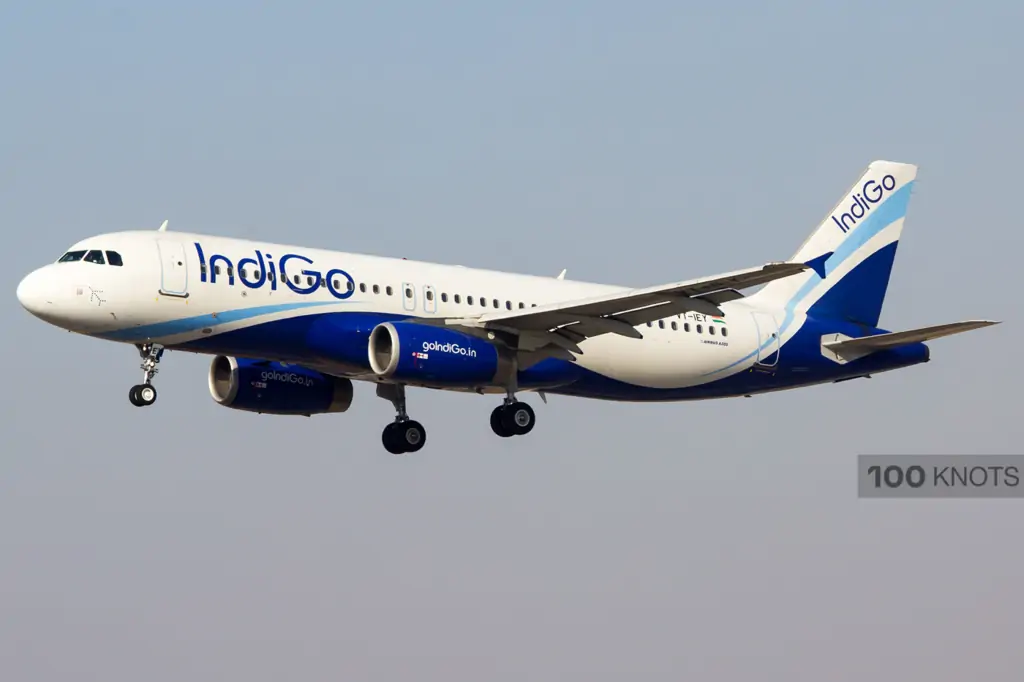
IndiGo operator Interglobe Aviation Limited to expand its international operations is in discussion with aircraft makers to buy 20 wide-body aircraft, reported the Mint quoting people close to the matter. Before this, IndiGo had never ordered a wide-body aircraft and currently operates a fleet of Airbus 320 family of aircraft, smaller ATR aircraft and a fleet of Boeing 777 aircraft which is on lease aligned with the crew from Turkey, between India and Istanbul. A wet lease involves leasing an aircraft, along with its crew.
"IndiGo will be inducting around 15-20 wide-body aircraft. The airline has been in discussions with aircraft manufacturers Airbus and Boeing for at least one year. It is expected to plan an order this year itself," one of the people with knowledge of the matter told Mint.
Another person told Mint that IndiGo had ordered Airbus 321 XLRs that can fly to Amsterdam from India but is expected to join the fleet only in 2025. The report quoting the source said, "If IndiGo was to place a wide-body aircraft order now, it may get it in six months. It makes sense if the airline wants to induct wide-body, bridge that capacity gap and tap low-cost international flying simultaneously."
IndiGo, established in 2006, has so far been a low-cost carrier operating a fleet of narrow-body aircraft which can seat around 222 passengers. Its fleet consists of 302 planes including 288 planes on operating lease and 14 owned, as of December 2022. IndiGo also has another 480 jets including largely narrow-body aircraft and some turboprop jets are in the pipeline and the induction of these will be completed by 2030, stated the report by Mint. The government has asked airline companies to order wide-body aircraft to directly connect to destinations like America and Europe with India.
Air India in February this year made a historic order of 470 aircraft including 70 wide-body ones.
Airlines Asked to Induct More Wide-Body Aircraft
Civil aviation minister, Jyotiraditya Scindia in an interview said, "It is important for me to give every avenue possible to my customers that means certainly look at international airlines and increasing their footprint into India.. but also look at out domestic flag carriers growing their footprint internationally, which is why I have been stressing to our airlines that we need to induct greater wide-body aircraft so that we can cross the seven seas and supplant our footing and make our mark there." He later also added that he is glad that the airlines in the last one and half years have already started ordering wide-body aircraft.
Several IndiGo Aircraft Grounded
In the last few months, IndiGo has been quite aggressive in positioning itself as a carrier that offers convenient international options to passengers either through its own flights or codeshare connections. This change has been quite apparent since the airline introduced former KLM president Pieter Elbers as its CEO in September 2022.
IndiGo has been compelled to the floor around 30 aircraft as provide of spare engines by US-based Pratt & Whitney has fallen delayed by at least two months. The airline, which was returning planes older than six years, has now been compelled to carry them for an extended interval because of the shortfall.
In December 2022, IndiGo sought the Directorate General of Civil Aviation's (DGCA) approval to wet lease Boeing 777 aircraft, which will be utilised for operating flights on the Delhi-Istanbul route. This is the first time that the carrier will induct wide-body planes into its fleet and the move also comes against the backdrop of global supply chain issues impacting aircraft deliveries. The airline will wet-lease two aircraft.
(With Inputs from Mint)
Read next

Raytheon, one of the world's premier technology and innovation businesses, is off to a solid start in 2023, owing to its profitable commercial engine sector. The division, which manufactures engines for commercial aircraft, has grown significantly in recent years, contributing to Raytheon's overall success.
Background of the Company
Raytheon Intelligence & Space, which manufactures military sensors, radars, and communications platforms, reported flat sales. Executives attribute the slowdown to a greater mix of low-revenue-generating developmental activities and ongoing supply chain difficulties in the defence industry. “We remain very focused on the health of the supply chain, which continues to be a challenge from a performance and cost perspective,” says Calio.
Raytheon's Commercial Engine Division's Success
In this part, we will look at the factors that have contributed to Raytheon's commercial engine division's success. We will consider things like innovation, efficiency, and consumer happiness.
Innovation:
Efficiency:
Customer fulfilment:
Current Scenario
Raytheon Technologies, an American aerospace corporation, reported high sales in the first three months of 2023, owing to the resumption of commercial air traffic. During a quarterly earnings call on April 25, Raytheon CEO Gregory Hayes stated that subsidiaries Pratt & Whitney (P&W) and Collins Aerospace lead the company's revenue, with both recording double-digit percentage sales growth year over year.
P&W, which manufactures the F135 engine that powers the Lockheed Martin F-35 fighter jet, has also been awarded a substantial contract by the United States Air Force (USAF) to undertake an engine core update on the service's fleet of sophisticated stealth aircraft. The USAF chose P&W's upgrade package over GE Aerospace's full engine replacement proposal.
Raytheon's Commercial Engines Division's Future
This section will focus on Raytheon's commercial engine division's future. We will look at the company's development and expansion goals, as well as how it intends to remain ahead of the competition.
Development and expansion:
Keeping a Step Ahead of the Competition:
Aerojet Rocketdyne
Raytheon executives have been particularly concerned about one critical partner. Aerojet Rocketdyne manufactures rocket engines that power anything from precise weapons to NASA's next-generation heavy-lift space rocket.
Conclusion
Raytheon's commercial engine sector has been critical to the company's recent success. The division's emphasis on innovation, efficiency, and customer happiness has assisted it in staying ahead of the competition and positioning itself for future development and expansion. Raytheon's commercial engines sector is well positioned for ongoing success, thanks to continued investment in research and development and a solid client base.
With Inputs from FlightGlobal
Read next

The epidemic has had a significant impact on the aviation sector, and it appears that supply chain concerns are generating additional issues. Hawaiian Airlines has indicated that it will halt its A321neo fleet owing to engine supply chain difficulties. This move is expected to create significant delays to the airline's flight schedule, affecting passengers travelling to and from Hawaii.
Current Situation
Access to dependable and safe air travel is critical for individuals who must travel large distances for business, personal, or recreational reasons. As a result, any disruption in airline services might have a considerable impact on the impacted passengers' schedules. The grounding of five Hawaiian Airlines A321neos due to engine supply chain concerns is a big worry for the airline's customers and business operations, while also impacting customers of Pratt & Whitney's PW1100G engines.
"We are still plagued with limitations on our A321neo fleet capacity as a result of our engine suppliers' inability to meet fair engine commitments amidst an overtaxed engine overhaul supply chain," said CEO Peter Ingram during Hawaiian Holdings' first-quarter earnings call on April 25.
How Will Hawaiian Airlines and its Passengers Be Affected by the Grounding of A321neos
The grounding of the A321neo fleet is likely to have an impact on various Hawaiian Airlines routes, including those to the United States' West Coast, Australia, and Japan. Passengers who have already booked flights with the airline may experience cancellations or delays, and those who want to fly in the future may need to make alternate plans. The airline has indicated that impacted guests will have the option of rebooking their flights or receiving a full refund.
Root Cause
Earlier this month, analysis of Cirium data revealed that nearly 12% of the global PW1100G-powered A320neo-family fleet is currently in storage. Though not all are stored due to engine-related issues, it is notable that the storage rate for GTF-powered jets is three times higher than that of the rival CFM International Leap-1A fleet.
Widebodies to Fly the Mainland Route
As demand recovery in Japan, one of Hawaiian’s most critical markets, has remained slow, the A321neo grounding is forcing Hawaiian to use widebody jets to cover routes to the US mainland.
Conclusion
To summarise, Hawaiian Airlines' grounding of its A321neo aircraft due to engine supply chain difficulties is a big blow for the airline and its passengers. The circumstances emphasize the necessity of supply chain management in the aviation sector as well as the difficulties in addressing supply chain concerns. While Hawaiian Airlines is taking precautions to minimize the impact on its customers, it is probable that the grounding will have a substantial impact on travellers travelling to and from Hawaii. We can only hope that the engine supply chain concerns are resolved quickly so that Hawaiian Airlines may resume operations and offer its passengers the dependable and safe service they deserve.
With Inputs from FlightGlobal
Read next

Airbus Helicopters is adding two new variants to its H125 family of helicopters. The company on 24 April said it would introduce militarised attack and utility configurations of the H125 single-engined civil helicopter. “The new offerings complement the extensive line of military helicopters already produced by Airbus, including the H125M,” Airbus says.
The armed variant will be designated the AH-125 Ares, while the utility variant will be known as the MH-125 Ares. Scott Tumpak, vice president of military sales for Airbus’s defence business in the USA, says the new types represent the “latest evolution” of the H125 line. “The AH-125 and MH-125 Ares helicopters will offer the capability, reliability and flexibility needed by America’s allies and partners as they perform an array of rotary-wing missions, ranging from light attack to disaster response and other para-public missions,” he says.
Airbus says the rotorcraft will also be able to perform air assault, search and rescue and casualty evacuation missions. Both Ares variants will be produced at the current Airbus H125 assembly plant in Columbus, Mississippi. Airbus does not yet have any orders for the new militarised airframes, but Tumpak says the company sees the AH-125 and MH-125 as filling an “open niche” in the market for military helicopters.
“There’s not a single-engine aircraft on the market that offers international users an easily reconfigurable and multi-mission capability,” Tumpak says.
Specifications of the New Variant
Airbus says the Ares can be “easily re-configured” for its various mission sets in under 30 minutes. Weapons installation, engineering and certification for the AH-125 will be overseen by Virginia-headquartered MAG Aerospace. Armaments available under the programme include a .50 calibre (12.7mm) machine gun, unguided rockets and precision weaponry. Despite plans to produce the Ares rotorcraft in the USA, Airbus says the US Department of Defense (DoD) will not be the focus for Ares sales.
“We don’t see any requirements with the US Army or with the DoD for this platform,” Tumpak says. “This is targeted for export, be that [foreign military sales] or direct sales of aircraft made in Mississippi.”
Globally, the H125 family accounts for almost 80% of the single-engine market and has the highest number of certified modifications (supplemental type certificates) available. With the new addition of a flexible weapons capability, the H125 helicopter will easily be re-configured between multiple mission sets in less than 30 minutes, ranging between light attack, air assault, search and rescue, casualty evacuation, and disaster response, as well as other combat and para-public operations.
MAG Aerospace will perform the weapons installation design, engineering, certification and manufacturing. The helicopter will accommodate a wide range of weapons such as a .50 cal (12.7 mm) gun and unguided rockets, and precision-guided weapons as a growth option. The installation allows for doors-on-flight throughout the mission.
“MAG Aerospace is thrilled to team with Airbus to combine our unique platform engineering and modification capabilities with the world-class leader in the single-engine helicopter market. It’s an honour to work with Airbus and expand our ability to serve our partners in the U.S. and worldwide,” said Matt Bartlett, President of MAG Aerospace.
The H125 is the world’s top-selling helicopter with a long history of use by U.S. law enforcement and government agencies. Currently, the H125 is the light enforcement helicopter used by U.S. Customs and Border Protection, with more than 100 H125 family aircraft in service, making the U.S. government the single largest customer and operator of the aircraft.
Airbus in the US
Airbus provides a range of reliable and versatile helicopters to the U.S. government and military, enabling them to perform various missions. More than 480 UH-72A and UH-72B Lakota helicopters have been delivered to the U.S. Army and National Guard since the program began in 2006. Airbus also supports the U.S. Coast Guard’s fleet of nearly 100 MH-65 helicopters, which play a critical role in the USCG’s homeland security, drug interdiction and lifesaving missions.
The US Army is currently developing its next-generation aircraft under the Future Vertical Lift initiative. The Bell V-280 Valor tiltrotor was recently confirmed as the final choice for the service’s future troop carrier and utility lift type, eventually replacing the Sikorsky UH-60 Black Hawk. Bell and Sikorsky are still in competition for a separate design, known as the Future Attack Reconnaissance Aircraft.
About H125
The Eurocopter AS350 Écureuil (or Squirrel), now Airbus Helicopters H125, is a single-engine light utility helicopter originally designed and manufactured in France by Aérospatiale and Eurocopter (now Airbus Helicopters). In North America, the AS350 is marketed as the AStar. The AS355 Ecureuil 2 is a twin-engine variant, marketed in North America as the TwinStar. The Eurocopter EC130 is a derivative of the AS350 airframe and is considered by the manufacturer to be part of the Écureuil single-engine family. The AS350 is in service around the world and operated by private individuals, airline and charter operators, emergency medical teams, governments and law enforcement agencies.
The H125 has broken world records throughout its career. In 2005, the AS350 B3 broke the world record for the highest-altitude landing and takeoff, performed on Mount Everest at 8,848 metres (29,029 feet) – a title still held today. In May 2013, the AS350 B3 performed the world's highest long-line rescue operation on Lhotse, the world's fourth-highest mountain, located in the Himalayas, at 7,800 metres (25,590 feet).
The H125 is equipped with a Safran Helicopter Engines Arriel 2D turboshaft engine with a dual-channel full authority digital engine control (FADEC) unit, plus a third independent and automatic back-up channel and an automatic start-up. The engine is fitted with an engine data recorder.
Read next
Boeing Detects Issues With 737 Max Aircraft; Can Impact Air India & Akasa Air Deliveries
Radhika Bansal
25 Apr 2023

One of the biggest manufacturers of commercial aircraft, Boeing, has detected issues with the manufacturing of 737 Max planes, the most used aircraft in Indian skies, CNBC-TV18 reported on April 24.
The issues are likely to hit the fleet expansion of Air India, Akasa Air, which placed a major order with Boeing recently, CNBC TV-18 added citing sources. The orders also include 190 737 MAX aircraft for Air India, which is part of its mega-deal for 470 aircraft from Boeing and Airbus at about $70 billion.
Following the development, Boeing told CNBC-TV 18 to “expect lower near-term 737 MAX deliveries due to manufacturing issues. We are in contact with customers concerning their delivery schedule.” Elaborating on the issue, Boeing also stated that a supplier used non-conforming fittings in the Aft Fuselage Section which was detected in the aircraft.
Detected Problem
Original equipment manufacturers (OEMs) operate with the support of several external vendors. They ask these vendors to supply the required parts in accordance with the set standards. Some vendors fail to comply with these standards and supply parts that do not meet the OEM's requirements. Therefore, the faulty parts need to be changed to ensure the aircraft’s safety and airworthiness.
However, Boeing has clarified that the planes already in service will not have an impact since this is not an immediate flight safety issue, the report added. Regardless, the planes still in the production line or inventory will be replaced. Hence, Boeing may have to reschedule its delivery arrangements.
“This is not an immediate safety of flight issue and the in-service fleet can continue operating safely. However, the issue will likely affect a significant number of undelivered 737 Max airplanes, both in production and in storage,” a Boeing spokesperson said.
The supplier, Spirit AeroSystems, notified Boeing about the non-standard manufacturing process used during the installation process pertaining to 737-7, 737-8, 737-8-200 and P-8 model airplanes, creating the potential for a non-conformance to required specifications.
In February, Air India announced provisional deals for 220 aircraft from Boeing and 250 aircraft from Airbus. The order will be funded with a combination of resources including internal cash flow, shareholder equity and sale-and-leaseback of aircraft. At that time, CEO Campbell Wilson had said, “We have committed to a historic order of new aircraft that will start entering the fleet from the end of this year through the end of the decade, to both transform the fleet and power significant network and capacity expansion.”
Akasa Air also has a pending order of around 72 737 Max aircraft with the company. The new airline was planning to purchase more aircraft as part of its fleet expansion plans, but the discovery by Boeing has made the situation uncertain for the airline. The Mumbai-based airline was expecting deliveries of 12-16 aircraft per year from next year as part of the total 72 units of the 737 Max aircraft order it placed earlier. It has a total of 19 aircraft in its fleet as of today.
Ramp up Production of 737 Max
Last week, Boeing CEO Dave Calhoun said that the production ramp-up plans of the 737 remain unchanged for the year despite the manufacturing problems the company is facing. The manufacturer was forced to cut production following two plane crashes in 2018 and 2019 that killed 346 people.
He further added that the long-term guidance for 2025-26, which calls for production to be upped to 50 737 Max aircraft per month, remains unchanged. The company is planning to ramp up production to 38 jets per month by June before hitting 42 per month by January 2024 and 52 a month by January 2025.
The issues in Boeing 737 Max assume significance as in 2019, the aircraft had two fatal crashes in Ethiopia and Indonesia killing more than 346 people. The aircraft was grounded for around 20 months after that and the subsequent pandemic led to huge losses for the company. Federal investigations showed that the problem was caused by a faulty stall-prevention system known as MCAS, and the MAX was cleared to resume flights in late 2020.
Comment