
Ahmedabad Airport Faces Backlash from Airlines Over Increased Flight Charges

Radhika Bansal
16 Oct 2023
Adani Group-owned Ahmedabad Airport's proposal to increase user charges for charter flights during the ongoing ICC Cricket World Cup has sparked a backlash from major airlines, prompting them to seek government intervention, according to a report by The Economic Times (ET). The airport has raised ground handling charges by more than tenfold. The airlines have asserted that this sudden hike is illegal and will render charter operations unaffordable.
On Friday, October 13 evening, the Airport Economic Regulatory Authority (AERA) issued a notice stating that levying charges and tariffs not authorised by the authority is illegal. In the notice, AERA pointed out that some airport operators were imposing charges without seeking permission, resorting to unethical conduct. All airport operators have been instructed to refrain from imposing charges that the authority has not approved.
Sources have informed ET that AERA has also summoned the top management of Ahmedabad airport to discuss the issue, scheduled for Monday, October 16. The tariff list issued by Ahmedabad Airport in September reveals that the airport demanded a minimum of INR 265,000 as general aviation charges for any charter flight carrying more than 15 passengers. Additionally, it imposed a charge of INR 17,667 per passenger beyond that threshold. The airport also imposed supplementary charges on special flights operated during the Indian Premier League, including INR 6,000 per passenger.
These charges are in addition to the landing and parking fees. Any flight that has not been registered with the airport operator for a specific season will be categorised as a charter, as per information provided to the airlines.
Sources have disclosed to ET that airlines such as IndiGo, SpiceJet, and Vistara had bid based on previous charges for a Board of Control for Cricket in India (BCCI) tender to ferry cricket teams during the tournament. The unexpected surge in airport charges makes these flights financially unviable, and the cricket body has refused to pay the extra charges. In response, airlines are operating special charter flights to accommodate cricket fans from around the world.
During this period, more than 170 charter flights, four times the usual traffic, transported cricket teams and some of India's wealthiest individuals to and from Ahmedabad. The city has already hosted the ICC Cricket World Cup opener and the India-Pakistan match.
A senior official from Adani Airports has stated that AERA's permission was not required, as the additional fees imposed are not aeronautical charges. The company is currently reviewing the charges and has clarified that the airport had to employ additional personnel due to the increased charter flight activity, which has raised expenses. The official also highlighted that airlines are operating charters beyond the normal operating hours, necessitating extra resources from the airport, as charter operations do not adhere to a fixed schedule. Additionally, passengers on charter flights require various additional services, all of which incur costs.
A government official explained that the charges have been imposed for ground handling services, which are critical for aircraft operations. The rules unequivocally state that any airport-related services related to aircraft operations fall under aeronautical services, with tariffs determined by AERA. Private airport operators are expected to act responsibly, he added.
(With Inputs from The Economic Times)
Read next
NAL Expects to Finalise Production Partner for HANSA-NG Trainer Aircraft by November
Radhika Bansal
16 Oct 2023
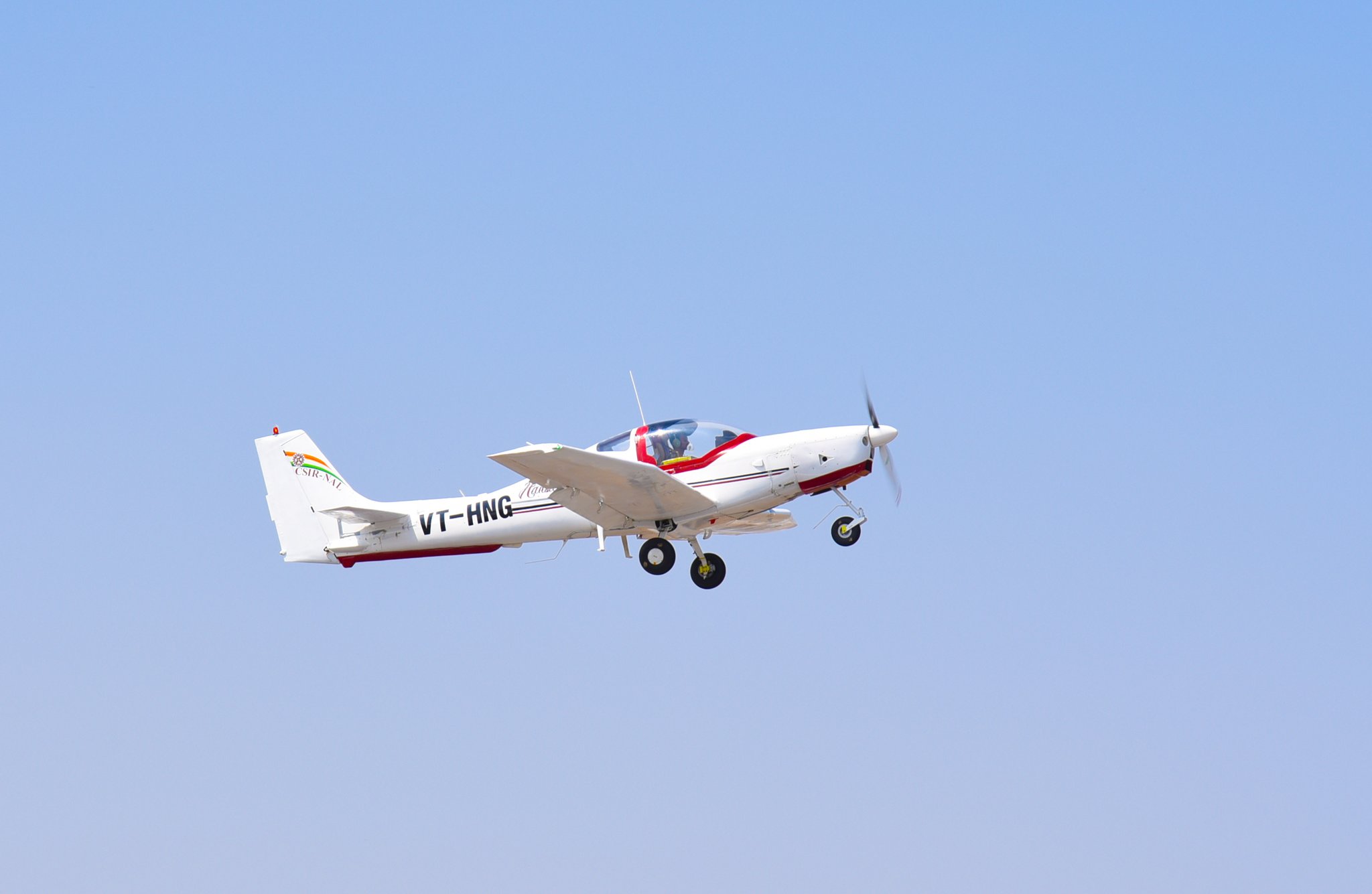
The National Aerospace Laboratories expects to finalise the production partner for its two-seater trainer aircraft HANSA-New Generation, in a month, a top NAL official said. A market study done by Bengaluru-based NAL has shown there is a potential demand for about 400-500 such aircraft in India in the next 5-10 years, Program Director of Civil Aircrafts at NAL, C M Anand, told PTI.
Approvals were obtained from DGCA and manufacturing of HANSA-NG was initiated in September 2020. The Indira Gandhi Rashtriya Uran Akademi (IGRUA) signed an MoU with CSIR-NAL as a launch customer of HANSA-NG for pilot training. They will pick up the first five aircraft, said Joint Secretary, Ministry of Civil Aviation Amber Dubey.
Between 2001 and 2010, NAL built 14 production versions of the old HANSA aircraft, of which 11 were delivered to DGCA, one aircraft to IIT-Kanpur and two aircraft were with NAL. The upgraded HANSA-NG aircraft programme was initiated by NAL to meet the requirements of the Indian flying club and has been pitching that it is an ideal aircraft for Commercial Pilot Licensing (CPL) due to its low cost and low fuel consumption.
The NAL-developed HANSA-NG features a state-of-the-art glass cockpit, a Rotax-912iSc sport engine and a steerable nose wheel. Manufactured using advanced processes, the aircraft is Instrument Flight Rules (IFR) compliant, has superior aerodynamic features and handling qualities, enhanced range and endurance, its officials said.
Anand said the NAL, a constituent of the Council of Scientific and Industrial Research (CSIR), is presently in the process of finalising the production partner for manufacturing the aircraft. Discussions are going on with the identified potential partners about the production capabilities and other parameters. In another month, a decision will be made and the partner will be finalised, he said.
"Production companies also have a lot of questions and queries which are being addressed. For the last six months, we have been on the job. More or less things are done. Therefore, we are confident. In another month, we will be finalising the partner. We are planning to announce the partner in the 'Wings India-2024' event (to be held in Hyderabad in January) which is apt for the occasion," he said. "Currently, we are manufacturing our second aircraft of the HANSA new generation which will be ready by January and we are planning to fly the new aircraft at the 'Wings India 2024' event," he added.
Maintaining that there is a good requirement in India for pilot training and that not many aircraft are available today for this purpose since all of them are being imported, the NAL official said HANSA-NG can be used for pilot training. "Based on our survey, around 400-500 aircraft are required in the next 5-10 years and that can be used for training pilots. It can also be used for joyrides and tourism. A lot of flying clubs have already shown keen interest," he said.
In Western countries, these kinds of aircraft (two-seater) are used for joy rides and hobby flying. However, it is not so popular in India, but this concept is slowly getting traction, according to an NAL official. Once the production partner is finalised, with its help, NAL targets to make around 120 such aircraft and once we start producing, there will be a lot more demand, he said.
"We will support the production partner in the transfer of technology. The plan is that one aircraft will be made at NAL along with the production partner, and one aircraft will be built on their premises with our hand-holding,” he added. "We have received 114 letters of intent requests which can potentially be converted into a purchase order," Anand said.
NAL said it has invested INR 20 crore in the HANSA-NG project, and the aircraft can be developed within INR 2.5 to INR 3 crore. NAL rolled out the HANSA-NG in March 2021 and it completed its maiden flight in September same year, followed by the sea level trials at Puducherry last year. It has also successfully completed in-flight engine relight tests at the aeronautical test range at Challakere in Karnataka's Chitradurga district.
NAL in March 2021 rolled out the HANSA-NG; it completed its maiden flight in September 2021, followed by the sea level trials at Puducherry from February 19 to March 5 and in May 2022, it also successfully completed in-flight engine relight tests at the aeronautical test range in Challakere, Chitradurga district.
Read next
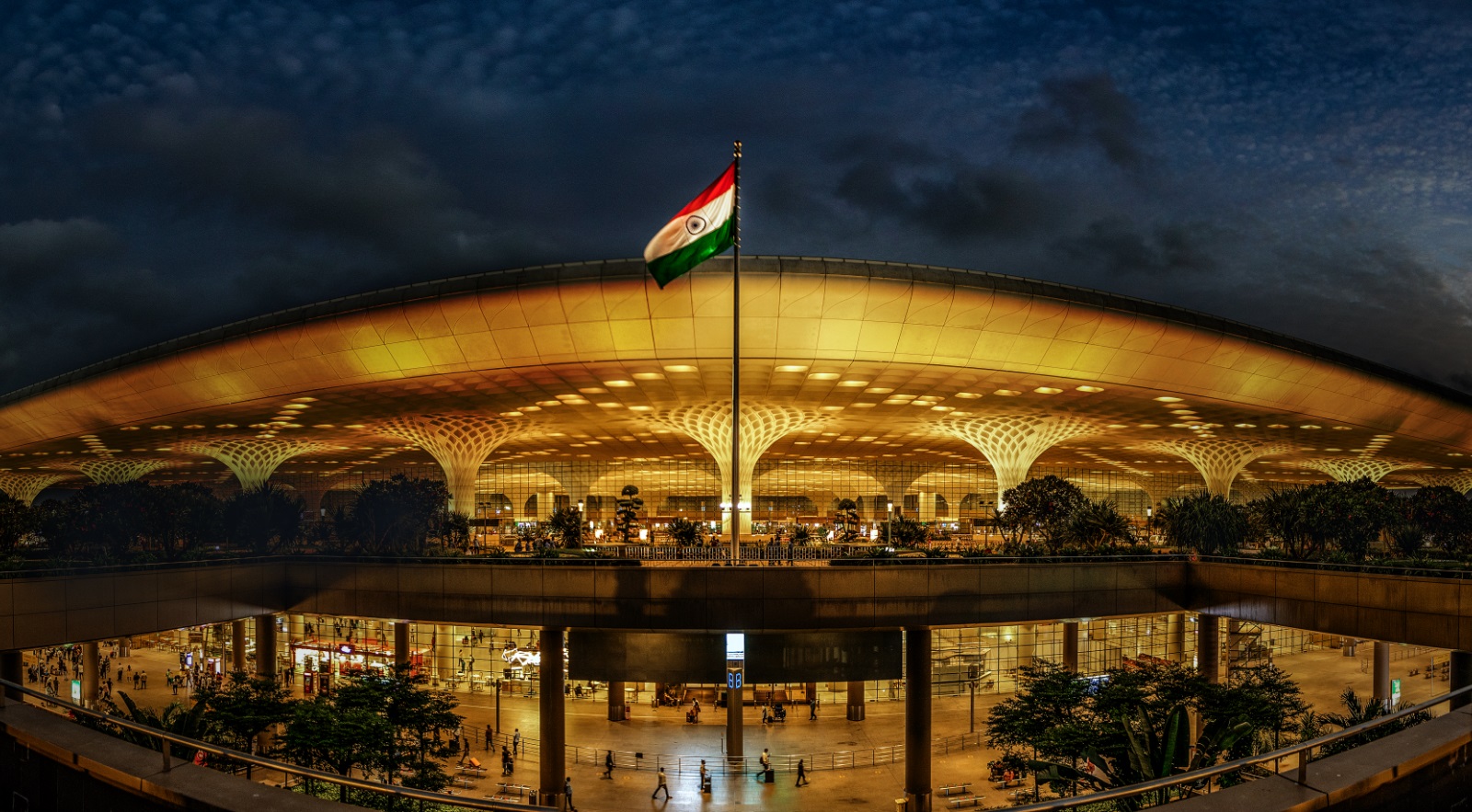
Adani Enterprises, supported by billionaire Gautam Adani, confirmed on Friday, October 13 that the Ministry of Corporate Affairs is examining the accounts of the group's two airports in Mumbai. The ministry has requested information and documents concerning Mumbai International Airport Ltd and Navi Mumbai International Airport Ltd for the financial years 2017-18 to 2021-22.
Adani currently owns and operates seven airports, including Mumbai's Chhatrapati Shivaji Maharaj International Airport, which it assumed control of in 2021. In 2019, it acquired six airports as part of the government's initial privatisation initiative and is constructing a new airport in Navi Mumbai on the city's outskirts. Adani acquired a majority stake in Mumbai International Airport in August 2020 from the debt-stricken GVK Group. Adani said it will commence operations at the Navi Mumbai Airport from December 2024.
In July 2021, the group acquired a 74% stake in Mumbai’s international airport, after buying GVK Group’s 50.5% stake and a 23.5% stake from ACSA Global Ltd and Bid Services Division (Mauritius) Ltd (Bidvest). It also secured rights to build and operate the Navi Mumbai airport, where operations will commence from December 2024.
Across the country, the group owns and operates seven airports. It won bids for six airports under the Airports Authority of India (AAI) in February 2019, including Lucknow, Mangaluru, Ahmedabad, Jaipur, Guwahati, and Thiruvananthapuram. The group will be responsible for operating, managing, and developing airports for over 50 years.
"We would like to inform you that Mumbai International Airport Limited and Navi Mumbai International Airport Limited, stepdown subsidiaries of Adani Enterprises Limited have received communications dated October 06, 2023 (received on October 12, 2023) from the Office of the Regional Director, Southeast Region, Hyderabad, Ministry of Corporate Affairs, relating to initiation of investigation of books of accounts," said Adani Enterprises in a stock exchange filing on Friday, October 13.
"MIAL and NMIAL shall be responding to the said communications, by applicable legal provisions," the firm said. On October 13, Adani Enterprises' scrip on BSE closed 2% lower at INR 2,454.65.
Adani Group Facing Investigation
This investigation is the most recent challenge for the conglomerate since a U.S. short-seller accused it of improper use of offshore tax havens and stock manipulation earlier this year. In May, a court-appointed panel reported that the investigation by India's markets regulator into these allegations had yielded no results.
However, last week, Reuters revealed that the financial regulator would explain to the country's top court why it had paused and then resumed investigations into the group following a tip in 2014, amid concerns about regulatory delays.
According to customs data, Adani Group imported coal at significantly higher prices than the market rate, as per an Organised Crime and Corruption Reporting Project (OCCRP) report. In February, India's Ministry of Corporate Affairs began scrutinizing the Adani Group's financial statements.
(With Inputs from Reuters)
Read next
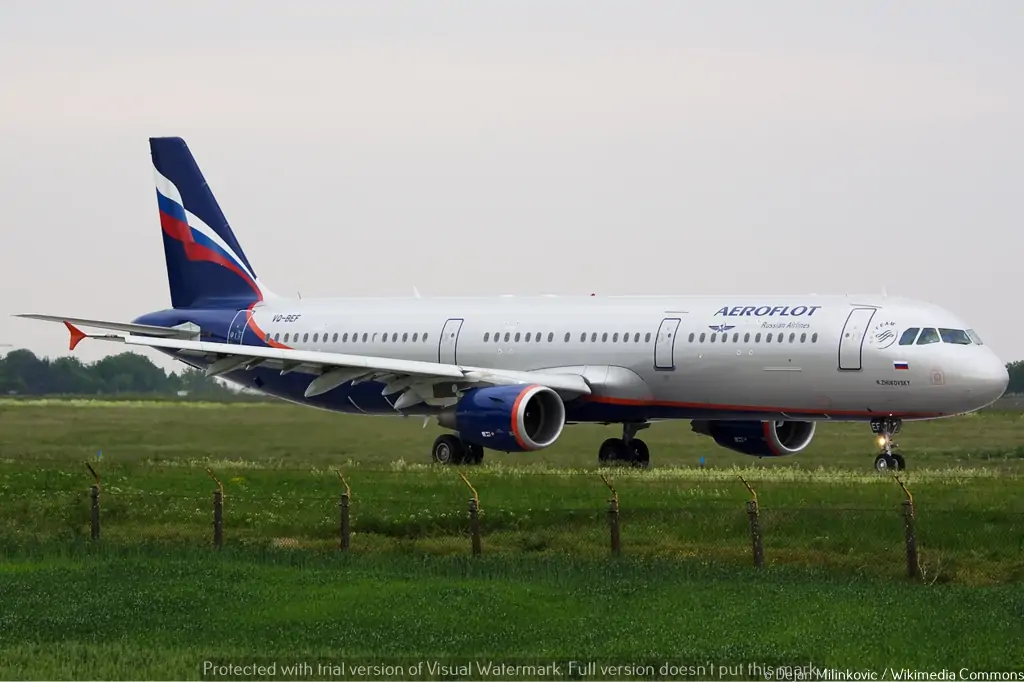
CDB Aviation received a 1.42 billion yuan (USD 194 million) payout from Russian state-owned insurer NSK, as a settlement for its claims against Aeroflot Group. Parent China Development Bank Financial Leasing said in a stock market filing that the payment, made in compliance with all relevant sanctions and laws, covers four undisclosed aircraft.
CDB Aviation will continue to pursue litigation in the Irish courts under its own insurance policies with other insurers. It will also seek insurance payouts covering aircraft previously leased to other Russian airlines. Aeroflot Group continues negotiations on the settlement of existing claims with other lessors of foreign-made aircraft.
By the agreements reached, the lessor terminated its claims to the Russian parties both under insurance policies issued by Russian insurance companies and under leasing agreements with PJSC Aeroflot. The ownership of the aircraft was transferred to the LLC insurance company NSK, which paid the settlement amount.
The ch-aviation fleets advanced module shows that Aeroflot currently operates four aircraft ordered and formerly owned by CDB Aviation: three A320-200Ns and one A321-200NX. It was also due to take one more A320-200N from CDB's order book, but the delivery was deferred indefinitely due to sanctions imposed on Russia.
Aeroflot Settling With Lessors
Aeroflot is Russia's largest airline. Aeroflot Group also includes Rossiya Airlines and Pobeda Airlines. Aeroflot Group is the leader in the Russian commercial aviation. In 2022, Aeroflot carried 20.5 million passengers (40.7 million passengers as Aeroflot Group including subsidiaries). Aeroflot extensively contributes to supporting Russian aircraft manufacturing as the launch customer and biggest purchaser of domestically-produced mainline passenger aircraft. By 2030, Aeroflot Group is set to acquire 339 locally-made airliners.
Aeroflot is constantly expanding the Russian domestic route network and operates flights between Russian regions bypassing Moscow. It develops socially important air transportation projects and implements its own flat fare programme on flights to the cities of the Russian Far East, and Kaliningrad.
While the recent settlement marks a significant step, Aeroflot Group is actively engaging in discussions to address remaining claims from other lessors of foreign-manufactured aircraft. At the beginning of September, Aeroflot announced a settlement with the Irish lessor AerCap for 18 aircraft and 5 engines. The airline operator has previously announced reaching similar accords with both AerCap and SMBC Aviation Capital. Although Aeroflot has remained reticent about the models involved in the CDB Aviation settlement, it's worth noting that CDB Aviation declared in May 2021 its plans to provide Aeroflot with three Airbus A320neos and an A321neo under a long-term lease.
Complicating the situation, sanctions placed upon Russian entities due to the conflict in Ukraine led the Russian government to hold onto and re-register numerous foreign-made aircraft leased to domestic operators.
Aeroflot Resumes International Operations
Aeroflot, Russia's flagship carrier, has recently resumed its international operations, including services to the beloved vacation spot, Goa, India. Traditionally, Goa has been a preferred destination for Russian tourists seeking respite from their harsh winters. However, this year, the landscape has changed, with fewer Russians opting for travel to India due to cost considerations. Turkey and Thailand, offering more economical tour packages, have become choices for many Russian travellers.
One notable challenge facing Aeroflot is the liquidation of the Russian state-owned aircraft lessor, GTLK Europe DAC. The threat of the seizure of aircraft, which had been a topic of concern, has left Aeroflot operating under a cloud of uncertainty. Liquidators, appointed by an Irish high court, have sent notices to various airports, including Delhi, indicating their intention to seize assets owned by GTLK Europe DAC. Despite these ominous circumstances, Aeroflot insists that its flights to India continue to operate normally.
In addition to the threat of aircraft seizures, Russian carriers like Aeroflot have also been grappling with Western sanctions. These sanctions have limited the routes and destinations available to Russian airlines, further complicating their international operations. Additionally, airspace restrictions have contributed to the challenges faced by these carriers.
According to aviation analytics firm Cirium, Aeroflot's international schedule for October represents just 32% of its 2019 capacity, with 2,350 planned departures for the month. The airline's busiest international routes at present include Antalya and Istanbul in Turkey, as well as Yerevan in Armenia. To further bolster travel to Goa, charter flights are expected from countries like Israel, Kazakhstan, and Russia in October. Additionally, charter flights from the UK to Goa are slated to commence in November, signalling a potential uptick in international tourism to the region.
Read next

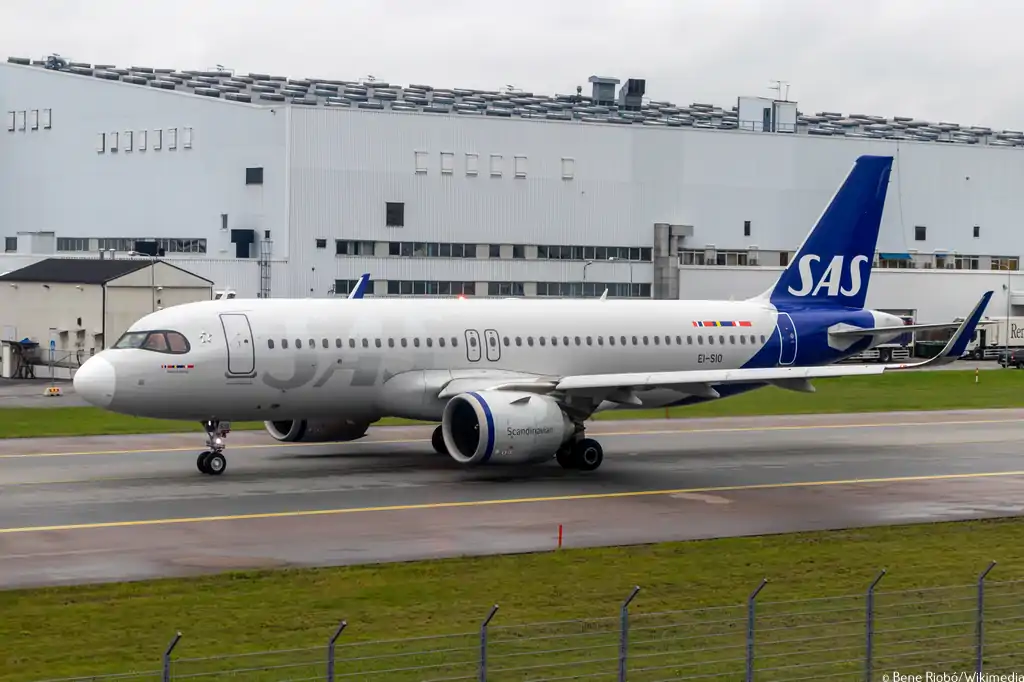
Scandinavian Airlines System (SAS), the flagship carrier of Scandinavia, has taken a strategic step as part of its ongoing restructuring efforts by entering into a sale-and-leaseback agreement for two brand-new Airbus A320neo twinjets. The move, aimed at bolstering the airline's financial stability, comes at a pivotal time as SAS operates under the protective umbrella of US Chapter 11 bankruptcy.
SAS Forward: A Restructuring Game Changer
SAS is currently in the midst of a comprehensive restructuring initiative, aptly named 'SAS Forward,' which seeks to redefine the airline's operations and improve its financial health. A central element of this transformation is the reorganization of the airline's fleet.
Sale-and-Leaseback Agreement with AerDragon Aviation Partners
In a recent development, SAS has revealed the specifics of a sale-and-leaseback arrangement with Irish aircraft lessor AerDragon Aviation Partners. The two Airbus A320neo aircraft, bearing serial numbers 11885 and 12028, are equipped with CFM International Leap-1A engines. While the exact terms of this agreement have not been disclosed, SAS notes that it engaged with 40 potential lessors, receiving 18 offers in total. This level of interest demonstrates the market's confidence in the 'SAS Forward' plan.
Boosting Liquidity and Fleet Transformation
The sale-and-leaseback agreement is expected to infuse SAS with much-needed liquidity, though the exact financial figures remain confidential. This fresh capital injection will be instrumental in supporting the airline's restructuring efforts, ensuring its viability during these challenging times.
Furthermore, the delivery dates for the two A320neo jets have not been disclosed. However, their introduction into the SAS fleet will play a vital role in modernizing and optimizing the airline's operations, enhancing efficiency, and potentially lowering operational costs.
A330-300 Retention

In a separate and notable development, SAS has decided to retain an Airbus A330-300 aircraft with serial number 1660. This decision marks a departure from the initial plan to divest this twinjet during the fleet restructuring process. The airline has cited an evolving business need for additional widebody aircraft in its fleet as the reason for this decision.
Improved Economic Terms
SAS has also revealed that it has successfully negotiated "improved economic terms" for the lease of the Airbus A330-300. This is a positive development, as it allows the airline to maximize the efficiency of its widebody fleet and adapt to changing market conditions. The leasing entity for the A330-300 is identified as Cavic 31 Designated Activity Company.
Conclusion
SAS's entry into the sale-and-leaseback agreement for two Airbus A320neo twinjets represents a crucial step in its 'SAS Forward' restructuring process. This move, alongside the decision to retain the A330-300 under improved terms, underscores the airline's commitment to adapting to the ever-evolving aviation landscape and securing its long-term viability.
As the aviation industry continues to navigate the challenges posed by the global pandemic, SAS's efforts to reorganize its fleet and secure additional liquidity highlight its determination to emerge from Chapter 11 bankruptcy stronger and more resilient. These developments are indicative of SAS's commitment to its long-term vision and ability to adapt in the face of adversity.
With Inputs form Flight Global
Read next
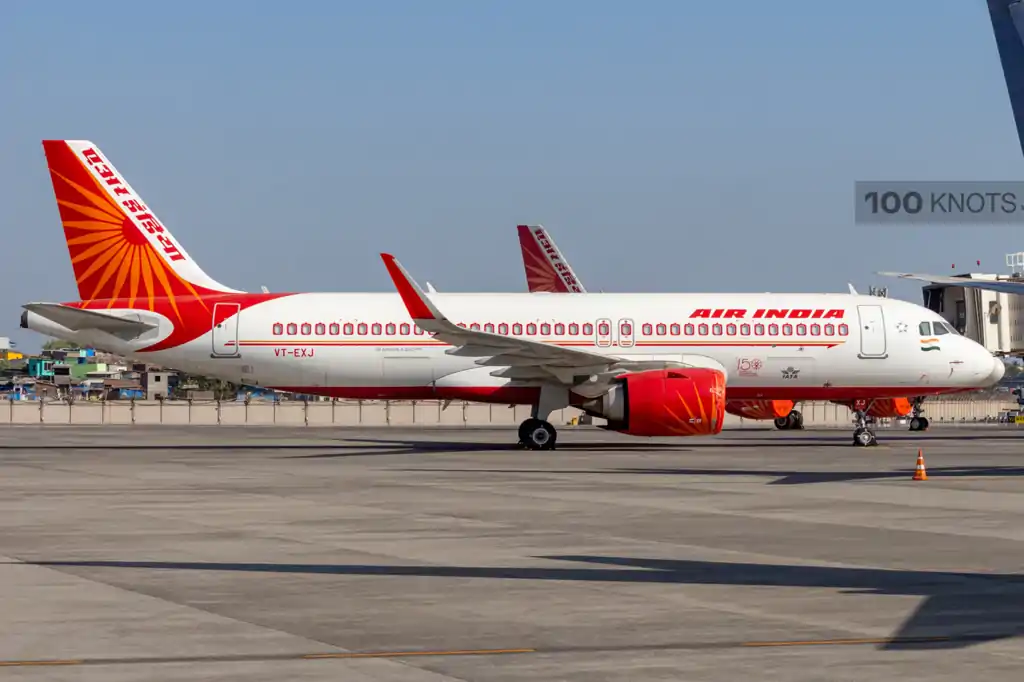
Air India, the national carrier of India, is set to enhance its fleet with the addition of a substantial number of new aircraft. This expansion is part of the airline's strategy to address capacity and connectivity needs while renewing and diversifying its aircraft portfolio.
A Leap in the Sky: The New Fleet
Air India has taken delivery of the first of a 21-strong batch of leased A320-200Ns and expects the remainder to arrive by August 2024, according to CEO Campbell Wilson. The airline has also taken delivery of its second A350-900.
The Expansion Plan
In September 2022, Air India made a strategic move by announcing its intention to lease twenty-one A321-200Ns and four A321-200NX aircraft to address a "capacity and connectivity need." This decision reflects Air India's commitment to enhancing its services and offering an even more extensive network to its passengers.
The Mystery of the Lessors
At the time of the announcement, Wilson did not disclose the identity of the lessors. However, the first A320-200N, VT-RTF (msn 11705), which ferried into Delhi from Toulouse Blagnac on October 11, comes from CALC. The four A321-200NX aircraft, VT-RTB (msn 11113), VT-RTC (msn 11156), VT-RTD (msn 11183), and VT-RTE (msn 11260), have already been delivered and were sourced from AerCap.
CEO Campbell Wilson's Announcement
"This week saw the arrival of yet another aircraft – the first of 21 A320Ns," Wilson told Air India employees in an internal email this week and reported in The Business Standard. "The remaining twenty A320neo (are) progressively arriving between now and August 2024."

Separate from Previous Orders
It's important to note that the leased Airbus narrowbodies are separate from the 470-strong order placed by Air India earlier this year, which included 250 planes sourced from Airbus and 220 from Boeing. The Airbus order included 210 A320N family aircraft and forty A350s, including thirty-four A350-1000s and six A350-900s. The first A350-900 has already been delivered, with Air India taking VT-JRA (msn 554) in September and the second being handed over more recently.
The Second A350-900
"We also took delivery of our second A350, VT-JRB (msn 554), which is now undergoing livery changes and other modifications in Toulouse before arriving in New Delhi in January 2024," said Wilson. The six A350-900s are planes taken up by Aeroflot (SU, Moscow Sheremetyevo).
The Current Fleet
Air India's existing fleet includes twenty A319-100s, nine A320-200s, twenty-eight A320-200Ns, fourteen A321-200s, the four A321-200NX, the two A350-900s, eight B777-200LRs, fourteen B777-300ERs, and twenty-seven B787-8s. Boeing's share of the order earlier this year included 190 B737 MAX, twenty B787 types, and ten B777 types.
Conclusion
Air India's decision to expand its fleet with the addition of A320-200Ns and A350-900s is a bold step towards enhancing its services and increasing its capacity to cater to the growing demand in the aviation industry. This move reaffirms Air India's commitment to providing exceptional air travel experiences to its passengers.
With Inputs from ch-aviation
Comment